 Save
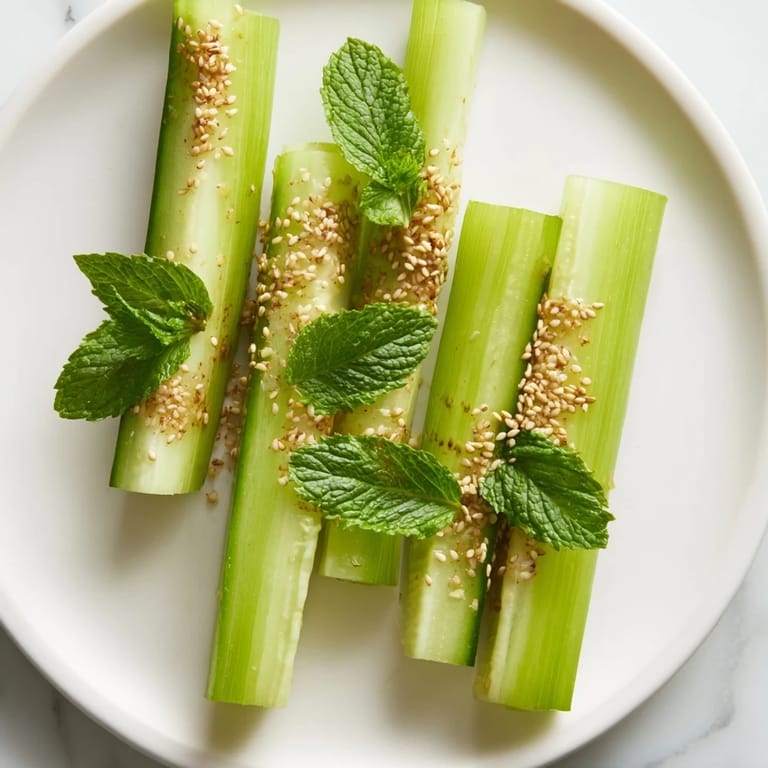
Save I discovered the power of simplicity on a quiet afternoon when a friend arrived unannounced, and I had nothing but raw vegetables in my crisper drawer. Rather than panic, I grabbed a sharp knife and started cutting long, even sticks of cucumber and celery, arranging them on a plate like a minimalist art installation. The moment she saw it, her expression shifted from curiosity to genuine delight. That's when I realized that sometimes the most memorable dishes aren't complicated—they're just thoughtfully presented. The Bamboo Zen became my go-to when I want to impress without stress.
I made this for a dinner party where someone brought their anxious new partner, and the nervous energy in the room felt thick until I set down this simple platter. Watching them both reach for a stick and the immediate smile when they bit into the crisp, cold vegetable—it was like I'd given them permission to relax. That's when I understood that presentation can be its own kind of hospitality, especially when it whispers rather than shouts.
Ingredients
- Cucumbers (2 large): The crispness matters here, so pick ones that feel firm and heavy for their size, not soft or wrinkled—they'll hold their snap even after sitting out for a bit.
- Celery stalks (4 large): Go for the palest, most tender stalks you can find in the bunch, as they're milder and more delicate than the darker outer ones.
- Toasted sesame seeds (1 tablespoon): Toast them yourself if you can—the difference between raw and toasted is the difference between background noise and a whispered note of nuttiness.
- Light soy sauce or tamari (1 tablespoon): This is your dipping sauce backbone, so choose one you actually enjoy tasting straight, because that's what your guests will experience.
- Rice vinegar (1 teaspoon): It brightens the soy sauce without overpowering it, like a small bell going off to wake up your taste buds.
- Fresh mint or basil leaves: Pick whichever one you have or prefer—mint leans cooler and more refreshing, while basil adds a subtle peppery warmth.
Tired of Takeout? 🥡
Get 10 meals you can make faster than delivery arrives. Seriously.
One email. No spam. Unsubscribe anytime.
Instructions
- Wash and inspect:
- Run your cucumbers and celery under cold water, rubbing them gently with your hands to remove any soil. This isn't just about cleanliness—you're also waking up the vegetables, feeling their firmness, and mentally preparing them for their moment.
- Trim with intention:
- Slice off the very ends with a sharp knife, creating a clean canvas. Listen for that slight crunch—it's your signal that everything is fresh and ready.
- Cut into elegant sticks:
- Aim for pieces about 4 to 5 inches long, making them as even as you can manage. The uniformity isn't about perfection; it's about creating rhythm on the plate, so your eye can rest.
- Arrange your landscape:
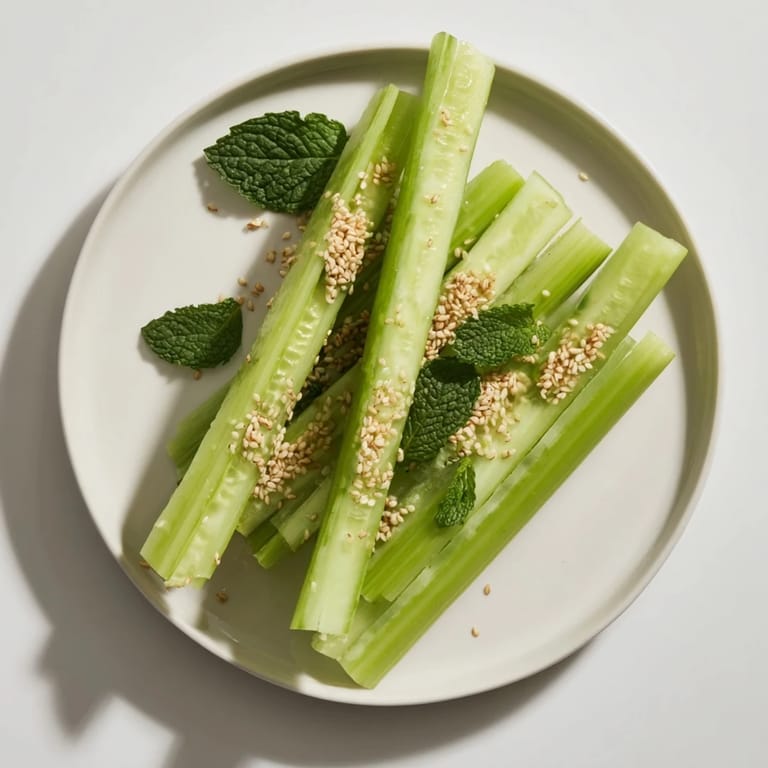
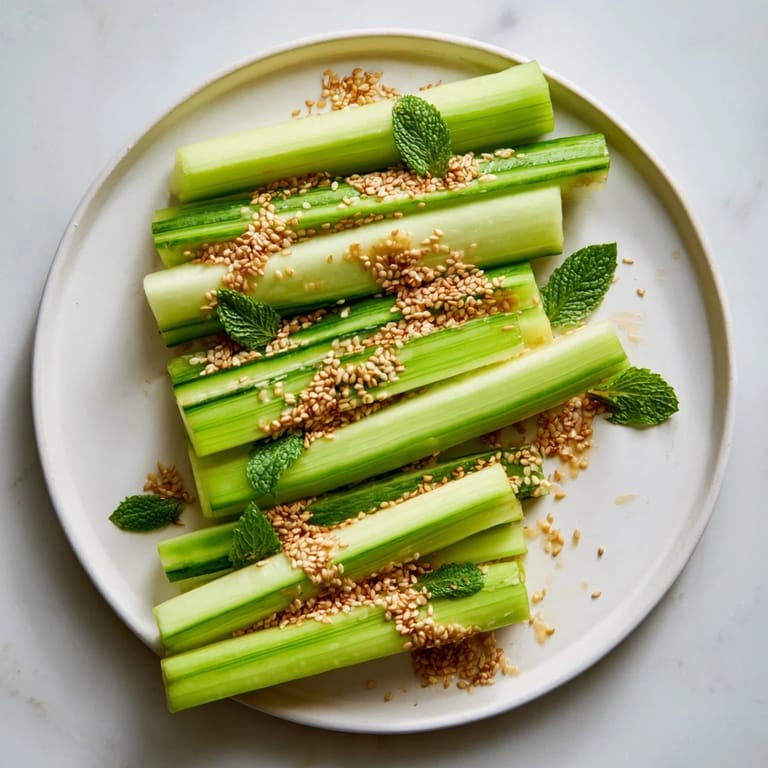
- Set the sticks on your platter standing upright and laying horizontally, playing with angles until it feels balanced to you. Think of it like arranging furniture in a tiny room—there's no single right way, just what feels right to your eye.
- Garnish with restraint:
- Sprinkle sesame seeds lightly across the top, then tuck a few herb leaves into the crevices. Less is more here—you want guests to notice the vegetables first, the garnish as a beautiful whisper.
- Chill and serve:
- Pop it in the fridge until you're ready to serve, then set out a small bowl with soy sauce and rice vinegar mixed together. The cold vegetables against the warm umami of the dip is where the magic happens.
 Pin it
 I served this at a work lunch once, and a colleague who swore they hated raw vegetables took three sticks. Later, she told me it wasn't the taste that won her over—it was the care in the presentation, how it felt intentional rather than thrown together. That's when I learned that even the simplest food can feel luxurious if you treat it with respect.
The Art of the Platter
Presentation is genuinely half the battle with this dish. I used to just pile everything on a plate and wonder why it didn't feel special, until I started thinking about white space and balance. Now I arrange the sticks at slightly different angles, creating a landscape rather than a stack. It takes an extra thirty seconds but changes how people perceive what they're eating entirely.
Playing With Flavor
The dipping sauce is where you can get creative without changing the spirit of the dish. Some nights I add a touch of honey to the soy and vinegar mix, other times a whisper of ginger or a drop of sesame oil. I've even experimented with sriracha for those moments when I want to wake people up, though that feels like a different meal entirely. The beauty of this recipe is its flexibility—it welcomes variations without demanding them.
Variations and Occasions
You can easily expand this into something more complex without losing its meditative quality. Add carrot sticks for warm color, daikon for peppery bite, or thin apple slices for unexpected sweetness. I've served it alongside grilled tofu, added edamame to the platter, or even drizzled everything with a cashew cream for richer gatherings. Whatever you add, the core remains: fresh, crisp, and deeply satisfying.
- Try adding thin strips of daikon radish for a subtle peppery note that surprises and delights.
- Carrot sticks bring visual warmth to an otherwise cool palette and add a gentle sweetness.
- Pairing with chilled sake or a crisp white wine turns this casual appetizer into something elegant enough for your finest gatherings.
 Pin it
 There's something calming about this recipe, the way it slows you down and asks you to pay attention to simple things. Serve it when you want to feed people gently, when you want them to taste the vegetables themselves rather than a complicated mask.
Frequently Asked Questions
- → What vegetables are used in the Bamboo Zen?
Long, crisp stalks of celery and cucumber form the base of this fresh, minimalist appetizer.
- → How can I enhance the crunch of the vegetables?
Soaking the celery and cucumber sticks in ice water for 10 minutes before serving increases their crispness.
- → What garnishes complement the arrangement?
Toasted sesame seeds and fresh mint or basil leaves add aroma, color, and subtle flavor contrasts.
- → What dipping sauce pairs well with this dish?
A simple mix of light soy sauce or tamari with rice vinegar creates a tangy, umami-rich dip.
- → Are there any suggestions for variations?
Adding carrot or daikon sticks introduces color variation while maintaining the fresh, crunchy texture.
- → How should this dish be served?
Arrange the vegetable sticks vertically and horizontally on a platter for a minimalist bamboo look, and serve chilled.