 Save
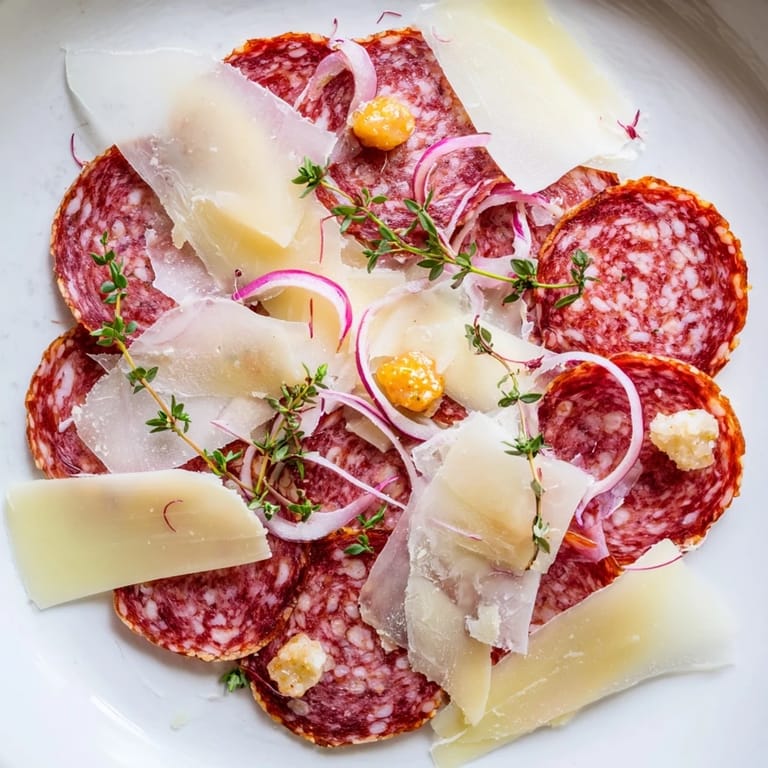
Save There's something about standing in front of an empty wooden board that feels like a blank canvas waiting to be painted. Years ago, I watched a cheese monger in a small Italian market arrange cured meats and shaved Parmigiano with the kind of precision that made it look effortless—except I could see her counting the layers, adjusting the drape of each ribbon. That moment stuck with me, and now whenever I need to feed people something that tastes like I've done far more work than I actually have, I reach for this platter. The Burlap & Lace is my shortcut to looking generous and thoughtful, a humble arrangement that somehow feels luxurious.
I once made this for a small dinner where someone had just broken up with their long-term partner. Instead of cooking something complicated that required me to disappear into the kitchen for hours, I put together this board about an hour before they arrived. They sat at the table picking through the meats and cheeses, the rhythm of it—selecting, pausing, tasting—seemed to settle something in them. By the end of the evening, they were laughing and building little stacks of meat and cheese like they were constructing tiny edible sculptures. That's when I realized this platter isn't just about the flavors; it's about giving people permission to move slowly and tend to themselves.
Ingredients
- Smoked beef (120 g, thickly sliced or hand-torn): The rough, irregular edges matter here—they catch the light differently than perfectly uniform slices and give the platter a more genuine, lived-in feel.
- Rustic country ham (120 g, roughly chopped): Look for the kind that's been aged properly, where the edges curl slightly and the color runs from deep rose to deep mahogany; it should taste salty and complex, not just salty.
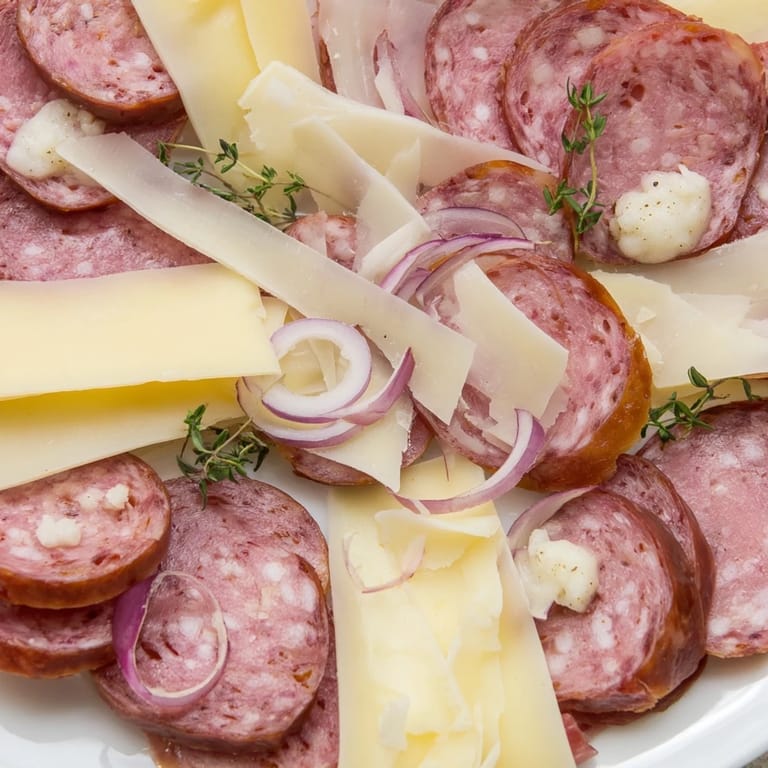
- Smoked sausage (120 g, thick-cut rounds or wedges): Choose a sausage with visible pepper or spice flecks—those little dots tell you there's actual flavor inside, not just smoke.
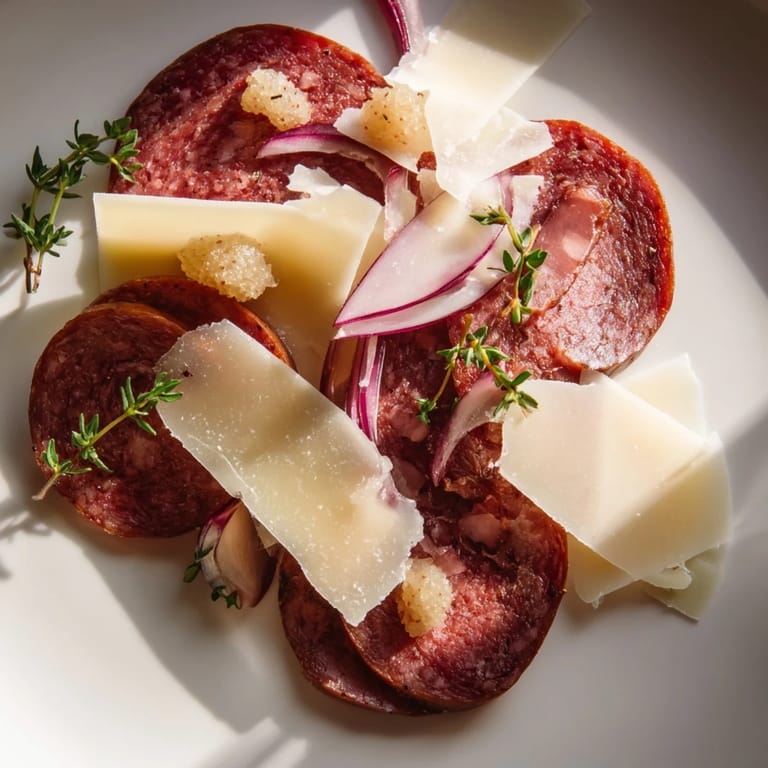
- Parmigiano Reggiano (60 g, thinly shaved): Use a cheese plane or vegetable peeler to create ribbons so thin they're almost translucent; these delicate curls soften the boldness of the meats.
- Aged Manchego (60 g, thinly shaved): This Spanish cheese has a slightly nutty sweetness that bridges the gap between the salty meats and the sharp Gruyère, making every bite feel balanced.
- Gruyère (60 g, thinly shaved): Its crystalline texture and deeper flavor ground the board, preventing it from feeling too light or one-dimensional.
- Cornichons (1 small handful): These tiny pickles are your palate cleansers and flavor anchors—they cut through the richness and add a pop of brightness.
- Red onion (1 small, thinly sliced): Raw and slightly sharp, these thin half-moons add a whisper of bite that wakes up the other flavors without overpowering them.
- Grainy mustard (2 tbsp): The seeds give you texture and a clean, sharp flavor that's meant to be spread onto bread or eaten alongside the meats, not mixed in.
- Fresh thyme or rosemary sprigs (1 small bunch): These aren't just for decoration—when you brush past them or pinch a leaf, the aroma fills your nose and makes everything taste better.
- Rustic country loaf or crusty baguette (optional): If you include bread, slice it right before serving so it's still warm and the crust still cracks when you bite it.
Tired of Takeout? 🥡
Get 10 meals you can make faster than delivery arrives. Seriously.
One email. No spam. Unsubscribe anytime.
Instructions
- Start with the foundation:
- Lay out your wooden board or platter and begin arranging the rough-cut meats in overlapping layers or casual mounds, like you're being careless but actually being very deliberate. The unevenness is the point—it's meant to look rustic and inviting, not sterile.
- Shave and drape the cheeses:
- Take your cheese plane or vegetable peeler and shave each cheese into thin ribbons, letting them curl slightly as they fall onto the board. Drape them over and beside the meats like delicate fabric, creating pockets of softness against the bold, rough textures of the cured meats.
- Fill in the gaps:
- Scatter the cornichons around the platter, tuck the sliced red onion into spaces between the meats, and add small dollops of grainy mustard in two or three spots where people will naturally look first. You're creating visual rhythm, so nothing gets lost and everything invites a second look.
- Add the finishing aroma:
- Nestle the fresh thyme or rosemary sprigs around the board as a final touch—they'll release their fragrance every time someone reaches for something, making the eating experience sensory and memorable.
- Serve with intention:
- If you're including bread, slice it and arrange it nearby but not directly on the board; it should feel optional and supportive, not the main event. Set the board in front of your guests and step back—let them take over from here.
 Pin it
 I made this platter for my partner on an ordinary Wednesday evening after we'd both had demanding weeks. We didn't set a table; we just sat on the couch with the board between us, picking and talking, the conversation meandering the same way our hands moved across the meats and cheeses. There was something grounding about it—the flavors were rich and sophisticated, but the experience was intimate and unhurried, exactly what we both needed.
The Art of Building Your Board
The magic of a charcuterie board isn't in any single ingredient but in the balance between opposites—rough and refined, bold and delicate, salty and sharp. When you're arranging this platter, think about creating little flavor journeys for whoever is eating it. A piece of smoked beef, then a ribbon of Gruyère, then a cornichon and a sliver of raw onion—that's a conversation happening on the palate. The thyme and rosemary aren't afterthoughts; they're participants in the whole experience, adding aroma and a whisper of herbaceous green to cut through all the richness.
Pairing and Serving Suggestions
This board is forgiving in terms of what you drink alongside it. A bold red wine—something with tannins and depth like a Côtes du Rhône or a Spanish Tempranillo—will stand up to the smoked meats and aged cheeses. If you prefer white, go for something crisp and dry like a Sauvignon Blanc or a Grüner Veltliner. I've also found that this works beautifully as part of a larger spread; it doesn't need to be the only thing, but it should be present because it does something no other dish quite does—it gives people something to do with their hands and their attention while conversation happens around it.
Final Thoughts and Quick Tips
Charcuterie boards have become something of a cultural phenomenon, and I understand why—they're inclusive, beautiful, and honest. They let everyone find what they love without forcing them into someone else's vision of what dinner should be. The Burlap & Lace works because it respects both the boldness of the meats and the refinement of the cheeses, refusing to choose between them.
- If you want to get fancy, add a small handful of toasted walnuts or a scatter of dried figs or apricots; they add complexity without requiring any cooking.
- Don't be afraid to substitute the cheeses based on what you can find—look for aged, firm varieties that shave cleanly and have distinct flavor profiles so they don't disappear next to the meats.
- Make this board just before serving so all the elements taste fresh and the cheese ribbons stay delicate; it's one of those rare dishes where timing is about quality, not stress.
 Pin it
 This is one of those dishes that reminds you that feeding people doesn't have to be complicated to feel meaningful. Sometimes the most generous thing you can do is assemble beautiful ingredients thoughtfully and then get out of the way.
Frequently Asked Questions
- → What kind of meats are used in the platter?
Smoked beef, rustic country ham, and smoked sausage, all prepared thick-cut or roughly chopped for a hearty texture.
- → How should the cheeses be prepared?
Cheeses like Parmigiano Reggiano, Manchego, and Gruyère are thinly shaved into delicate ribbons for a refined texture.
- → What accompaniments enhance the platter’s flavor?
Cornichons, thinly sliced red onion, grainy mustard, and fresh thyme or rosemary sprigs add balance and aroma.
- → Can this be served with bread?
Yes, a rustic country loaf or crusty baguette complements the platter but is optional depending on dietary preferences.
- → Are there suggestions to elevate the platter?
Adding toasted walnuts, dried fruits like figs or apricots, or substituting cheeses with other aged varieties can add complexity.