 Save
Save I discovered this dish on a lazy Sunday afternoon while scrolling through photos of our family's trip to Belize, watching my phone screen light up with images of impossibly colorful reefs beneath the water. Something about those vibrant corals sparked an idea—what if I could translate that underwater artistry onto a plate, combining the sweetness of citrus with briny shrimp and the comfort of melted cheese? The first time I made it, I was honestly nervous the flavors wouldn't work, but the moment the Gruyère bubbled under the broiler and I saw the orange and grapefruit segments nestled between the pink shrimp, I realized I'd created something that tasted as beautiful as it looked.
I made this for my sister's birthday dinner last spring, and watching her eyes light up when I set it in front of her—that moment of seeing something so colorful and unexpected—made me understand why plating matters so much. She didn't even want to eat it at first because she wanted to photograph it, which felt like the highest compliment a cook could receive.
Ingredients
- Large pink shrimp (500 g / 1.1 lb), peeled and deveined: The shrimp are your protein anchor and visual star, so don't skip the deveining—it takes five extra minutes but changes the texture completely.
- Medium oranges (2), segmented, plus 1 tsp zest: Segment them over a bowl to catch the juice, which becomes part of the dressing and keeps everything moist.
- Small pink grapefruit (1), segmented: The grapefruit adds a subtle bitter edge that prevents the dish from feeling too sweet, so resist the urge to skip it.
- Lemon juice (from 1 lemon): Fresh lemon is essential here—bottled juice changes the brightness entirely.
- Gruyère cheese (120 g / 4 oz), grated: This is the cheese that bubbles and browns beautifully, so if you substitute, choose another melting cheese with real flavor.
- Ricotta cheese (50 g / 1.7 oz): The ricotta adds a creamy, soft texture contrast that keeps the dish from feeling too composed—dollop it generously.
- Small zucchini (1), thinly sliced into ribbons: Use a vegetable peeler or mandoline to create thin ribbons that steam quickly and arrange like delicate coral branches.
- Small carrot (1), julienned: The carrot adds sweetness and structure, plus it stays slightly firmer than the zucchini, creating textural interest.
- Fresh chives (1 tbsp), finely chopped: This is your finishing touch—don't chop it too early or it bruises and loses its delicate onion flavor.
- Fresh dill (1 tbsp), torn: Tear the dill by hand rather than chopping to preserve its aromatic oils and keep the herb looking fresh and bright.
- Olive oil (2 tbsp): Use your good olive oil here since it's a finishing touch where its flavor really shines.
- Salt and freshly ground black pepper, to taste: Taste as you go, especially after adding the citrus, since citrus itself can provide seasoning.
Tired of Takeout? 🥡
Get 10 meals you can make faster than delivery arrives. Seriously.
One email. No spam. Unsubscribe anytime.
Instructions
- Get your oven ready:
- Preheat your broiler to high so it's crackling hot when you need it—this is what gives the cheese that golden-brown bubbling and makes the dish feel special.
- Season and sear the shrimp:
- Toss the shrimp with 1 tbsp olive oil, lemon juice, salt, and pepper in a bowl, then sear them in a hot skillet for about 2 minutes per side until they're just cooked through—they should be pink and firm but still tender, not rubbery. The pan should be really hot so they get a light golden crust.
- Prepare the citrus:
- In a separate bowl, gently combine your orange and grapefruit segments with the orange zest and a pinch of salt, being careful not to break up the segments as you toss them. Let them sit for a moment so the flavors start to mingle.
- Soften the vegetables:
- Steam your zucchini ribbons and carrot strips for just 1–2 minutes until they're tender but still have some structure—you want them to look alive on the plate, not limp. If you don't have a steamer, a microwave-safe bowl covered with a damp paper towel works perfectly.
- Build your coral reef:
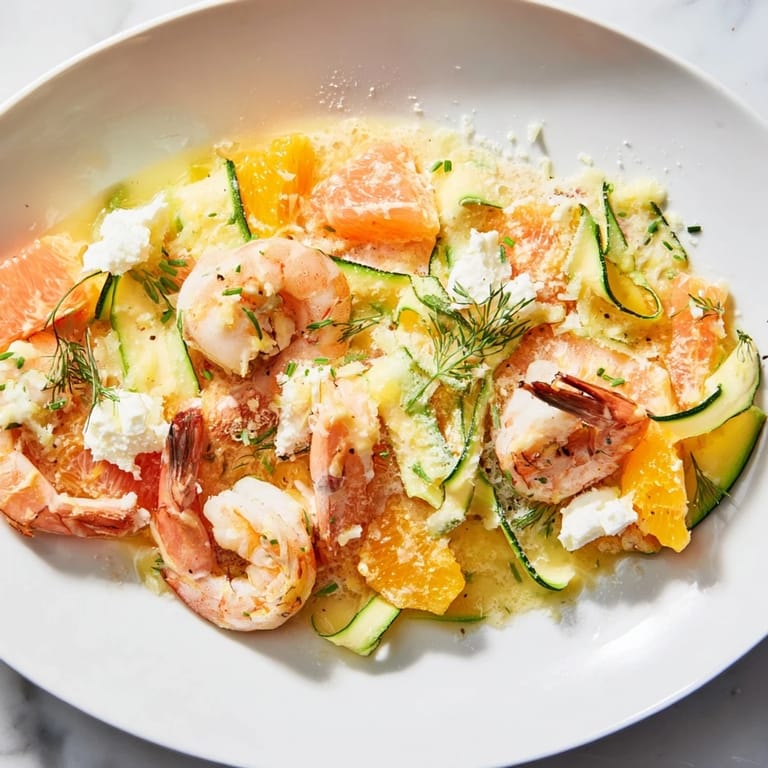
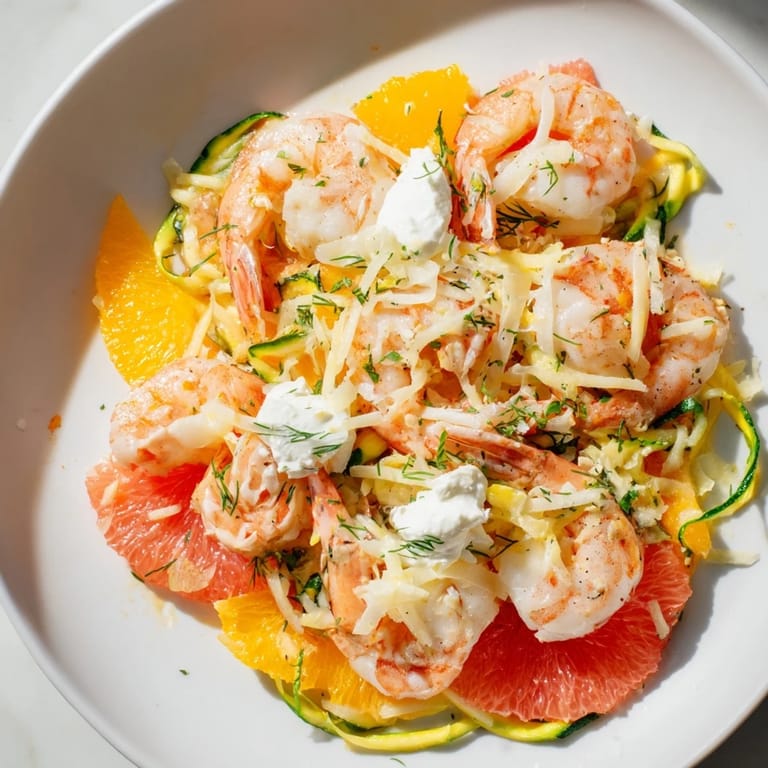
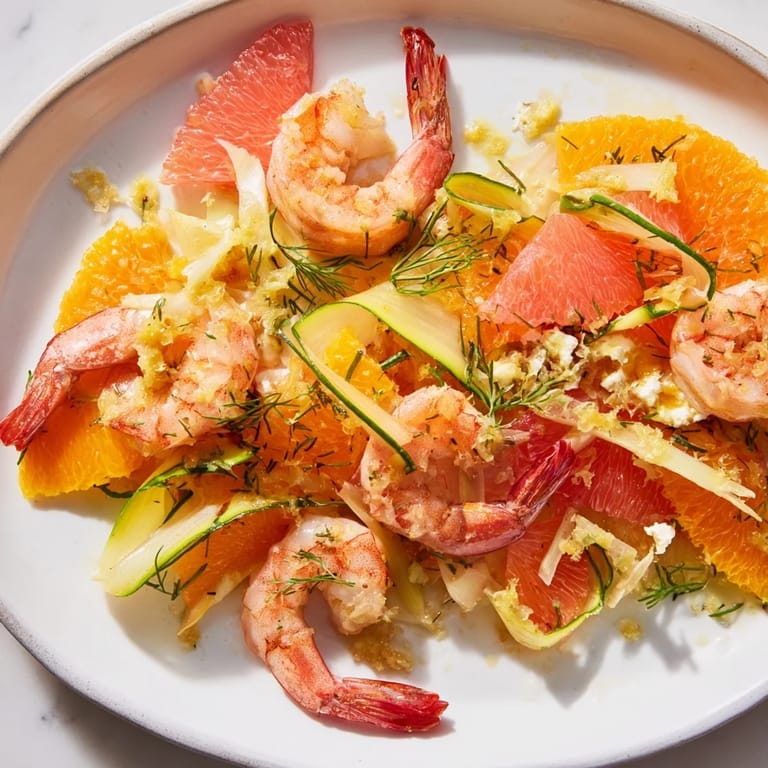
- Arrange the warm steamed vegetables on your oven-safe serving platter, creating a layered base that looks like the textures of a real reef—zucchini ribbons standing up, carrot pieces tucked between them. Nestle the sautéed shrimp and citrus segments among the vegetables, thinking of them as the fish and anemones living in this edible underwater world.
- Add the cheese:
- Sprinkle your grated Gruyère evenly across the entire arrangement, then dot small spoonfuls of ricotta around the platter like sea anemones blooming from the coral. Don't be shy—you want plenty of cheese.
- Broil until golden:
- Slide the platter under the hot broiler for 2–3 minutes, watching carefully so the cheese bubbles and just barely browns—this is where the magic happens, as the heat brings everything together. You're not looking for dark brown, just a light golden bubble.
- Finish and serve:
- Remove from the broiler, scatter fresh chives and torn dill over the top, drizzle with your remaining olive oil, and bring it straight to the table while everything is still warm. This is the moment to show it off.
 Pin it
 My neighbor came over for dinner and asked if I'd attended culinary school because the dish looked so professionally plated, and I realized that sometimes the most meaningful cooking moments are when people feel transported by something beautiful. This dish does that—it takes you somewhere colorful and warm, even if you're eating it on a regular Tuesday night.
Timing Your Components
This dish is all about coordination, and the key is having everything ready before you start cooking the shrimp. I segment my citrus and prep my vegetables first, so once the shrimp hits the pan, I'm just flowing from one step to the next. If you try to do everything at once, something will get cold or overcooked, and the whole effect falls apart. The beauty of this recipe is that it doesn't take long once you start—it's 20 minutes of prep and 15 minutes of actual cooking heat, but those 15 minutes are busy ones.
Playing with Substitutions and Variations
I've made this dish with Emmental instead of Gruyère when that's what I had on hand, and honestly, it's just as delicious—both cheeses have that beautiful melting quality and complex flavor. Some seasons I add pomegranate seeds or thin slices of watermelon radish for extra color and tartness, and it completely changes the visual story you're telling on the plate. You could even try this with halibut or scallops if shrimp isn't your thing—the citrus and cheese work beautifully with any sweet, delicate seafood.
Wine Pairing and Serving Suggestions
A crisp Sauvignon Blanc cuts through the richness of the cheese while echoing the citrus notes already in the dish, creating this beautiful harmony that feels intentional. A dry rosé also works wonderfully if that's what you have—it's lighter and won't overpower the delicate shrimp, and it has this pink hue that honestly complements the visual story of the dish.
- Serve this straight from the broiler while the cheese is still bubbling and warm.
- This makes four generous servings as a main, but you could stretch it to six as a special first course.
- Don't assemble everything on the platter too far ahead—you want the vegetables to still have some warmth when the cheese hits them under the broiler.
 Pin it
 This is the kind of dish that reminds you why we bother cooking for the people we love—it's not just food, it's a moment of brightness and creativity on a plate. Make it when you want to feel a little bit of magic in your kitchen.
Frequently Asked Questions
- → How should the shrimp be cooked for best texture?
Sauté the shrimp over medium-high heat for 2 minutes per side until just cooked through to retain tenderness and juiciness.
- → What vegetables pair well in this dish?
Thinly sliced zucchini ribbons and julienned carrots add a delicate crunch and vibrant colors that complement the seafood.
- → Can the Gruyère be substituted?
Yes, Emmental or a bubbly mozzarella work well as alternatives, offering similar melt and flavor profiles.
- → What role does citrus play in this dish?
Segments of orange, grapefruit, and lemon juice brighten the dish with fresh acidity and enhance the seafood’s natural flavors.
- → How is the coral reef effect achieved?
By layering steamed vegetables as the base, then nestling shrimp and citrus segments among them before topping with bubbly cheese.