 Save
Save There's something about the smell of bacon hitting a hot skillet that makes everything feel possible, even on mornings when I'd rather stay in bed. The first time I made this grilled cheese, I wasn't trying to be fancy—I just had good bread, decent cheese, and leftover bacon from breakfast, and I thought, why not put them together? Twenty minutes later, I understood why this sandwich has fed people through generations of lunch breaks and late-night cravings. It's the kind of dish that teaches you something about balance: the salty smoke, the melted richness, the crispy golden exterior giving way to soft bread inside.
I made these for my roommate on a random Thursday when she came home exhausted from a presentation, and she sat at the kitchen counter with her sandwich in both hands, not saying anything for a solid minute. Then she looked up and said, 'This is exactly what I needed,' and somehow that felt like the highest compliment a sandwich could receive. That's when I realized this wasn't just lunch—it was the edible version of a pep talk.
Ingredients
- Sourdough bread: The tang and chew matter here; regular bread will get too soft. Look for a loaf with a thick, crispy crust that won't turn into mush.
- Sharp cheddar cheese: Don't skimp on flavor—mild cheddar tastes like regret. Sliced is easier, but grated melts faster and more evenly.
- Bacon: Cook it until it's almost too crispy; it softens slightly when the sandwich heats through, and you want it to have backbone.
- Unsalted butter, softened: This spreads without tearing the bread, and you control the salt level. Cold butter is your enemy here.
- Mayonnaise (optional): A thin layer on the non-buttered side adds a subtle crispiness and richness that surprises people.
- Black pepper: Fresh grinding is the difference between 'good sandwich' and 'why does this taste better than I expected.'
Tired of Takeout? 🥡
Get 10 meals you can make faster than delivery arrives. Seriously.
One email. No spam. Unsubscribe anytime.
Instructions
- Render the bacon until it shatters:
- Cook bacon in a skillet over medium heat for about 8–10 minutes, watching for the edges to darken and the fat to render. You want each piece to snap when you bite it, so don't pull it off the heat too early. Let it cool on paper towels so it stays crackly.
- Prepare your bread canvas:
- Spread softened butter on one side of each bread slice—thick enough to coat but not so much it pools. If you're using mayo, spread it thin on the opposite side; it's a secret weapon that changes everything.
- Build with intention:
- Place two slices butter-side down on a clean surface. Layer cheese, then bacon, then a whisper of pepper, then more cheese for cohesion. Crown it with the remaining bread, butter-side up. The cheese on both sides of the filling acts like glue.
- Toast low and slow:
- Heat your skillet or griddle over medium-low heat—this matters more than speed. Place the sandwiches down and cook for 3–4 minutes until the bottom turns deep golden brown and sounds crispy when you tap it. Press gently with a spatula; the bread will compress and everything melts together.
- Flip and mirror the magic:
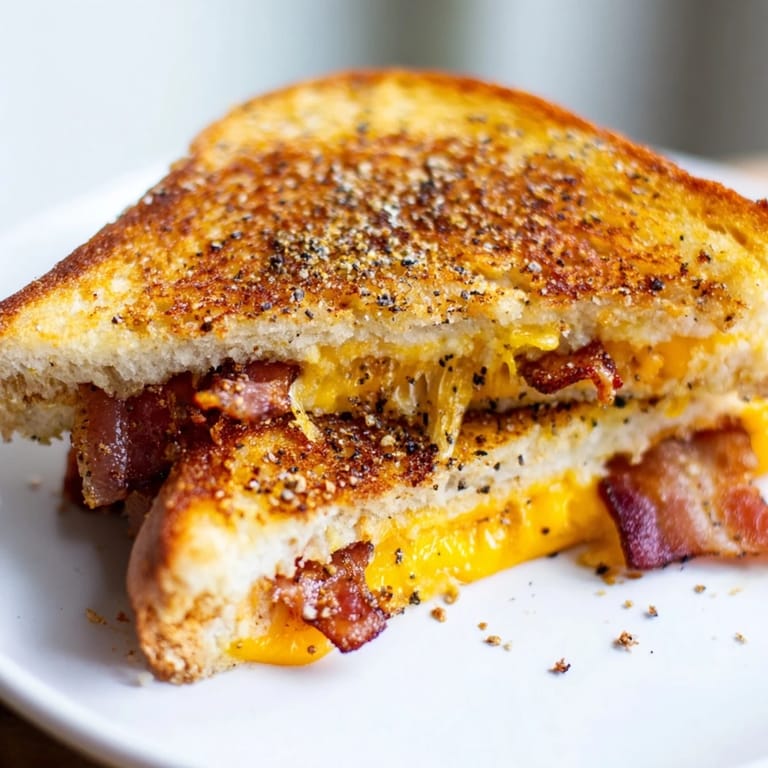
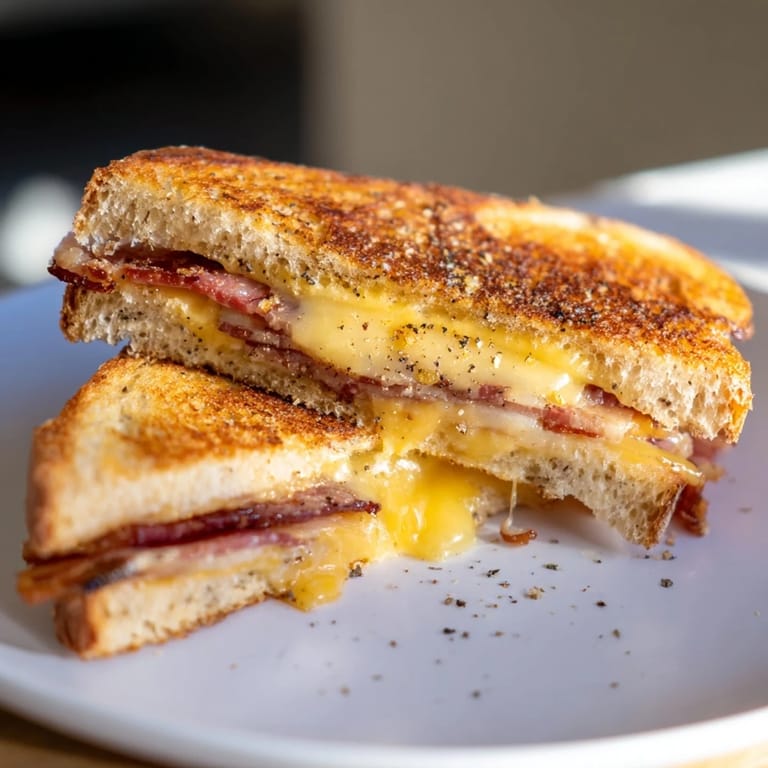
- Flip carefully and repeat on the second side, pressing occasionally. You're aiming for a color that looks like autumn, not charred. The cheese should be completely liquid inside by now.
- Rest and reveal:
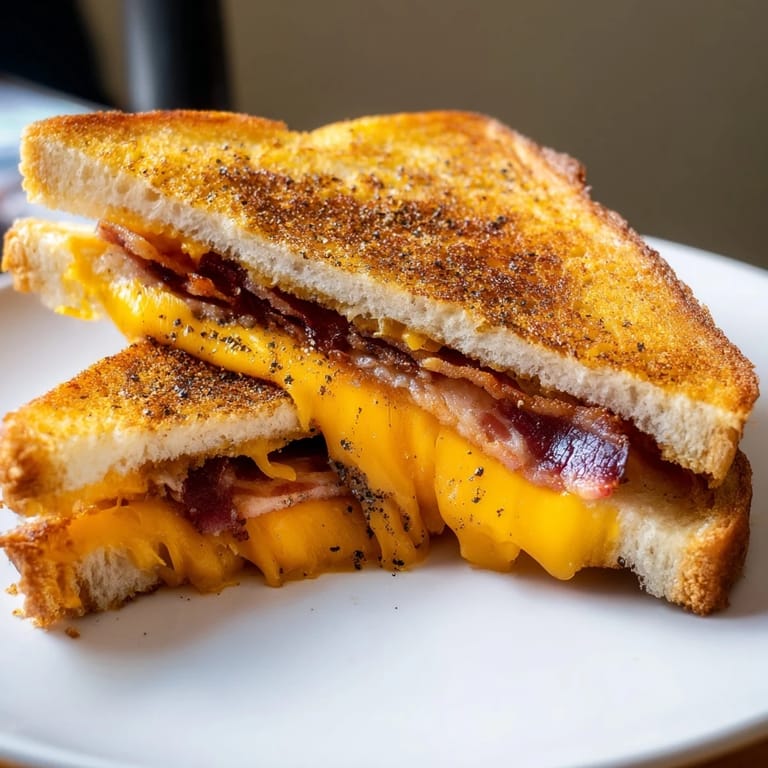
- Let the sandwich sit for 1 minute before slicing—this lets the filling settle so it doesn't pour out everywhere. Slice on a diagonal, plate while it's still hot, and serve immediately.
 Pin it
 There's a moment, about halfway through eating, when the warm cheese hits your mouth and the crispy bacon crackles between your teeth, and you realize that sometimes the simplest things are the ones worth remembering. I've made hundreds of complicated dishes, but this is the one people text me about.
The Magic of Melting
Sharp cheddar doesn't just taste better—it actually melts differently than mild cheddar. The higher fat and acid content means it flows together into a silky layer instead of clumping. I discovered this by accident when I grabbed the wrong cheese and wondered why my sandwich suddenly felt gourmet. Temperature control makes this possible; too hot and the butter separates from the bread, too cool and the cheese stays sliced instead of merged.
Bread Matters More Than You Think
The sourdough crust is doing real work here—it's protecting the interior from the heat and creating that crucial textural contrast between crispy outside and soft inside. I once tried this with regular sandwich bread thinking it wouldn't matter. It mattered. The sandwich fell apart, the cheese leaked out the sides, and I learned a lesson I didn't forget. The sour tang of the bread also plays against the richness of the cheese in a way that feels intentional, even though it's just chemistry being chemistry.
Variations That Actually Improve Things
Once you understand how the core sandwich works, you can start playing. A thin slice of tomato adds brightness if you're feeling summer, or caramelized onions bring depth if the weather turns cold. Smoked gouda or gruyère swap in beautifully, each bringing their own personality. The foundation stays the same—good bread, good cheese, crispy bacon—but the details can shift with what's in your kitchen or what season it is.
- Tomato works best if you pat it dry and don't overload; wet slices make soggy bread.
- Gruyère adds a nuttiness that makes people ask what you did differently.
- Serve alongside tomato soup and you've accidentally created comfort.
 Pin it
 This sandwich sits at that rare intersection where it's simple enough to make on a Tuesday but satisfying enough to feel special. Make it for yourself first, then make it for someone who needs feeding.
Frequently Asked Questions
- → What type of bread works best?
Sourdough bread is recommended for its sturdy texture and tangy flavor, which crisps nicely when grilled.
- → How can I ensure the bacon stays crispy?
Cook bacon in a skillet until fully crisp, then drain on paper towels before adding to the sandwich to maintain crunch.
- → Can I use different cheeses?
Yes, gruyère or smoked gouda make excellent alternatives to sharp cheddar, offering varied flavor profiles.
- → Is mayonnaise necessary for crispiness?
Mayonnaise is optional; spread thinly on the bread to enhance crunch, but butter alone provides great crisp texture.
- → What’s the best way to grill the sandwich?
Use a skillet or griddle over medium-low heat, cooking 3-4 minutes per side and pressing gently for even browning and melted cheese.