 Save
Save My neighbor knocked on the door one October afternoon with a butternut squash the size of a small child, insisting I had to do something with it before winter set in. I'd never roasted one before, but watching those golden cubes transform in the oven while the kitchen filled with something warm and nutty felt like accidentally discovering kitchen magic. That first bowl of soup, eaten straight from the pot while steam fogged my glasses, taught me that the simplest recipes often taste the most like home.
I made this soup for my sister on a gray November evening when she'd been dealing with a rough week at work. Watching her face soften as she tasted it, the way she closed her eyes for a second, reminded me that sometimes the most meaningful thing you can offer someone is something warm and unhurried, made with real butter and real care.
Ingredients
- Butternut squash (1 large, about 2 lbs): The star of the show—roasting brings out its caramel notes way better than simmering ever could, and peeling it raw is way easier than trying to peel it cooked.
- Yellow onion (1 medium): This creates the flavor foundation that makes people ask what your secret ingredient is, even though it's just onion doing what onion does best.
- Garlic cloves (2): Added after the softer vegetables to keep that garlicky edge from turning bitter and harsh.
- Carrot and celery (1 each): They're the quiet supporters here, building depth without trying to steal the spotlight.
- Olive oil (2 tbsp) and unsalted butter (2 tbsp optional): The butter isn't essential, but it rounds out the edges and makes the soup taste somehow more complete.
- Vegetable broth (4 cups): Low sodium matters because you're adding your own salt and you want to control the final taste, not fight against a salty broth.
- Ground cinnamon (1/2 tsp), nutmeg (1/4 tsp), and black pepper (1/2 tsp): These spices whisper rather than shout, creating warmth without making it taste like a pumpkin spice situation.
- Kosher salt (1 tsp): Taste as you go because everyone's broth is different and your hand is the best measuring tool at the end.
- Heavy cream or coconut milk (1/4 cup), pumpkin seeds, and fresh thyme (optional): These elevate the bowl from simple to something you'd order at a restaurant.
Tired of Takeout? 🥡
Get 10 meals you can make faster than delivery arrives. Seriously.
One email. No spam. Unsubscribe anytime.
Instructions
- Get your oven ready and prep the squash:
- Preheat to 400°F and line a baking sheet with parchment paper so cleanup stays easy. Toss your cubed squash with a tablespoon of olive oil, salt, and pepper until every piece is lightly coated—this is what gets you that caramelized edge that makes all the difference.
- Roast until golden:
- Spread the squash in a single layer and roast for 25 to 30 minutes, stirring halfway through if you remember. You're looking for tender pieces with slightly browned edges, which is the squash telling you it's ready to become soup.
- Build the flavor base:
- While the squash roasts, heat your remaining olive oil and butter in a large pot over medium heat. Add the chopped onion, carrot, and celery, cooking gently for 5 to 7 minutes until they soften and start to smell like dinner.
- Add the aromatics:
- Stir in the garlic cloves and cook for just one more minute, letting them become fragrant without burning. This quick timing is the secret to garlic that tastes mellow instead of sharp.
- Combine everything:
- Pour in the vegetable broth, add the roasted squash, and sprinkle in the cinnamon, nutmeg, salt, and pepper. Bring the pot to a boil, then lower the heat and let it simmer gently for 10 to 15 minutes so the flavors can marry together.
- Blend until smooth:
- An immersion blender makes this step effortless—just stick it in and blend until you reach the texture you want, whether that's perfectly smooth or with a few soft bits remaining. If you're using a countertop blender, work in batches and be careful with the hot liquid.
- Taste and adjust:
- This is your moment to play with it—maybe it needs a touch more salt, or perhaps a whisper more cinnamon. Taste as you go and trust your instincts.
- Serve with style:
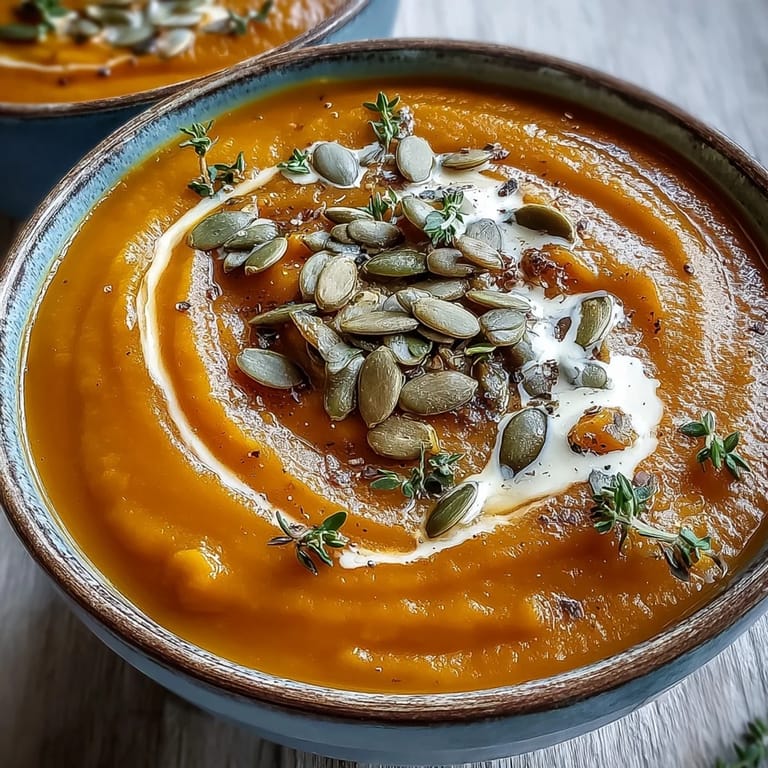
- Ladle into bowls and drizzle with cream or coconut milk, then scatter pumpkin seeds and fresh thyme on top if you have them. A crack of black pepper on top never hurts either.
 Pin it
 There's something about autumn that makes people crave soup, and this one has become my go-to when I want to feel like I've done something impressive without stressing about it. Now whenever someone mentions they're tired of their usual meals, this is the first thing I recommend.
Why Roasting Changes Everything
Roasting squash is where patience pays off in the most visible way—those caramelized edges aren't just pretty, they're flavor that develops through heat and time. The oven does most of the work while you prep your aromatics, and the result tastes like you've been simmering this for hours when you've really only been in the kitchen for a moment. It's one of those small kitchen decisions that makes people wonder where you learned to cook.
Making It Your Own
This soup is forgiving enough to bend to what you have on hand or what you're craving that day. I've made it vegan by swapping the butter for extra olive oil and using coconut milk at the end, and honestly, it's just as silky and good. Other times I've added a pinch of cayenne for heat, or stirred in sage instead of thyme, and each version feels new.
Serving Suggestions and Storage
This soup tastes even better the next day when the spices have settled into every spoonful, so making a double batch is never a mistake. It keeps beautifully in the fridge for four days and freezes well for up to three months, which means you can bottle up autumn in your freezer and return to it in January when you need it most.
- Pair it with crusty bread or a grilled cheese sandwich for a meal that feels complete and cozy.
- Top it with crispy sage leaves or a drizzle of brown butter for texture and extra richness.
- Serve it chilled as a gazpacho-style dish in summer if you're feeling adventurous, though warm is the way it was meant to be.
 Pin it
 This is the kind of soup that teaches you cooking doesn't need to be complicated to be memorable. Simple ingredients and one patient step make something that wraps around you like a hug.
Frequently Asked Questions
- → Can I make this ahead of time?
Yes, this soup actually tastes better the next day as flavors meld. Prepare up to 3 days ahead and refrigerate. Reheat gently on the stove, adding splash of broth if needed.
- → How do I store leftovers?
Cool completely and transfer to airtight containers. Refrigerate for 4-5 days or freeze for 3 months. Thaw frozen portions overnight in refrigerator before reheating.
- → Can I use frozen squash?
Frozen butternut squash works in a pinch. Skip roasting and add directly to the pot with vegetables. Simmer until tender before blending, though fresh roasted squash yields deeper flavor.
- → What can I use instead of immersion blender?
A standard countertop blender works perfectly—blend in batches filling only halfway. Cool slightly first, and vent lid to prevent steam buildup. A potato masher creates rustic chunky texture.
- → How can I make it thicker?
Simmer longer to reduce liquid, or add a peeled potato while cooking. Blending some cooked rice or white beans creates creaminess without dairy. For richest texture, swirl in extra cream or coconut milk before serving.
- → What spices pair well with this soup?
Beyond cinnamon and nutmeg, try ground ginger, cardamom, or curry powder for warmth. Fresh sage or rosemary adds earthy notes. A pinch of cayenne provides subtle heat that balances sweetness.