 Save
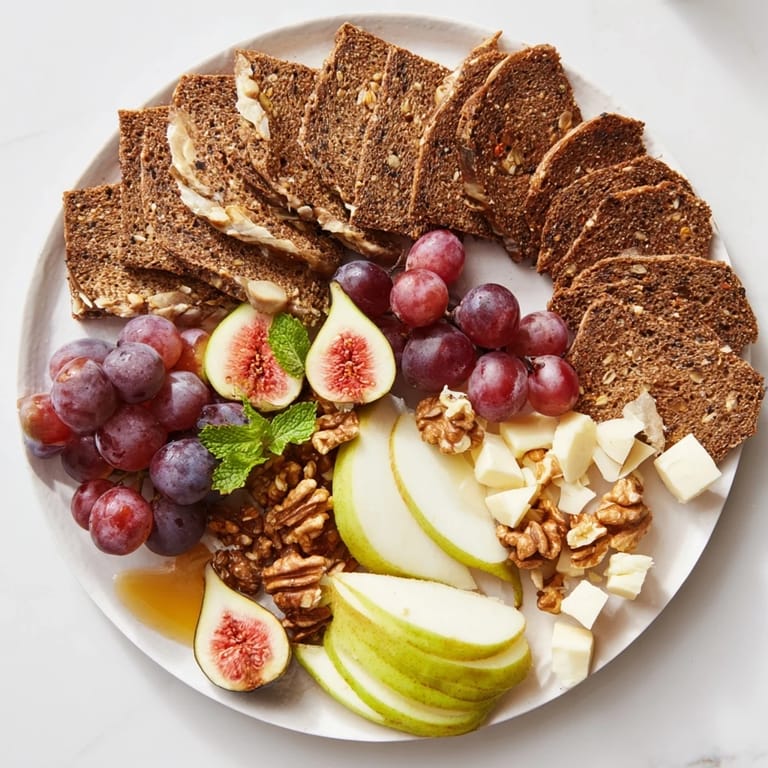
Save The first time I arranged a platter that actually stopped people mid-conversation was when a friend brought over a loaf of fresh rye bread and some just-picked pears from their garden. I'd meant to make a simple cheese board, but instead found myself arranging everything in this long, swooping curve across the wooden board, and it suddenly looked like something alive, something purposeful. That's when the idea of the scythe came to me, and I realized that the best platters aren't just about what you serve, they're about how the arrangement itself tells a story.
I made this platter for my sister's book club gathering last September, and I watched it transform the whole evening. People kept coming back to it between chapters, not just for the food but because something about the arrangement made them linger, made them slow down. By the end of the night, the fruits had been picked at and rearranged a dozen times, the honey drizzled in unexpected places, and somehow it felt less like a platter and more like a communal work of art.
Ingredients
- Baguette, sliced: Use a crusty, day-old baguette if you can, as fresh ones crumble under the knife and don't hold their shape on the board.
- Multi-grain crackers: These add textural variety and visual interest, and they hold up well throughout serving without becoming soggy.
- Seeded rye bread, thinly sliced: Rye has an earthy depth that grounds the sweetness of the fruits and makes the whole platter feel more substantial.
- Cooked and cooled farro or barley: The grains are the heart of the design, so toss them with a tiny bit of olive oil and salt while still warm so they stay separate and fluffy when cooled.
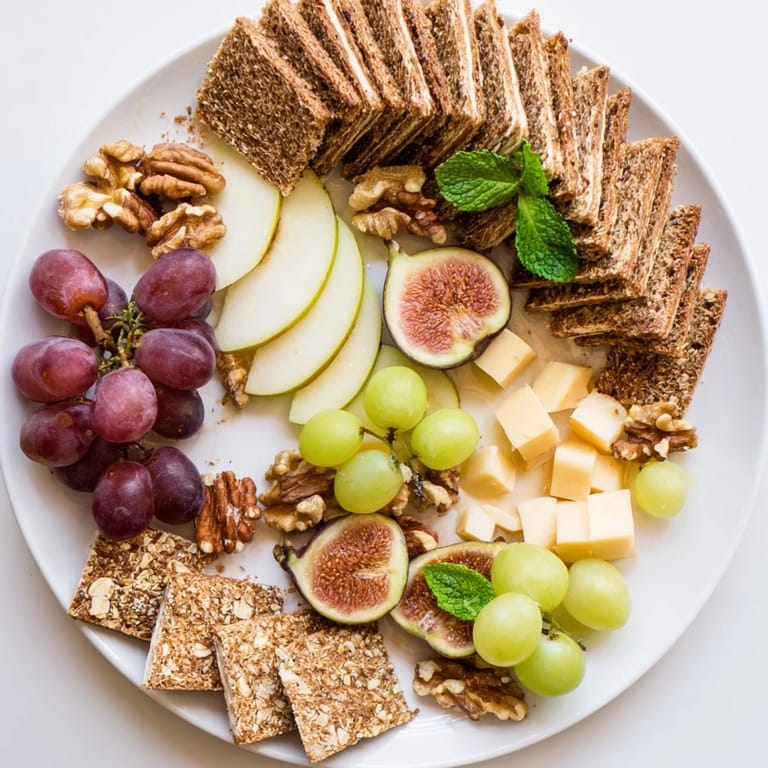
- Seedless red grapes: Leave them in small clusters where possible, they're easier to pick at and look more intentional on the board.
- Pears and apples, sliced: Slice these just before arranging, and toss lightly with lemon juice to prevent browning and add a subtle brightness.
- Dried apricots: Their jewel-like color creates striking contrast, and they balance the tartness of fresh fruit with natural sweetness.
- Fresh figs, halved: If you find good fresh figs, they're worth the small splurge, but dried figs work beautifully too and are less fragile to handle.
- Brie and aged cheddar: Slice the brie thin and cube the cheddar so they integrate visually with the other elements rather than dominating the board.
- Honey or fig jam: Warm honey pours more easily and looks more luminous, while jam adds another flavor layer that surprises people.
- Fresh mint and roasted nuts: Add these at the very last moment before serving so the mint stays vibrant and the nuts maintain their crunch.
Tired of Takeout? 🥡
Get 10 meals you can make faster than delivery arrives. Seriously.
One email. No spam. Unsubscribe anytime.
Instructions
- Create the scythe sweep:
- Lay your wooden board in front of you and imagine a large arc running diagonally across it. Arrange the baguette slices and crackers along this curve, letting some overlap slightly so the line feels organic and unforced.
- Build the grain field:
- Spread the cooled farro or barley in a thin, even layer along the inner curve of your bread line, as if you're filling in the space just behind the scythe's sweep. This is where the composition really comes alive.
- Weave in the fruits:
- Scatter the grapes in small clusters, fan the pear and apple slices so their colors catch the light, and tuck the dried apricots into gaps to add pockets of deep gold. Let the fruits flow both along and across the main lines rather than following rigid rows.
- Position the cheeses:
- Place small clusters of brie and cheddar near the breads where they naturally pair together. They should feel like accidental discoveries on the board rather than formal designated zones.
- Add the finishing touches:
- Set small bowls of honey or jam at the edge, scatter fresh mint leaves where they catch the light, and sprinkle roasted nuts generously over the top for texture and aroma. Step back and look at the whole thing before anyone else sees it.
 Pin it
 What struck me most after that book club evening was realizing that this platter had given us an excuse to actually be together without anything getting in the way. There were no courses to time, no dishes stacking up between conversations, just a shared landscape of good food that drew people closer.
The Art of Arrangement
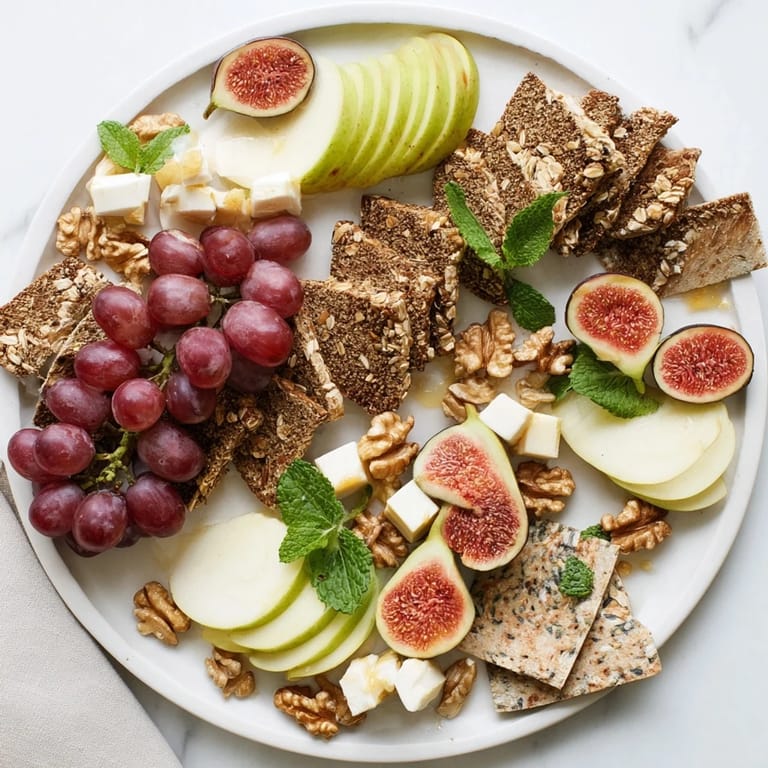
The scythe isn't just a visual metaphor, it's a way of thinking about space and balance on a flat surface. I learned this through trial and error, arranging the same ingredients in different ways until something clicked. The key is creating a sense of movement, of one element flowing into the next, so the whole board feels like it's swinging across the space rather than sitting flat and static.
Bread and Grain as Anchor
Breads and grains do more work on this platter than they seem to at first glance. They're not just sides or fillers, they're structural elements that hold the composition together and give people something to eat with and build on. I always make sure the variety feels intentional, mixing textures from airy baguette to dense rye to nutty farro so that every bite feels different.
Seasonal Flexibility and Fresh Thinking
One of my favorite things about this platter is that it doesn't demand a specific season, it just invites you to work with what's available and beautiful right now. In spring I use strawberries and fresh cherries, in summer I add berries and stone fruits, in autumn I reach for grapes and figs, and in winter I rely more on dried fruits and pears. The structure stays the same, but the personality shifts completely.
- Don't be afraid to swap the cheeses entirely for seasonal varieties or local finds from your cheese counter.
- Nuts can vary too, try hazelnuts, pecans, or pine nuts depending on what you have or what sounds good with your other choices.
- If honey feels too sweet for your gathering, try a sharp mustard or a drizzle of balsamic reduction instead.
 Pin it
 This platter is really just an excuse to gather good things together and let them speak for themselves. Every time I make it, I'm reminded that the simplest food often carries the most meaning.
Frequently Asked Questions
- → What breads suit this platter best?
Small baguette slices, seeded rye, and multi-grain crackers offer diverse textures and robust flavors.
- → Can I use alternative grains?
Yes, cooked farro, barley, or other chewy grains enhance the rustic appeal and mouthfeel.
- → What fruits work well for this arrangement?
Seedless grapes, sliced apples and pears, dried apricots, and fresh or dried figs create vibrant color and natural sweetness.
- → Are cheeses necessary?
Cheeses like brie and aged cheddar add creamy and savory balance but can be omitted or swapped for plant-based options.
- → How should I present the platter?
Arrange breads and crackers in an arched line to mimic a scythe blade; layer grains inside the curve, fan fruits alongside, and add cheeses and garnishes strategically for visual appeal.