 Save
Save There's something magical about the moment when your kitchen fills with the smell of caramelizing onions and warming spices—that's when I knew this stew had to become a regular in my rotation. I'd been experimenting with plant-based cooking on a rainy Tuesday, and sweet potatoes kept calling to me from the produce bin, so I built a stew around them almost by accident. What started as improvisation turned into the kind of dish that somehow tastes even better the next day, when all those flavors have gotten to know each other in the pot overnight.
I made this for my sister when she was going through a particularly demanding work week, and she sat at my kitchen table with a steaming bowl, closed her eyes, and just sighed. That moment—when someone stops rushing long enough to actually taste their food—that's what this stew does. It's the kind of meal that wraps around you like a favorite blanket.
Ingredients
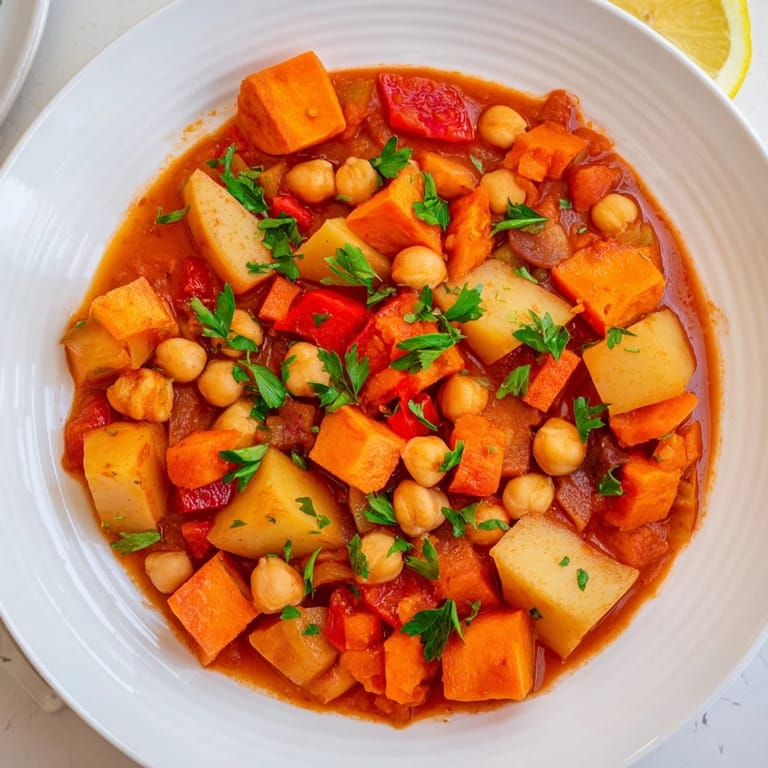
- Sweet potatoes: They're the soul of this stew, turning creamy and almost buttery when they cook down, so choose medium ones that feel firm to the touch.
- Yukon Gold or russet potatoes: These add body and earthiness; Yukon Golds stay a bit firmer while russets break down slightly and thicken the broth.
- Carrots: Slice them on a slight bias so they cook evenly and look a little more intentional in the bowl.
- Onion, celery, and garlic: This is your flavor foundation, and taking five minutes to let the onions actually soften makes an enormous difference in the final taste.
- Red bell pepper and zucchini: These add brightness and texture; don't skip them just because they seem optional.
- Cannellini beans and chickpeas: Use both if you can—they add different textures and the cannellini are creamy while the chickpeas give a little bite.
- Diced tomatoes and tomato paste: The paste is worth seeking out because it deepens the flavor in a way tomato sauce alone simply won't.
- Smoked paprika, thyme, cumin: These three work together like a well-rehearsed band, creating warmth without overpowering the vegetables.
- Vegetable broth: Use one you actually like drinking, because you'll taste it in every spoonful.
- Olive oil: Good quality makes a real difference, especially since you're not cooking it to death.
Tired of Takeout? 🥡
Get 10 meals you can make faster than delivery arrives. Seriously.
One email. No spam. Unsubscribe anytime.
Instructions
- Build your base:
- Heat the olive oil in a large pot over medium heat, then add your diced onion, sliced celery, and carrots. Let them cook for a full five minutes—you want them to soften and start releasing their sweetness, not just become warm. You'll know it's right when the kitchen smells like home cooking.
- Add brightness and depth:
- Stir in the minced garlic, diced red bell pepper, and zucchini, cooking for another three minutes until the garlic becomes fragrant and stops being sharp. This is where you're waking up the pan.
- Toast the spices:
- Add your diced sweet potatoes, regular potatoes, smoked paprika, dried thyme, ground cumin, black pepper, and salt. Stir everything together and let it cook for two minutes so the spices start to release their oils and coat every piece of vegetable.
- Create the broth:
- Stir in the tomato paste first, letting it cook into the vegetables for just a moment, then add your canned diced tomatoes, vegetable broth, and bay leaf. Stir well and bring the whole thing to a boil—you'll see the surface begin to bubble and roil.
- Let time do the work:
- Reduce the heat to low, cover the pot, and simmer for twenty minutes until your potatoes are just tender when you poke them with a fork but haven't started falling apart. This is the hardest part: waiting and not stirring constantly.
- Bring in the beans:
- Add your drained cannellini beans and chickpeas, then simmer uncovered for another ten to fifteen minutes. This is when the stew really begins to thicken and all those separate flavors start becoming one thing.
- Finish gently:
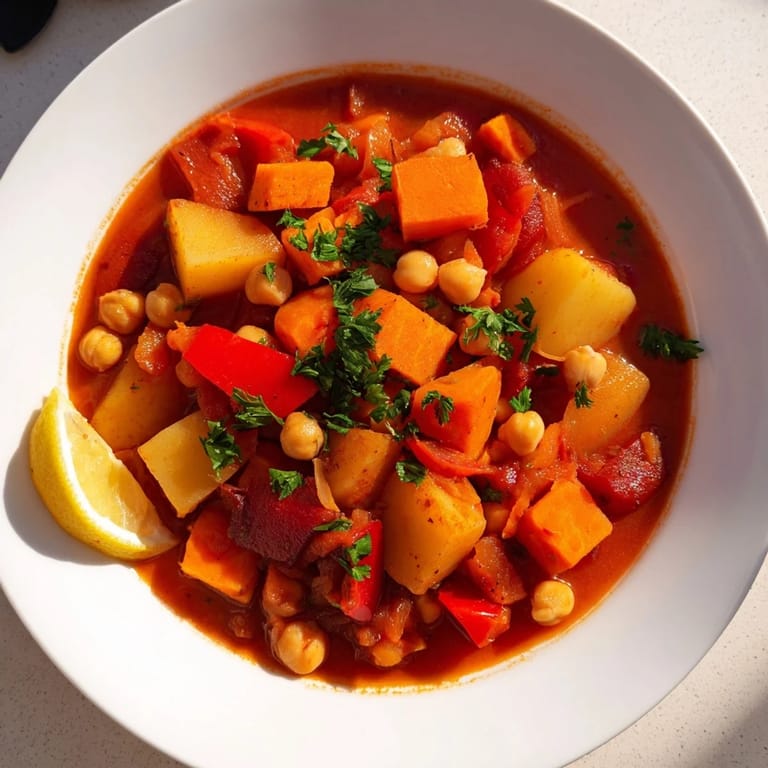
- If you're using baby spinach, stir it in now and cook for just two minutes until it melts into the stew. Remove your bay leaf, taste the whole pot, and adjust salt and pepper to your preference.
 Pin it
 What strikes me most about this stew is how unpretentious it is, how it doesn't ask for anything fancy or hard to find, yet somehow creates something deeply satisfying. It's the kind of food that proves you don't need complexity to make something wonderful.
Storage and Reheating
This stew lives beautifully in the refrigerator for up to five days, and honestly, I think it tastes better on day two or three when everything has had time to become friends. Store it in an airtight container, and when you're ready to reheat, warm it gently on the stovetop over medium heat, stirring occasionally—the microwave works fine too, but the stovetop is kinder to the vegetables.
Variations and Swaps
One of my favorite things about this stew is how forgiving it is with swaps. If chickpeas aren't your thing, use white beans or black beans instead; if you don't have zucchini, add broccoli or cauliflower; if spinach doesn't appeal, skip it entirely or substitute kale. I've made versions with butternut squash in place of half the sweet potatoes, and another time I added a splash of coconut milk at the end for richness. The structure stays solid while the specifics can dance around based on what's in your kitchen or what you're craving.
Serving Suggestions
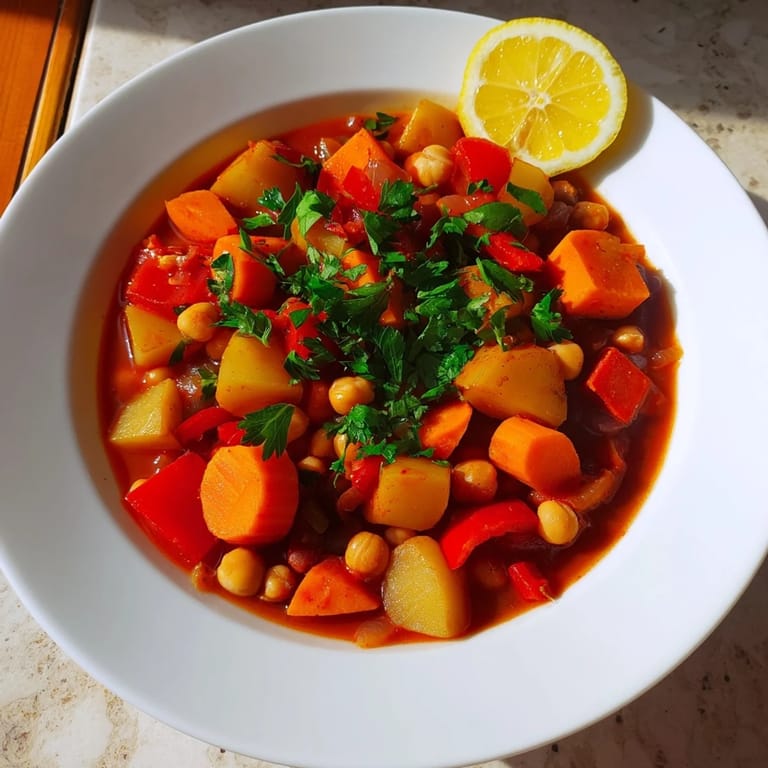
This stew is stunning on its own, but there's something about serving it alongside crusty bread or over a bed of rice that transforms it into something even more comforting. I've served it with quinoa to guests who are grain-conscious, and once I ladled it over creamy polenta and it became an entirely different experience. The lemon wedges at the end are non-negotiable though—that little squeeze of brightness cuts through the richness and makes everything taste more alive.
- Pair it with thick slices of toasted sourdough or whole grain bread to soak up every bit of broth.
- Try serving over rice, quinoa, or farro if you want the stew to feel like a complete meal.
- A squeeze of fresh lemon juice right before eating elevates the whole thing and adds a brightness that makes people take another spoonful.
 Pin it
 This stew has become my go-to when I want to feel like I've accomplished something in the kitchen without spending hours there. Make it once, and I promise you'll find yourself making it again.
Frequently Asked Questions
- → What are the main vegetables used?
Sweet potatoes, Yukon Gold or russet potatoes, carrots, onion, celery, red bell pepper, and zucchini form the vegetable base.
- → Can I add protein to the stew?
Beans like cannellini, kidney beans, and chickpeas provide plant-based protein and texture.
- → What spices enhance the stew’s flavor?
Smoked paprika, dried thyme, ground cumin, black pepper, and bay leaf give depth and warmth.
- → Is it possible to make it spicier?
Yes, adding chili flakes can increase the heat according to taste.
- → How can I customize the stew?
Swap beans for lentils or try other seasonal vegetables; serve with crusty bread or rice.
- → What garnishes complement this dish?
Fresh chopped parsley and lemon wedges brighten the stew before serving.