 Save
Save I discovered this dish while watching a chef arrange vegetables on a stark white plate, moving with the precision of someone painting rather than cooking. There was something almost meditative about how she layered those purées—beet giving way to carrot, then avocado—creating this single, confident stripe down the center. It felt like she was teaching me that sometimes the most impressive things come from restraint, not abundance.
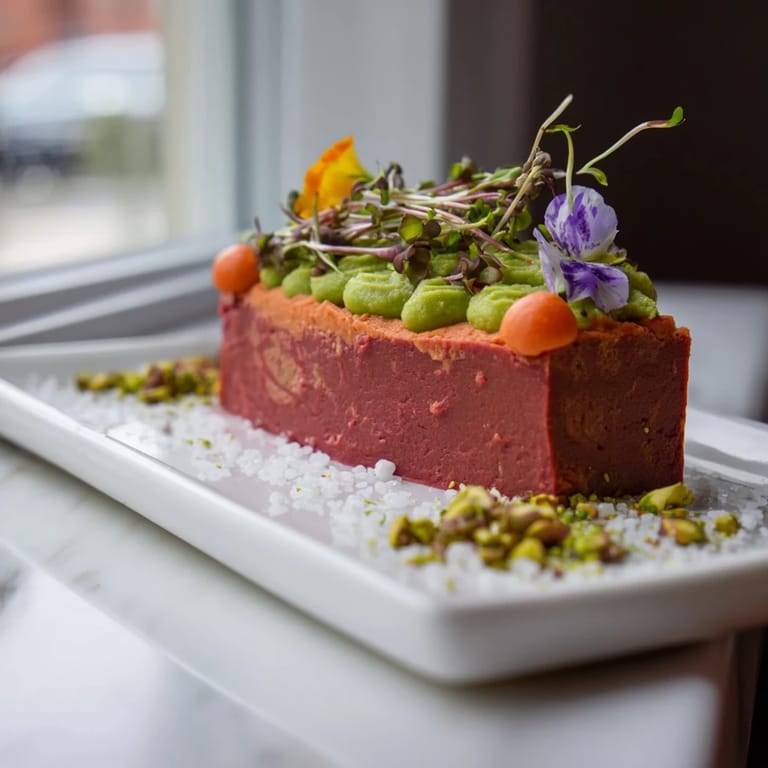
I made this for a dinner party where someone mentioned they were tired of "the same old plated appetizers." I remember their face when the board arrived—the vivid stripe of reds and oranges and greens stopped everyone mid-conversation. Nobody photographed it right away; they just stared. That moment reminded me that food doesn't need to be complicated to feel special.
Ingredients
- Beets: Two medium ones, peeled and diced—they'll stain your hands beautifully and release the deepest, most theatrical color when roasted.
- Olive oil and sea salt: Essential for coaxing out the beets' natural sweetness during roasting.
- Lemon juice: A tsp cuts through the earthy density of the beet purée, keeping it bright.
- Carrots: Three large ones, sliced thick enough to steam evenly in about fifteen to twenty minutes.
- Fresh ginger: One tsp grated adds a subtle warmth that makes people wonder what they're tasting.
- Unsalted butter: One tbsp transforms the carrot into something luxurious; olive oil works too if you prefer.
- Avocado: Choose one ripe enough to mash easily but still firm enough to hold its bright green color.
- Greek yogurt: Two tbsp creates a silky base without overwhelming the avocado's delicate flavor.
- Lime juice: One tsp prevents the avocado from browning and adds clarity to the cream.
- Microgreens, edible flowers, crushed pistachios, flaky sea salt: These are your finishing flourishes—choose what draws your eye and what feels right on the day.
Tired of Takeout? 🥡
Get 10 meals you can make faster than delivery arrives. Seriously.
One email. No spam. Unsubscribe anytime.
Instructions
- Roast the beets:
- Heat your oven to 400°F, toss your diced beets with olive oil and sea salt, then spread them on a tray and let them roast for thirty to thirty-five minutes until they're completely tender and the edges just barely caramelize. You'll smell that distinctive earthy sweetness filling your kitchen.
- Cook the carrots:
- While the beets roast, steam or boil your sliced carrots until they're very soft, about fifteen to twenty minutes, then drain and let them cool just enough to handle. They should break apart easily with a wooden spoon.
- Blend the beet purée:
- Transfer your roasted beets and the lemon juice to your blender and let it run until the mixture is completely smooth and silky. If it seems too thick, add just a splash of water and blend again until you reach that perfect, spreadable consistency.
- Blend the carrot purée:
- Add your cooked carrots to the processor along with the grated ginger, butter, and a pinch of sea salt, then blend until the mixture is velvety and completely smooth. Taste and adjust the salt if needed.
- Make the avocado cream:
- In a small bowl, mash your ripe avocado with the Greek yogurt, lime juice, and a tiny pinch of salt until it's silky and spreadable, then transfer it into a piping bag or squeeze bottle so you can apply it with precision later. The lime juice is your friend here—it keeps everything looking fresh and stops any browning.
- Build your stripe:
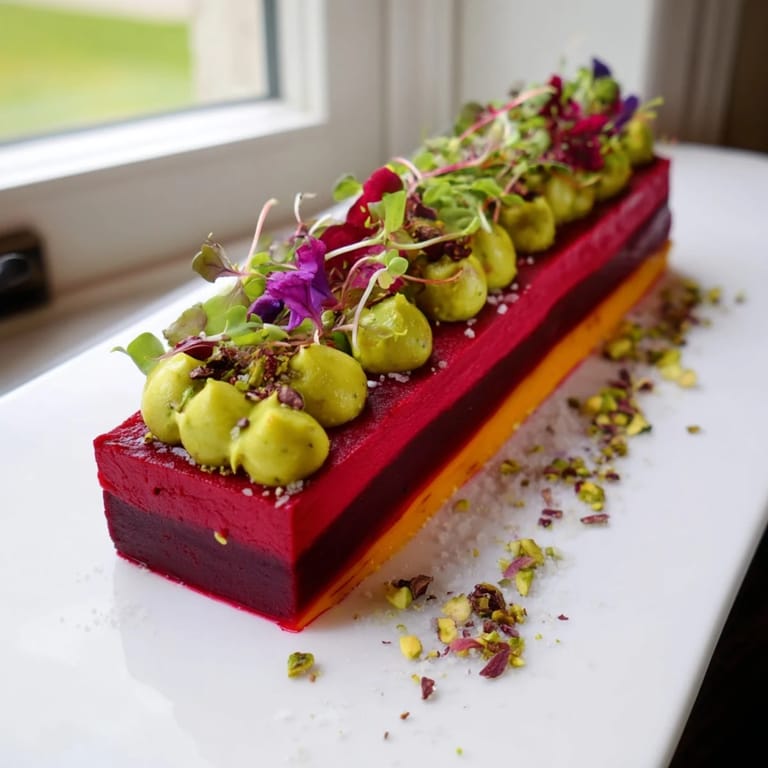
- On a clean, empty serving board, use a wide offset spatula or the back of a large spoon to spread a thick, three-inch-wide stripe of beet purée perfectly down the center, working from one end to the other with confidence. Take a breath before you start; this is where the meditative part happens.
- Layer the colors:
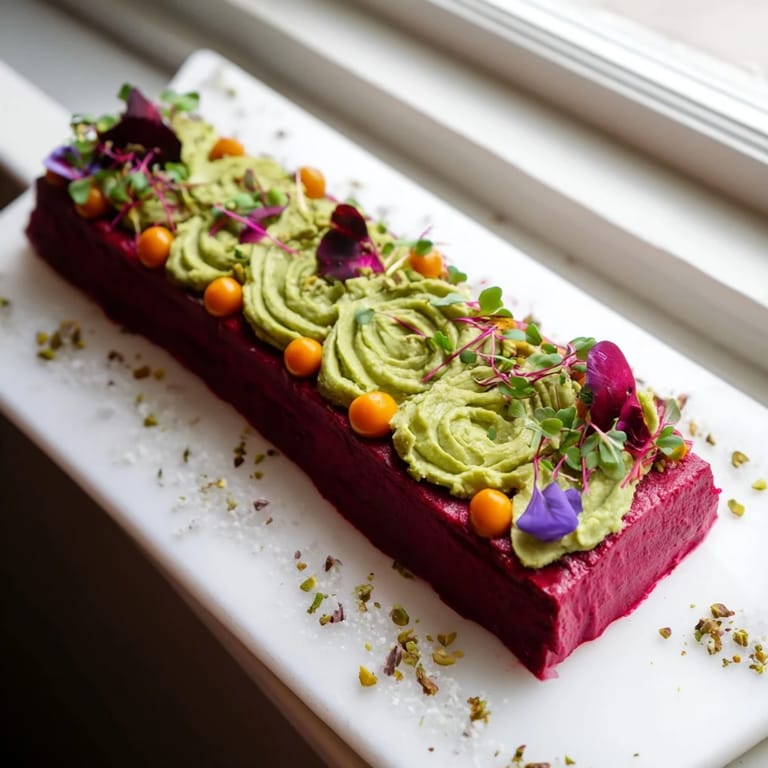
- Pipe or spread the carrot purée and avocado cream in artistic strokes or dots along the top of that beet stripe, letting some colors bleed into each other slightly while maintaining the clean center line. This is where you can play—there's no one right way.
- Garnish with intention:
- Scatter your microgreens, edible flowers, crushed pistachios, and flaky sea salt across the stripe, letting the colors and textures build a landscape that draws the eye. Serve immediately so everything stays vivid and nothing wilts.
 Pin it
 What struck me most wasn't the applause or the compliments, but the way people ate it—leaning in close, using their fork to scrape up small tastes of each purée together, as if they were trying to understand how something so beautiful could also taste this good. Somewhere between the visual drama and the actual flavor, this dish became a conversation.
The Art of the Stripe
The stripe isn't just a plating technique; it's a philosophy. Instead of filling a plate with multiple elements competing for attention, you commit to a single, bold statement. I learned this by watching minimalist chefs work, and it changed how I think about composition. When you remove everything unnecessary, what remains has to be perfect. The stripe forces you to focus on flavor, texture, and color in their purest forms, and that clarity is where the beauty lives.
Playing with Color
Beet, carrot, and avocado create a natural rainbow, but don't feel locked into these. I've experimented with roasted sweet potato purée instead of carrot, adding a deeper warmth, or swapping in a silky pea purée for something brighter and spring-like. The principle stays the same: choose vegetables that cook down to smooth, luxurious purées and whose colors sing against each other. A white plate enhances everything; a dark slate board makes the colors feel even more jewel-toned.
Texture and Flavor Balance
The stripe lives or dies by its contrast—smooth purées need the snap of microgreens, the crunch of pistachios, the delicate surprise of an edible flower. I think of it like jazz; the purées are your melody and the garnishes are your percussion. This balance keeps people engaged throughout each bite, preventing any single element from feeling heavy or boring. The flaky sea salt ties everything together, adding both flavor and a final textural element that finishes the experience.
- Crush your pistachios by hand so they're irregular and textured, not pulverized into dust.
- Choose microgreens that have personality—radish for peppery bite, arugula for green spice, or pea shoots for sweetness.
- If you can find edible flowers, prioritize ones that are actually tasty, not just beautiful.
 Pin it
 This dish taught me that sometimes the most elegant solution is the simplest one: take what tastes good, make it beautiful, and get out of the way. That's enough.