 Save
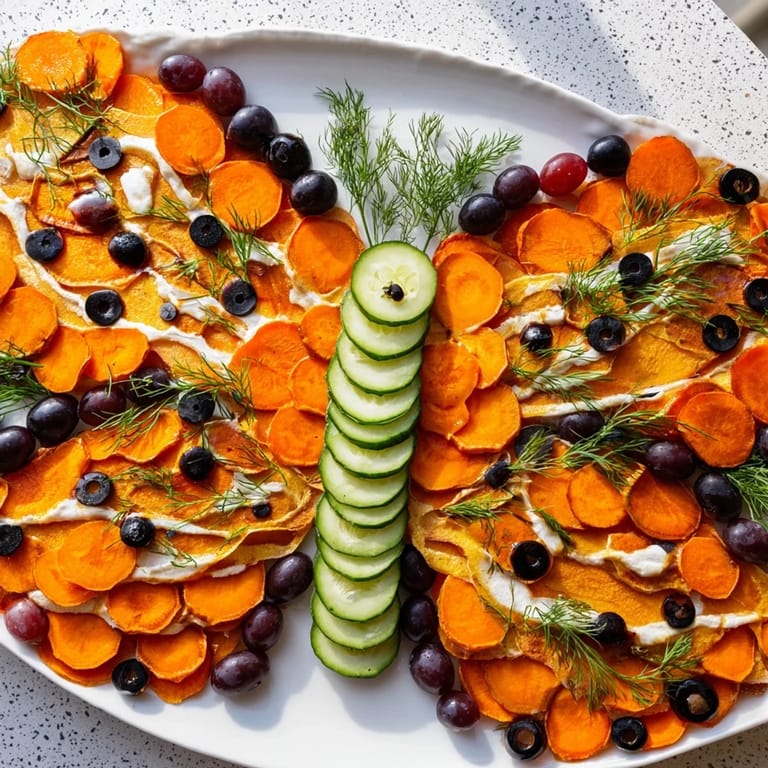
Save I still remember the moment I decided to turn food into art. It was my niece's sixth birthday party, and I wanted to create something that would make her eyes light up the moment she walked into the kitchen. That's when the idea struck me—why not arrange vegetables and cheese into the shape of her favorite creature, the monarch butterfly? As I started laying out the vibrant oranges and deep blacks across my largest platter, I realized I wasn't just making an appetizer. I was creating a memory, a moment where food became wonder.
I'll never forget watching my nephew carefully pick individual black olives from the wing to build his perfect bite, then turn to me with this serious expression and say, "This tastes like art." That's when I knew this platter had become more than decoration—it was interactive, it was fun, and somehow, the flavors mattered just as much as the presentation.
Ingredients
- Sweet potato, thinly sliced and roasted: This brings natural sweetness and a tender texture that anchors the orange wing sections. I learned to slice it thin—about a quarter inch—so it roasts evenly and keeps its color vibrant without turning dark at the edges.
- Carrot, peeled and sliced into thin rounds: The brightness of raw carrot is essential here; it stays crisp and adds that satisfying crunch guests don't expect from a vegetable platter.
- Orange bell pepper, deseeded and sliced into strips: This is the crown jewel of your orange palette—it's sweet, juicy, and its natural curves echo the shape of actual butterfly wings.
- Cheddar cheese, cubed: The richness of sharp cheddar adds sophistication to what could otherwise feel too light. I cube it for visual interest and because guests love finding pockets of creamy, salty contrast.
- Black olives, pitted and halved: These anchor your black pattern and bring a briny depth that makes every bite more interesting. Don't use the tinned ones if you can help it—fresh or better-quality olives make all the difference in how this platter tastes.
- Black grapes, halved: They add juiciness and sweetness against the olives, creating a balance that keeps people coming back for another handful. The slight pop of flavor is a pleasant surprise.
- Black sesame crackers or black rice crackers: These add crunch and structure to the platter. I prefer sesame crackers because they have a nutty depth that elevates the whole arrangement.
- Balsamic glaze: A light drizzle of this glaze isn't just for decoration—it ties the warm and cool colors together and adds a subtle, sophisticated sweetness that guests often can't quite identify.
- Cucumber, sliced lengthwise into sticks: This forms your butterfly's body and serves as a cool, refreshing anchor point. Cucumber is the unsung hero here—it brings everything together visually and texturally.
- Cream cheese, softened: The secret weapon. Tiny dots of this act like both glue and garnish, helping pieces stay in place while adding authentic white spots that mimic real monarch wings.
- Fresh dill or microgreens: A delicate finishing touch for the antennae, these herbs add a whisper of sophistication and a hint of garden freshness that makes the whole presentation feel intentional and refined.
Tired of Takeout? 🥡
Get 10 meals you can make faster than delivery arrives. Seriously.
One email. No spam. Unsubscribe anytime.
Instructions
- Gather and prep everything first:
- This is your mise en place moment. Roast your sweet potato slices at 400°F for about 12-15 minutes until they're tender but still hold their shape. While they cool, slice your carrots, pepper, and cheese. Halve your grapes and olives. Pat everything dry with a paper towel—this small step keeps your platter looking fresh and prevents sogginess.
- Create the body:
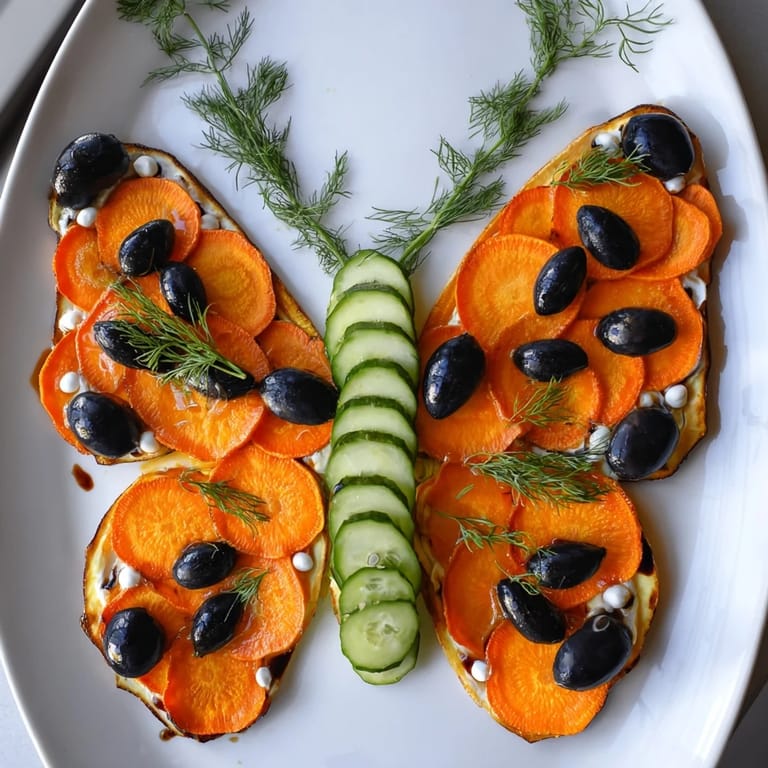
- Lay your cucumber sticks down the center of your platter in a straight line, like the spine of a butterfly. This is your guide, your anchor point. Step back and look at it from above—you're essentially dividing your platter into a left and right wing.
- Build the upper and lower wings with orange:
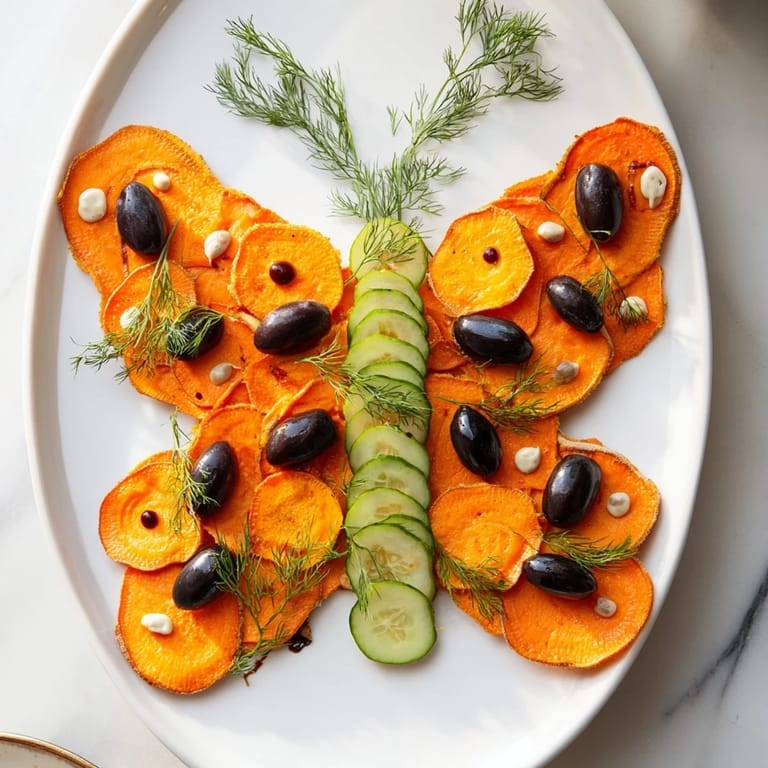
- Starting from where the cucumber meets the platter edge, arrange your orange elements in a gently fanned pattern on each side. Think of it like scales overlapping slightly, creating flow and movement. The sweet potato slices work beautifully for the wing's widest parts, while the pepper strips and carrot rounds fill in the tapering sections toward the edges. Don't overthink it—nature isn't perfectly symmetrical, and neither should your butterfly be.
- Fill with black elements to create contrast:
- Now comes the part where your platter transforms. Nestle your black olives and grapes into the spaces between orange pieces, focusing them along the edges of the wings where a real monarch has its black borders. Scatter your crackers throughout—they add height, texture, and those crucial pockets of black. You're creating a mosaic now, not just arranging food.
- Add white spots for authenticity:
- Using a small spoon, dot tiny amounts of softened cream cheese along the black wing borders. These aren't random—they mimic the white spots on actual monarch wings. I usually place them in clusters of two or three, following the natural curve of the wing pattern. This detail is what transforms it from pretty to absolutely stunning.
- Drizzle with balsamic glaze:
- Take a spoon and drizzle the balsamic glaze in thin, deliberate lines across the wings. Less is more here—you're adding depth and color, not drowning your creation. The glossy glaze catches the light beautifully.
- Crown with antennae:
- Place a small bundle of dill or microgreens at the top of your cucumber body. Arrange them to point upward and slightly outward, like a butterfly's antennae reaching toward the sky. This final touch makes the whole creation come alive.
- Bring it to the table and watch the magic:
- Serve immediately while everything is still fresh and vibrant. Encourage your guests to build their own bites, mixing oranges and blacks, crackers and cheese, in whatever combination appeals to them. The beauty of this platter is that everyone gets to participate in the experience.
 Pin it
 After that birthday party, I started making this platter for every gathering. But the real moment came when a friend who usually passes on vegetable platters came back for thirds. She told me that by making vegetables into something beautiful, I'd somehow made her feel like I understood her—that I'd thought about her enough to create something special. That's when I realized this recipe isn't really about the ingredients at all.
Why This Works as a Party Centerpiece
A platter this striking becomes conversation. It's not hidden in the kitchen or tucked away on a side table—it demands to be the star. People take photos, they gather around it, they become curious about what they're eating. There's something about food that's beautiful enough to frame that makes people slow down and actually taste what they're consuming instead of mindlessly grabbing and moving on. Plus, because it's vegetarian and doesn't require cooking, you can prep it while you're handling a dozen other party tasks. It's one of those rare recipes that looks like you spent hours creating it when really, you spent thirty focused minutes turning simple ingredients into art.
Swapping Ingredients for Your Pantry
The beauty of this platter is its flexibility. Not everyone has black grapes—use blackberries or black lentils if you want. Don't have sesame crackers? Black rice crackers work beautifully, or even thin slices of beet arranged like little dark coins. For the orange elements, I've used roasted butternut squash when sweet potatoes weren't available, and honestly, the slight nuttiness was even better. Purple carrots, red bell peppers, even thin slices of orange cheddar can work depending on your mood. The point isn't to follow this recipe exactly—it's to use the butterfly framework with whatever your kitchen offers. I've even made a version with roasted chickpeas for extra protein and a little more crunch. Think of this as a template, not a rulebook.
The Story Your Platter Tells
Every time I bring this to the table, someone asks, "Did you really arrange each piece individually?" And yes, I do. Because there's something quietly powerful about taking time to arrange food with intention. In a world where we're always rushing, always multi-tasking, this platter is an act of slowness, of care. It says, "I thought about you before you arrived. I wanted you to see beauty." That message, expressed through food, lands differently than words ever could. It's vegetarian, it's naturally healthy, it's completely gluten-free without feeling like a compromise, and it tastes like someone who loves to cook made it.
- The final arrangement should feel organic—slightly asymmetrical, like nature itself arranged it rather than a measuring tape.
- Serve this with good bread or crackers on the side for guests who want to build little bites, and maybe a small bowl of hummus for those who prefer dipping.
- Take a moment before your guests arrive to step back and look at your creation from above. That's the angle everyone will see when they walk in, and it should absolutely take their breath away.
 Pin it
 This platter isn't just appetizer—it's permission to slow down, to make ordinary ingredients into something extraordinary, and to remind the people you love that they're worth the extra thirty minutes. Serve it with joy.
Frequently Asked Questions
- → What ingredients create the orange colors?
Thinly sliced roasted sweet potatoes, carrots, and orange bell pepper strips provide the vibrant orange tones.
- → How is the butterfly body formed?
Sliced cucumber sticks are placed down the center of the platter to resemble the butterfly's body.
- → What adds the black wing details?
Black olives, halved black grapes, and black sesame or rice crackers create the signature dark edges and spots.
- → How are the white dots on wings made?
Small dots of softened cream cheese are used to mimic the white spots along the black edges.
- → Can I substitute the orange elements?
Yes, roasted butternut squash or orange cherry tomatoes can be used for extra flair and color variation.
- → What tools are recommended for assembly?
A large platter, sharp knife, vegetable peeler, and a small spoon for cream cheese dots are helpful.