 Save
Save The first time I truly understood the magic of seafood marinara was during a late summer evening when my neighbor brought over a handful of impossibly fresh mussels from the fishmonger down the street. We didn't have a fancy plan, just pasta and tomatoes and the kind of spontaneous cooking that happens when someone shows up with the good stuff. That night, I learned that the sauce doesn't need to be complicated—it just needs time to breathe, and the seafood needs respect.
I made this for my partner on an ordinary Thursday, nothing special planned, just wanting to cook something that felt like an occasion. The way the kitchen filled with garlic and basil as the sauce simmered, the small pop each mussel made when it opened—that's when I realized this dish has a rhythm to it, and once you fall into that rhythm, everything clicks into place.
Ingredients
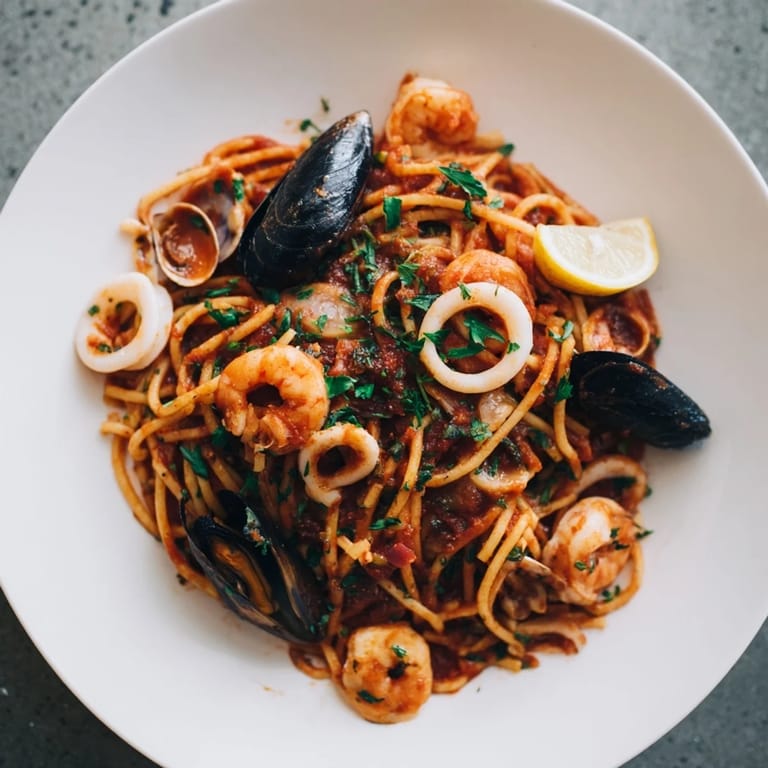
- Large shrimp, 200 g: Buy them the day of if possible, and peel them yourself—you'll taste the difference, and the shells make the sauce even better if you want to add seafood stock later.
- Mussels, 200 g: The fishmonger should clean and debeard them, but ask to smell them first—they should smell like the ocean, nothing off or sulfurous.
- Squid rings, 150 g: These stay tender if you don't overcook them; they'll add a delicate chew and absorb the sauce beautifully.
- Sea scallops, 150 g: Pat them dry before cooking or they'll steam instead of sear—a small trick that makes a surprising difference.
- Spaghetti or linguine, 350 g: I prefer linguine for how it holds the sauce, but spaghetti works just as well.
- Olive oil, 2 tbsp: Use something you actually like; it's in the background but it's there.
- Onion, 1 small: Finely chopped so it almost dissolves into the sauce and becomes sweetness.
- Garlic cloves, 3: Minced small—you want them to flavor the oil before the tomatoes go in.
- Red pepper flakes, 1/2 tsp: Optional but worth it; they give the sauce a little backbone.
- Canned crushed tomatoes, 800 g: San Marzano if you can get them, though any quality brand will do—the tomato is doing half the work here.
- Tomato paste, 2 tbsp: Don't skip it; it deepens everything in a quiet way.
- Dry white wine, 100 ml: Something you'd drink, not cooking wine—it should taste bright and a little crisp.
- Dried oregano and basil, 1 tsp each: These are your foundational flavors; taste as you go and adjust if your spices are older.
- Sugar, 1/2 tsp: Just enough to balance the acidity of the tomatoes, not to make it sweet.
- Sea salt and black pepper: Taste the sauce multiple times; your palate will tell you what it needs.
- Fresh parsley, 2 tbsp chopped: Add this at the very end so it stays bright and alive.
- Lemon wedges: For squeezing over everything at the table—this little touch pulls the whole dish together.
Tired of Takeout? 🥡
Get 10 meals you can make faster than delivery arrives. Seriously.
One email. No spam. Unsubscribe anytime.
Instructions
- Set the pasta water going:
- Fill a large pot with salted water—it should taste like the sea—and let it come to a rolling boil. This is your only chance to season the pasta itself, so don't skimp on the salt.
- Build your sauce foundation:
- In a large deep skillet, warm the olive oil over medium heat, then add the chopped onion. Let it soften for a couple of minutes until it becomes translucent and a little sweet. When you can smell the garlic starting to cook, you'll know you're ready for the next step.
- Add wine and let it breathe:
- Pour in the white wine and let it bubble away for a minute or two—this is where the sauce gets its brightness. You'll notice the smell changes, becomes a little sharper, which is exactly what you want.
- Bring in the tomatoes:
- Stir in the crushed tomatoes, tomato paste, oregano, basil, sugar, and a generous pinch of salt and pepper. The sauce will look bright red and a little loose—that's correct. Let it simmer gently, uncovered, for about ten minutes, stirring now and then.
- Cook the seafood with care:
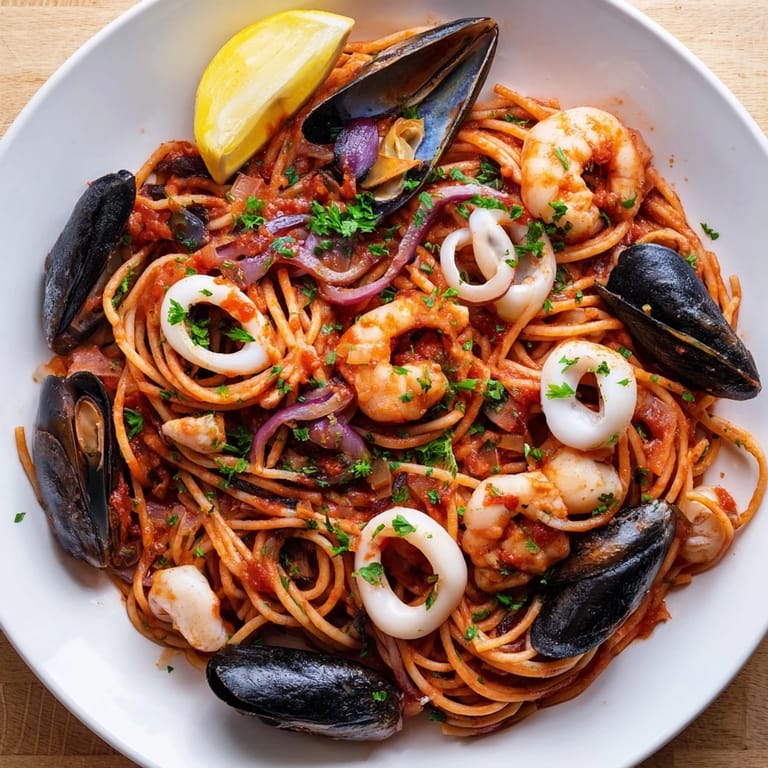
- Start with the squid rings and scallops, which need a couple of minutes in the sauce. Then add the shrimp and mussels, cover the skillet, and give them just enough time to cook through—the shrimp will turn pink and the mussels will open. Any mussels that stay closed should go straight to the trash.
- Bring pasta and sauce together:
- Drain the pasta, leaving it a little wet, and add it to the skillet. Toss everything gently together, adding a splash or two of that reserved pasta water if the sauce needs loosening—the starch will help it cling to the pasta.
- Finish and serve:
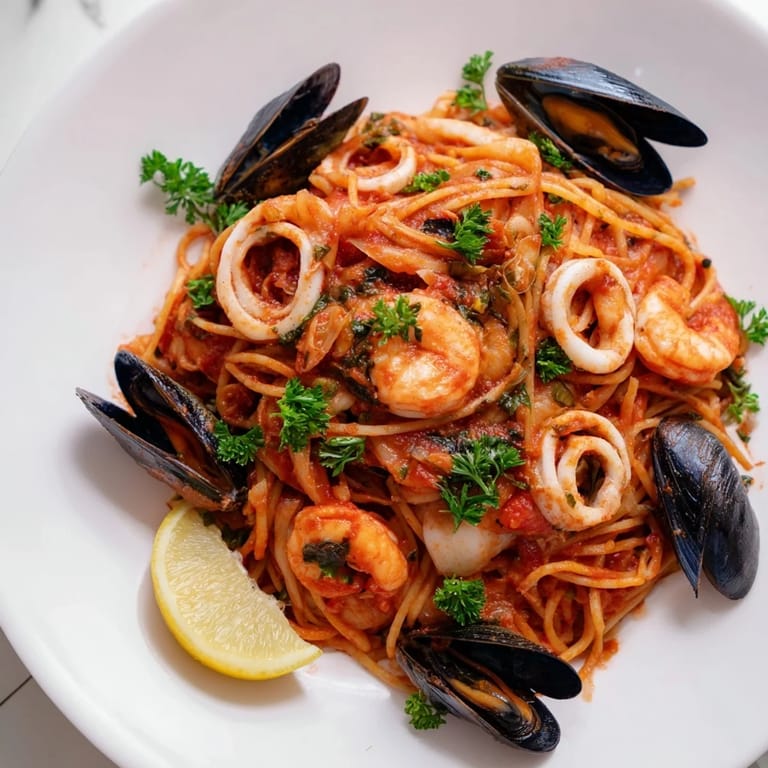
- Taste one more time for salt and pepper, scatter the fresh parsley over top, and serve immediately with lemon wedges. The whole thing comes together best when you eat it right away, while the pasta is still warm and the seafood is at its best.
 Pin it
 What struck me most about this dish was how it proved that simplicity and elegance aren't at odds with each other. The seafood, the tomato, the pasta—nothing fancy, but together they create something that tastes like you spent hours in the kitchen when really you were just paying attention.
The Gift of Good Seafood
Finding good seafood is half the battle, honestly. I've learned that the fishmonger is your friend, not just a transaction—they remember what you buy, they'll tell you what came in that day, and they'll clean and prep things the right way if you ask nicely. When you're cooking something this seafood-forward, that relationship and that quality matter in ways you'll taste immediately.
Timing Is Everything
This dish teaches you about the importance of having everything ready before you start cooking. The French call it mise en place, but what it really means is you get to enjoy the cooking instead of scrambling to peel shrimp while your sauce is bubbling away. I lay everything out—the cleaned seafood, the chopped parsley, the lemon wedges—and then I can actually be present in the cooking, noticing the smells and sounds.
The Small Details That Matter
I used to think seafood marinara was about technique, some secret thing I was missing, but it's really about respect for the ingredients and attention to detail. The way you mince the garlic, the moment you decide the sauce is ready, whether you let the wine really cook off or rush through it—these small things stack up and change everything.
- Taste the sauce throughout and adjust the seasoning as you go; your palate is the best guide you have.
- Reserve that pasta water before you drain—it's liquid gold for tightening or loosening the sauce as needed.
- Serve in warm bowls if you can; it keeps the pasta from cooling down too fast and losing its texture.
 Pin it
 This is the kind of dish that brings people to the table without pretense, where everyone's too busy eating and appreciating the food to worry about anything else. Make it whenever you want to feel a little closer to the ocean and to yourself.
Frequently Asked Questions
- → What types of seafood work best for this dish?
Large shrimp, mussels, squid rings, and sea scallops are ideal, offering a balanced variety of textures and flavors.
- → Can I substitute the pasta with gluten-free options?
Yes, gluten-free spaghetti or linguine can be used to accommodate dietary needs while maintaining the dish’s texture.
- → How do I ensure the seafood is perfectly cooked?
Simmer squid and scallops briefly first, then add shrimp and mussels, cooking until shrimp turn pink and mussels open.
- → What is the role of white wine in the sauce?
The white wine adds acidity and depth, enhancing the tomato base and complementing the seafood’s natural flavors.
- → Can this dish be prepared ahead of time?
It's best enjoyed fresh to preserve seafood texture, but the sauce can be made in advance and combined just before serving.