 Save
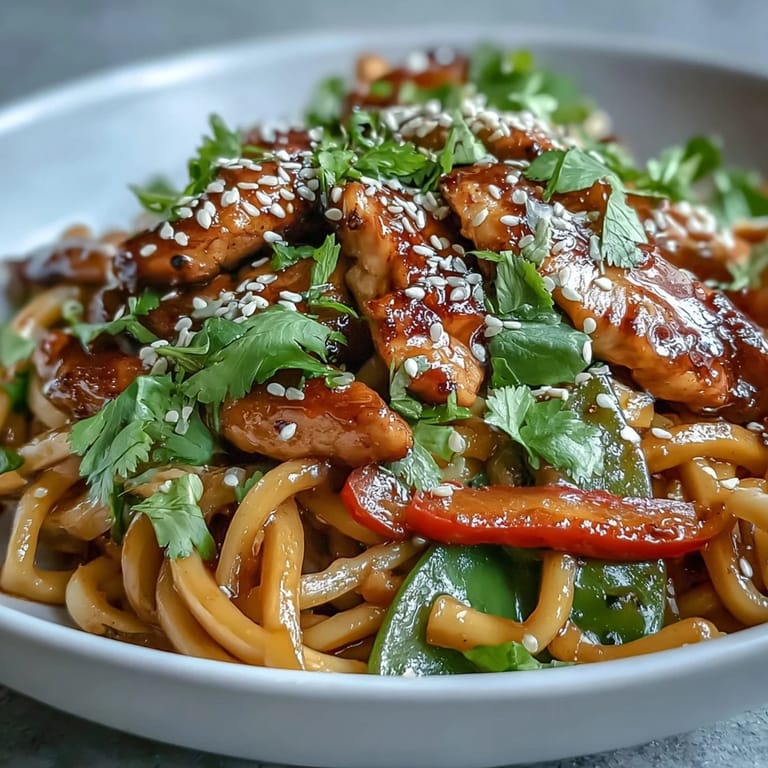
Save There's something about the smell of sesame oil hitting a hot pan that makes you stop whatever you're doing and pay attention. I discovered this bowl on a Tuesday evening when I was tired of the same rotation and decided to throw together what I had—chicken, noodles, and a sauce that came together in minutes but tasted like I'd been planning it all week. My roommate wandered into the kitchen halfway through, drawn by the aroma, and by the time I finished tossing everything together, she was already reaching for a bowl. That's when I knew this recipe had staying power.
I made this for my friend Maya on a rainy Sunday afternoon when she was dealing with one of those weeks where everything felt heavy. We chopped vegetables while talking through her frustrations, and somewhere between slicing the peppers and tossing the noodles, the conversation shifted. By the time we sat down with steaming bowls, she was laughing about something that seemed impossible just hours before. Food doesn't fix things, but somehow sharing it together makes the weight feel a little lighter.
Ingredients
- Chicken breast or thighs: Thighs are more forgiving if you're nervous about drying them out, but breasts work beautifully when sliced thin—the key is even thickness so everything cooks at the same speed.
- Udon, soba, or rice noodles: I've used all three, and they each bring their own character; udon is chewy and substantial, soba is delicate, rice noodles are light and slippery.
- Red bell pepper: The sweetness cuts through the umami beautifully, and the color makes the bowl feel alive.
- Carrot: Julienned means thin matchsticks—this matters because they'll cook gently during the stir-fry and stay crisp.
- Sugar snap peas: These stay crisp even when cooked, which is exactly what you want; regular snap peas work too if that's what's in your crisper.
- Spring onions: Added at the end so they keep their bite and brightness.
- Low-sodium soy sauce: The low-sodium version lets you control the salt level, which matters more than you'd think.
- Brown sugar: It dissolves faster than regular sugar and adds a subtle molasses depth to the sauce.
- Toasted sesame oil: Never skip the toasted version—regular sesame oil is pale and mild by comparison, and this sauce needs that dark, nutty intensity.
- Rice vinegar: The acidity brightens everything without being aggressive; white vinegar would be too harsh.
- Fresh ginger: Grated, not minced—the texture matters and it distributes more evenly through the sauce.
- Garlic: Minced as fine as you can manage without a food processor.
- Cornstarch: Optional but worth it if you like a glossy, clinging sauce rather than something runny.
- Toasted sesame seeds: The garnish that makes people think you know what you're doing.
- Fresh coriander or cilantro: A handful scattered over the top adds freshness that cuts through the richness.
Tired of Takeout? 🥡
Get 10 meals you can make faster than delivery arrives. Seriously.
One email. No spam. Unsubscribe anytime.
Instructions
- Start your noodles first:
- Get water boiling and cook according to package directions—this is your foundation and should be done before you touch anything else. Drain and rinse with cold water so they don't stick together, then set them aside and forget about them for now.
- Whisk your sauce while water boils:
- Combine soy sauce, brown sugar, sesame oil, rice vinegar, ginger, and garlic in a small bowl and stir until the sugar dissolves. If you're using cornstarch, mix it with a tablespoon of water first so it doesn't clump, then whisk it in.
- Heat your pan until it's almost smoking:
- A large skillet or wok over medium-high heat with a splash of oil—this is non-negotiable for getting the chicken to brown properly. You'll know it's ready when the oil shimmers and moves easily across the surface.
- Cook the chicken until golden:
- Add sliced chicken and resist the urge to stir constantly; let it sit for a minute or two so it develops color on one side, then toss and cook until cooked through, about four to five minutes total. It should smell incredible by now.
- Set chicken aside and stir-fry vegetables:
- Add a little more oil if the pan looks dry, then add bell pepper, carrot, and snap peas. Stir-fry for two to three minutes until they're tender but still have some snap when you bite them—this is the difference between a great bowl and a mushy one.
- Bring everything back together:
- Return the chicken to the pan, pour in your sauce, and toss everything to coat evenly. Simmer for a minute or two until the sauce thickens slightly and clings to everything beautifully.
- Add noodles and spring onions and finish:
- Toss the cooked noodles and sliced spring onions into the pan and stir until everything is hot and combined. The residual heat will warm the noodles through without cooking them further.
- Divide into bowls and garnish:
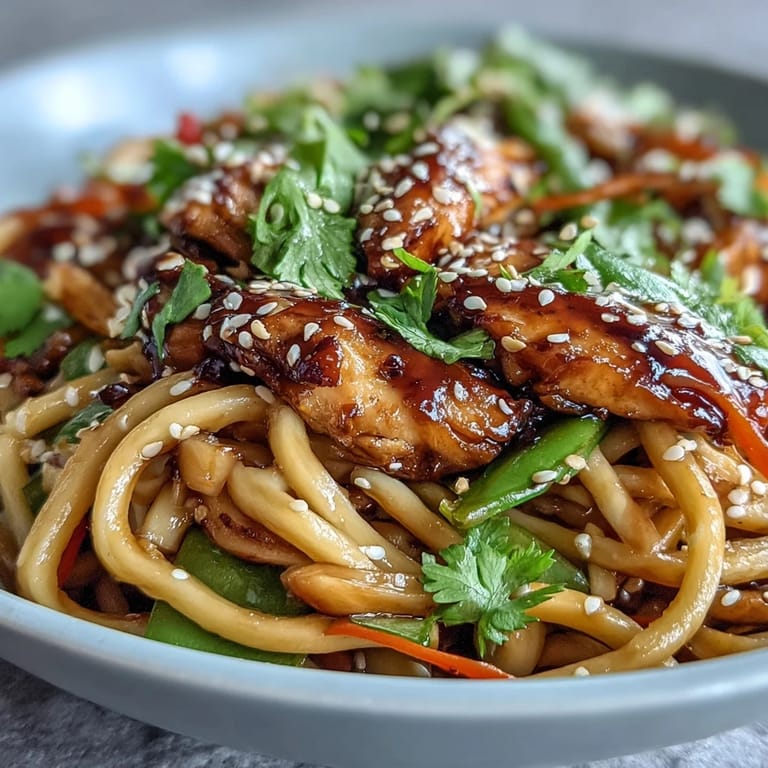
- Sprinkle each bowl generously with toasted sesame seeds and fresh cilantro, and add a lime wedge for squeezing if you like that brightness.
 Pin it
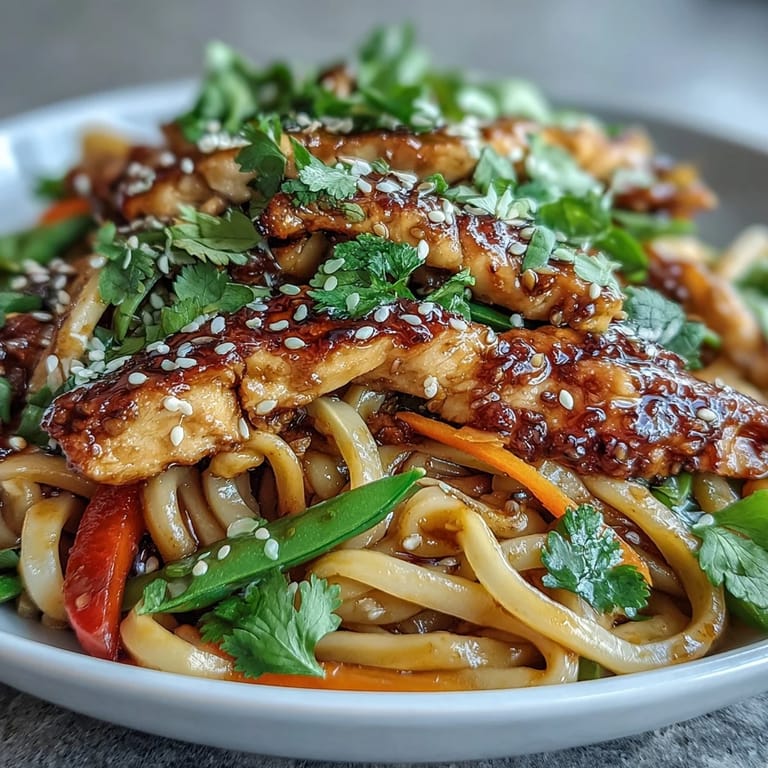
 My partner took one bite and looked up at me with genuine surprise, like she'd expected something competent but gotten something she actually wanted to eat again tomorrow. That's the moment when a recipe stops being instructions and becomes something that lives in your regular rotation.
The Sauce Is Everything
This sauce is where all the magic happens, and it's worth taking thirty seconds to understand why it works. The soy sauce brings umami, the brown sugar adds sweetness and depth, the sesame oil contributes that toasted nuttiness that makes people lean in closer to their bowl, and the ginger-garlic combination gives it backbone. The rice vinegar isn't there to make it sour; it's there to brighten everything and balance the sweetness. When these four components are in harmony, people don't taste individual flavors—they taste something they can't quite name but absolutely want more of.
Building Your Vegetable Game
The vegetables aren't afterthought garnish here; they're essential texture and flavor partners. Red bell pepper adds natural sweetness and looks beautiful in the bowl, carrots bring earthy sweetness and a satisfying bite, snap peas stay crisp even with a gentle stir-fry, and spring onions added at the end preserve that bright, sharp quality. The combination of these four means you get sweetness, earthiness, crunch, and freshness all in one bite, which is why it doesn't feel like you're eating health food even though it actually is.
Customizing Without Losing the Soul
This bowl is flexible enough to accommodate what you have on hand without falling apart. Broccoli, mushrooms, baby corn, or even cashews will work beautifully if red pepper doesn't speak to you. For protein, tofu soaks up the sauce wonderfully if you're going vegetarian, or shrimp if you want something lighter. You can adjust the sweetness by increasing or decreasing the brown sugar, add chili flakes if heat appeals to you, or a splash of lime juice if you want brightness.
- The fundamentals—noodles, sauce, protein, vegetables—must stay present or you lose what makes this work.
- Toast your sesame seeds in a dry pan for thirty seconds before garnishing; it's an extra step that makes a noticeable difference in flavor.
- Lime wedges are optional but recommended, because squeezing them over the top adds brightness that rounds everything out perfectly.
 Pin it
 This bowl has become my answer to hungry people at my table and my own question about what to make when I want something that feels special without drama. It's earned a permanent spot in my weeknight rotation, and I think it will in yours too.
Frequently Asked Questions
- → What type of noodles work best for sesame chicken bowls?
Udon noodles offer a satisfying chewiness that holds up well in stir-fries, while soba provides a nutty buckwheat flavor that complements sesame. Rice noodles work beautifully for a lighter, gluten-free option. Cook noodles al dente since they'll absorb sauce when tossed with the chicken and vegetables.
- → Can I make the sesame sauce ahead of time?
Yes, whisk together the soy sauce, brown sugar, sesame oil, rice vinegar, ginger, garlic, and cornstarch up to 3 days in advance. Store in an airtight container in the refrigerator. The flavors actually meld and improve over time. Give it a good stir before using since the sugar may settle at the bottom.
- → How do I prevent the chicken from drying out during stir-frying?
Slice the chicken thinly against the grain, which shortens muscle fibers for more tender results. Heat your pan thoroughly before adding oil and chicken, leaving space between pieces so they sear rather than steam. Avoid overcrowding the pan—cook in batches if needed. Remove chicken as soon as it's browned and cooked through, about 4–5 minutes.
- → What vegetables can I add to customize this bowl?
Broccoli florets, shiitake mushrooms, sliced bok choy, or shredded cabbage all work wonderfully. Consider adding baby corn, snow peas, or sliced water chestnuts for extra crunch. For greens, baby spinach or Swiss chard can be stirred in at the end until just wilted. Adjust cooking times so vegetables remain crisp-tender.
- → How can I adjust the sauce for different flavor preferences?
Reduce the brown sugar for a more savory profile, or increase it for a sweeter glaze. Add sriracha, chili garlic sauce, or red pepper flakes for heat. Extra rice vinegar brightens the sauce, while more sesame oil intensifies the nutty flavor. For a thicker coating, increase the cornstarch to 2 teaspoons dissolved in the sauce before adding to the pan.
- → Is this dish suitable for meal prep?
Absolutely. Portion the cooked sesame chicken noodles into individual airtight containers and refrigerate for up to 4 days. The noodles will absorb more sauce over time, which many people enjoy. For best texture, store garnishes like sesame seeds, fresh coriander, and lime wedges separately and add just before serving. Reheat gently in the microwave or a warm skillet.