 Save
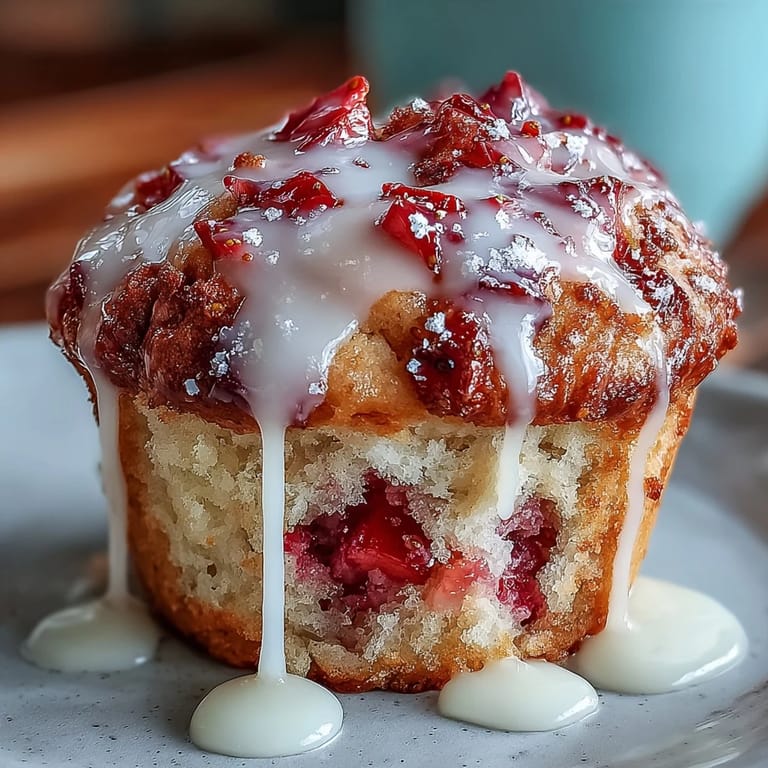
Save My neighbor dropped off a punnet of strawberries one June morning, fresh from her garden with soil still clinging to the stems. I had no real plan for them, but the smell alone pulled me toward my kitchen. By noon, I'd whipped up a batch of these muffins—tender, studded with ruby fruit, and finished with a glaze so bright it tasted like spring itself. That first muffin, still warm, taught me something simple: the best breakfasts are born from spontaneous generosity.
I baked these for a small book club gathering on a rainy afternoon, worried the gray weather outside might match everyone's mood. But the moment people bit into them, shoulders relaxed. One friend admitted she'd been having the worst week until she tasted that combination of tart glaze meeting tender crumb. There's something about a homemade muffin that feels like a quiet conversation when words aren't enough.
Ingredients
- All-purpose flour: This is your structure, so don't sift unless your flour has been sitting sealed for ages—a gentle stir in the bag is usually all you need.
- Granulated sugar: The sweetness foundation, though you can reduce it slightly if your strawberries are particularly sweet.
- Baking powder and baking soda: Together they create that tender crumb; too little and you get dense hockey pucks, too much and they taste metallic.
- Salt: A seemingly small detail that wakes up all the other flavors and keeps things from tasting flat.
- Vegetable oil: This keeps the muffins moist in a way butter can't—oil penetrates the crumb better than solid fat.
- Eggs: Two large ones are crucial for binding; if you only have medium eggs, add a third.
- Greek yogurt or sour cream: This is your secret weapon for moisture and subtle tang that balances sweetness.
- Milk: Just enough to thin the batter so it flows around the fruit without being soupy.
- Vanilla extract: A small touch that rounds out all the flavors without announcing itself.
- Fresh strawberries, diced: The star—use the ripest ones you can find, though slightly soft ones are actually preferable here since they won't fight you during folding.
- Lemon zest: Bright and essential, both in the batter and the glaze; a microplane does this better than a grater if you have one.
- Powdered sugar: For the glaze, sift it if it's clumpy to avoid a grainy finish.
- Fresh lemon juice: Use real lemons, not the bottled stuff, which tastes hollow by comparison.
Tired of Takeout? 🥡
Get 10 meals you can make faster than delivery arrives. Seriously.
One email. No spam. Unsubscribe anytime.
Instructions
- Heat your oven and prepare:
- Set your oven to 375°F and get your muffin tin lined—paper liners keep cleanup easy, but a light grease works too if you prefer a crispier exterior.
- Combine the dry ingredients:
- Whisk together flour, sugar, baking powder, baking soda, salt, and lemon zest in a large bowl, making sure the baking soda is evenly distributed or your muffins might rise unevenly.
- Mix the wet mixture:
- In another bowl, whisk oil, eggs, yogurt, milk, and vanilla until smooth and slightly frothy—this incorporates a little air that helps with rise.
- Bring them together gently:
- Pour the wet ingredients into the dry and stir just until the dry ingredients disappear; lumpy batter is your friend here, as overmixing develops gluten and makes muffins tough and tunneled.
- Fold in the strawberries:
- Use a spatula to gently fold in your diced berries, being careful not to crush them—you want little pockets of fruit, not strawberry paste.
- Fill the muffin cups:
- Divide batter evenly, filling each cup about two-thirds full; this gives them room to dome beautifully without spilling over.
- Bake until golden:
- Bake for 18 to 22 minutes, checking at 18 with a toothpick—it should come out clean or with just a few moist crumbs, not wet batter.
- Cool with patience:
- Let them sit in the pan for 5 minutes to set slightly, then turn them out onto a wire rack where air can circulate underneath.
- Make the glaze:
- Whisk powdered sugar with lemon juice and zest until smooth and pourable, adjusting liquid as needed—it should coat a spoon but still drip slightly.
- Finish with a drizzle:
- Once muffins are completely cool, drizzle the glaze over tops and let it set for a few minutes before serving.
 Pin it
 There was one morning when my daughter helped me bake these before school, and she insisted on tasting the raw batter (I know, I know, raw eggs, but she barely got a tiny spoonful before the lecture started). She declared it tasted like summer and asked if we could make them every weekend. We don't, because some things are special when they're occasional, but that moment—her flour-dusted face and pure joy—is what I remember most about these muffins.
The Strawberry Question
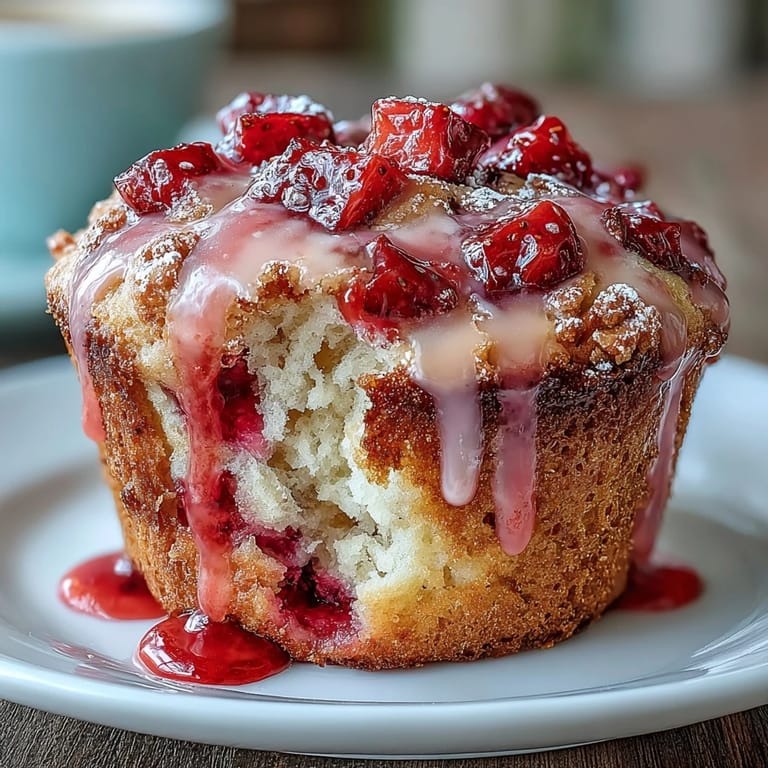
Fresh strawberries are non-negotiable here if you can find them, but I've made these in February with frozen berries that had been thawed and drained, and they were still delicious—just slightly less juice, which actually works in your favor. The thing about strawberries is they vary wildly in sweetness depending on the season and source, so taste yours before committing to the sugar amount. If they're particularly tart, add an extra tablespoon; if they're candy-sweet, you might reduce the sugar by a couple tablespoons.
Why Greek Yogurt Changes Everything
I once made these with regular sour cream and they were fine, but something felt missing—a slight heaviness, maybe. Then I switched to Greek yogurt and understood immediately: it's tangier, it's thicker, and it creates a more delicate crumb structure. The protein in Greek yogurt also helps stabilize the batter, which means less risk of the muffins sinking or becoming gummy. If you don't have Greek yogurt on hand, sour cream works beautifully too, though you might want to add an extra teaspoon of vanilla to lift the flavor.
Storage and Making Them Last
These muffins are best eaten the day you make them, but I've kept them in an airtight container at room temperature for three full days with no complaints. The glaze stays slightly tacky, which I actually prefer. If you want them to last longer, refrigerate after the second day—the cold doesn't dry them out as much as you'd think, especially with all that yogurt keeping things tender.
- Freeze unfrosted muffins in a zip-top bag for up to a month, then thaw at room temperature before glazing.
- You can also freeze the batter in muffin liners for up to two weeks, then bake directly from frozen, adding just a few extra minutes to the bake time.
- Make the glaze fresh the morning you plan to eat them for the brightest lemon flavor.
 Pin it
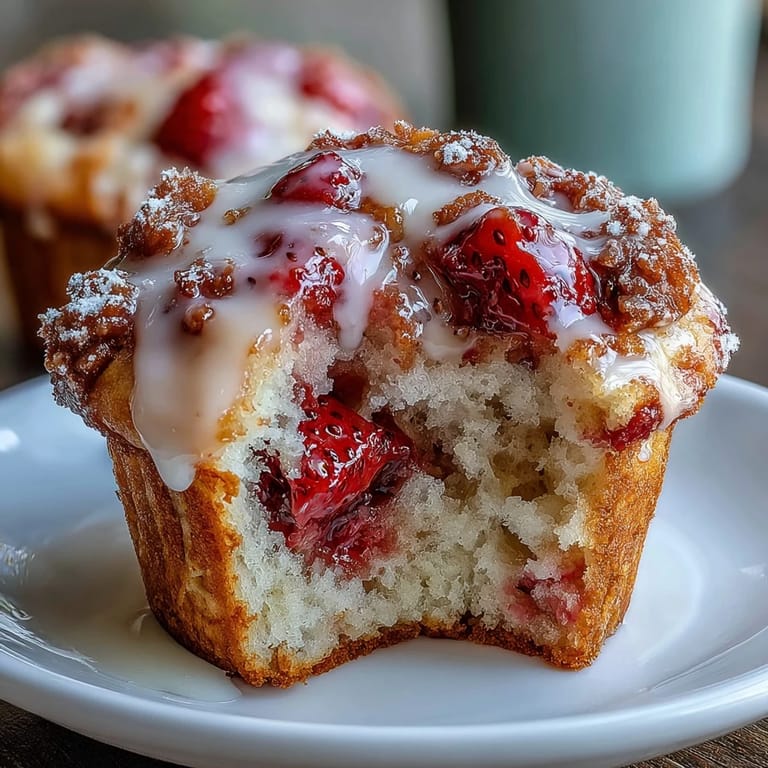
 These muffins became my answer to the question I get asked most often: what's an easy way to feel like you actually cooked something? They're proof that simple ingredients, treated gently, become something people remember. Make them once and you'll understand why.
Frequently Asked Questions
- → How do I keep the muffins moist?
Using Greek yogurt or sour cream in the batter adds moisture and tenderness, helping keep the muffins soft and fluffy.
- → Can I substitute the strawberries with other fruits?
Yes, fresh blueberries or raspberries work equally well, maintaining the moist texture and adding different flavor notes.
- → What is the purpose of lemon zest in the batter?
Lemon zest adds a subtle citrus brightness that complements the fruit and enhances the overall flavor profile.
- → How should I store the muffins for freshness?
Store the muffins in an airtight container at room temperature for up to 2 days or refrigerate to extend freshness.
- → Can nuts be added to this baked treat?
Yes, folding in chopped pecans or walnuts adds a pleasing crunch and additional texture variety.