 Save
Save The first time I made teriyaki chicken, I was standing in my kitchen on a Tuesday evening, the kind of day when everything felt rushed and my fridge was practically empty. I had chicken thighs, some soy sauce, and a vague memory of my neighbor raving about how she meal-prepped the same dish every Sunday. What started as desperation turned into something I've made nearly every week since—it's become my quiet ritual, the one dish that transforms a chaotic day into something that feels intentional and nourishing.
I remember bringing this to my partner's parents' house for Sunday dinner, nervous about bringing a rice bowl to a formal setting, but they ended up asking for the recipe before I'd even finished eating. There's something about how the glaze catches the light, how the smell of ginger and garlic fills the whole kitchen—it signals care without being pretentious.
Ingredients
- Chicken thighs: Use the thighs instead of breast meat; they stay juicy and forgiving, and honestly, they taste better than the lean stuff ever will.
- Soy sauce: Low-sodium is worth it because you're adding honey and other sweetness, and you want to taste the chicken, not just salt.
- Mirin: This sweet rice wine is the secret—it's what gives the sauce that glossy, restaurant-quality finish that makes people think you've been cooking all day.
- Rice vinegar: Just enough brightness to balance the sweetness so the whole thing doesn't tip into cloying.
- Cornstarch: This is what turns a thin sauce into that beautiful, clinging glaze that coats every piece.
- Jasmine rice: It's fragrant and absorbs the sauce beautifully, but short-grain works just as well if that's what you have.
- Fresh ginger and garlic: Never skip these; they're what make this taste like something real, not like you opened a bottle of bottled sauce.
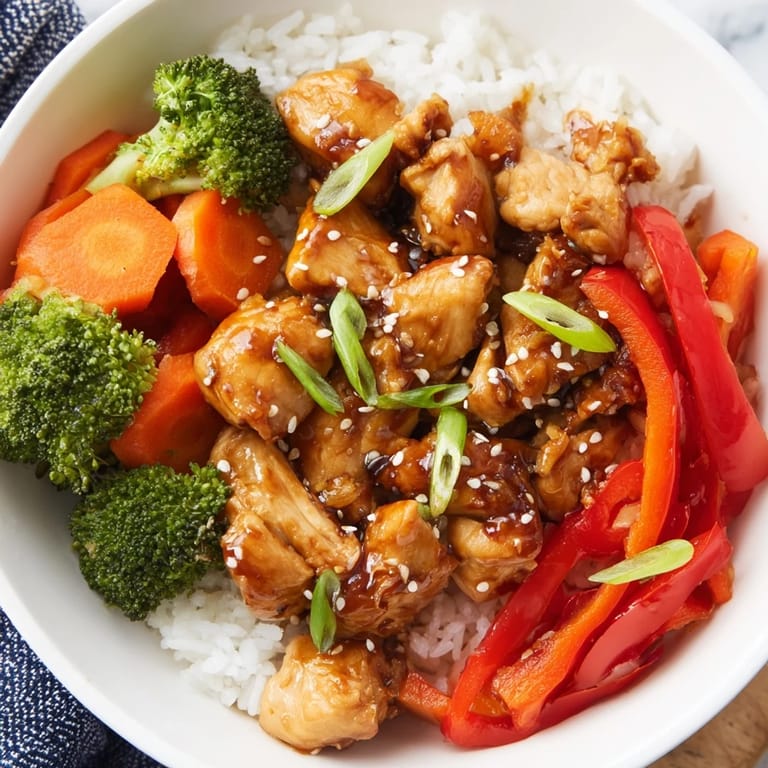
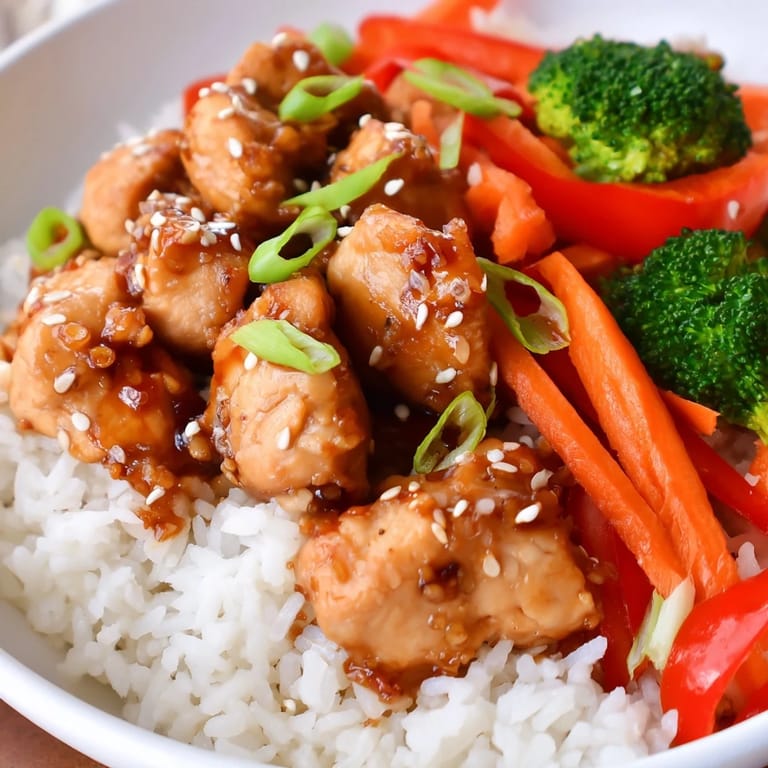
- Broccoli, carrots, bell pepper: These vegetables add texture and color, but more importantly, they soak up that incredible sauce and feel like you actually made a balanced meal.
Tired of Takeout? 🥡
Get 10 meals you can make faster than delivery arrives. Seriously.
One email. No spam. Unsubscribe anytime.
Instructions
- Prepare the rice foundation:
- Rinse your rice under cold water, rubbing it between your fingers—this removes the starch and gives you fluffier, separate grains. Bring it to a boil, cover, and let it simmer low for 12–15 minutes until the water's completely absorbed and it smells warm and toasted.
- Blanch the vegetables:
- While rice cooks, steam or blanch your vegetables for just 3–4 minutes—they should still have a slight bite to them because they'll soften a bit more when the hot sauce hits them. Don't overcook them into mush; texture matters here.
- Build the sauce:
- Whisk everything together in a small bowl: soy sauce, mirin, honey, rice vinegar, cornstarch, water, minced garlic, and fresh ginger. The cornstarch will make it slightly cloudy, which is exactly right.
- Cook the chicken golden:
- Sear the chicken:
- Heat oil in a skillet over medium-high heat until it shimmers, then add seasoned chicken pieces. Don't crowd the pan; let them sit undisturbed for 2 minutes per side so they actually brown instead of steam. You're looking for golden edges and meat that's cooked through, about 5–6 minutes total.
- Apply the glaze:
- Pour your sauce directly over the cooked chicken and stir constantly for 2–3 minutes. You'll see it thicken and cling to each piece like a glossy coating—this is the moment everything comes together. Taste it; this is when you adjust if it needs a touch more salt or brightness.
- Assemble for the week:
- Divide rice into four containers, top with chicken and vegetables, sprinkle with sesame seeds and spring onions if you're feeling fancy. Let it cool to room temperature before sealing so condensation doesn't make everything soggy.
 Pin it
 There's a moment every time I make this where I pull a container out of the fridge on a harried morning, pop it into the microwave, and within minutes I'm eating something that tastes intentional and nourishing—something that tells me I was thinking about myself even when I was in a rush. That shift from "I need to eat something" to "I have something delicious waiting" is worth every minute of prep.
Why This Works as Meal Prep
This recipe is practically designed for containers because the components stay distinct—the rice doesn't turn into mush, the vegetables keep their texture, and the sauce actually tastes better the next day after everything's had time to settle together. I've opened containers on day four that tasted as good as day one, which is honestly rare.
Customizing to Your Mood
The beauty of this is how flexible it is without losing what makes it special. Swap the chicken for salmon or tofu, throw in edamame or snap peas instead of bell pepper, add a drizzle of sriracha if you want heat—the sauce is forgiving enough to carry any of these changes. I've made it with whatever protein was on sale or whatever vegetables were about to go soft, and it's never disappointed.
Storage and Reheating
These containers keep for up to four days in the fridge, though honestly I rarely have any left by day three. When you're ready to eat, a quick 2–3 minutes in the microwave brings everything back to temperature without drying anything out. If you want to make it all on Sunday for the whole week, this is your recipe—it's literally built for that kind of life.
- Reheat straight from the fridge; no thawing needed, no complicated warming instructions.
- If you're at work without a microwave, it's actually delicious cold or at room temperature once you've had it for a day or two.
- Keep extra teriyaki sauce in a small jar if you're the type who likes to adjust the glaze when you eat—some days you want more, some days you don't.
 Pin it
 This recipe taught me that meal prep doesn't have to be boring or feel like punishment—it can be something you look forward to because what you've made is genuinely good. Every time I open one of those containers, it feels like a small gift to myself.
Frequently Asked Questions
- → How do I prevent the chicken from drying out?
Use boneless, skinless chicken thighs for juiciness and cook over medium-high heat until just done, then coat quickly with the sauce to retain moisture.
- → Can I use a different type of rice?
Yes, short-grain or jasmine rice works best, but you can substitute with brown rice; just adjust cooking times accordingly.
- → What vegetables pair well with this dish?
Broccoli, carrots, and bell peppers are classic choices that steam quickly and add vibrant color and texture.
- → How can I make this dish gluten-free?
Replace soy sauce with tamari or another gluten-free alternative to keep the flavors intact.
- → Is it possible to prepare this dish ahead of time?
Absolutely, it stores well in meal-prep containers for up to four days when refrigerated, making it convenient for busy schedules.