 Save
Save There's something about arranging food into a shape that makes people pause and really look at what they're about to eat. I discovered the Tudor Rose while browsing through a vintage dinner party handbook at an estate sale, tucked between notes about aspic molds and fondue pots. The simplicity stopped me cold—just salami and cheese, yet somehow elegant enough to make guests think you'd spent hours in the kitchen. I had to try it, and within minutes of assembling the first one on my kitchen counter, I understood why this appetizer has survived decades of culinary trends.
The first time I served these was at a casual dinner party that somehow turned into something more formal than planned. My friend Sarah arrived stressed from work, and watching her expression shift when she saw the little roses arranged on the board—that small moment of delight made the whole evening different. She took photos for her Instagram and kept calling them "genius," which felt ridiculous for something so effortless, but that's exactly what makes it perfect for any gathering where you want to feel composed and thoughtful.
Ingredients
- Salami slices: Choose slices about 6–8 cm across—thin enough to drape gracefully but sturdy enough to hold their shape as petals. Quality matters here; avoid the thinnest presliced stuff if you can, as it tears too easily when you're arranging.
- Yellow cheese: A small round slice of Gouda, Cheddar, or something similar works best. You want something with mild flavor that won't compete with the salami, and firm enough to sit prettily in the center without crumbling.
Tired of Takeout? 🥡
Get 10 meals you can make faster than delivery arrives. Seriously.
One email. No spam. Unsubscribe anytime.
Instructions
- Arrange your petals:
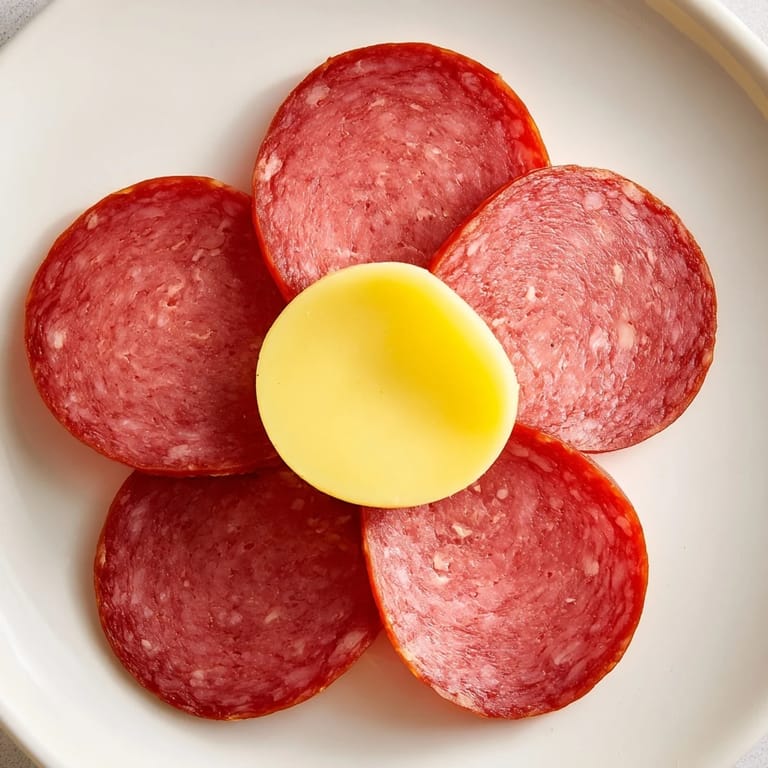
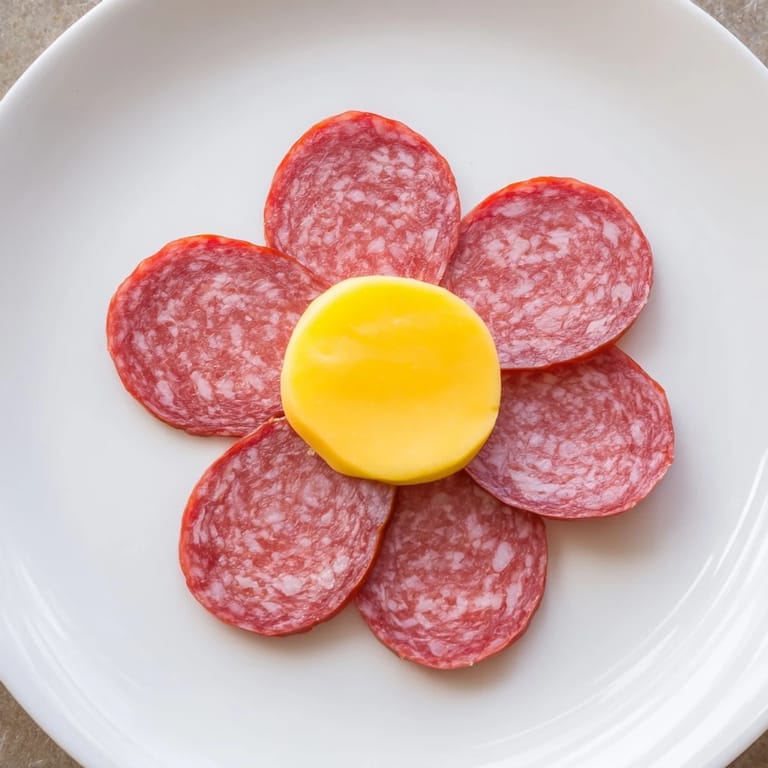
- Lay the five salami slices in a loose circle on your plate, overlapping each one slightly so they fan out like flower petals. Think of it as a gentle spiral—each slice should touch the center point but still have breathing room between the outer edges. The imperfection is what makes it look handmade and charming.
- Anchor with the button:
- Place the cheese round in the very middle where all those salami edges meet, pressing down just slightly so it anchors everything in place. If your cheese slice is thick, it naturally becomes the focal point; if it's thin, that's fine too—it just means the salami petals peek out a bit more.
- Perfect the symmetry:
- Step back and look at your rose from across the room. Adjust any petals that feel too bunched or awkwardly angled, but don't obsess—a little organic irregularity is more appealing than something that looks mathematically precise.
- Present immediately:
- Serve it fresh while the cheese is still at room temperature and the salami hasn't started to curl or wilt. These are best enjoyed within an hour of assembly, so time it right if you're building ahead for a party.
 Pin it
 One evening, my neighbor brought over her elderly mother-in-law, and I quickly assembled three of these roses as we waited for the main course. Watching her pick one up carefully, turn it around, and say "Now that's what I call pretty food" reminded me that sometimes the smallest efforts bring the biggest joy. It's not about complexity—it's about someone taking a moment to make something beautiful, even if it only takes ten minutes.
Visual Plating Magic
The Tudor Rose works because it plays with geometry and negative space in a way that feels intentional. When you place one on a slate board or white plate, the contrast makes it pop, and suddenly a humble appetizer looks like it belongs in a styled food magazine spread. I've learned that presentation is where you can inject personality without any real skill—just thoughtfulness about color, balance, and how light hits the arrangement.
Flavor Pairing Strategy
The salami brings salt and a whisper of spice, while the cheese provides a creamy, mild counterpoint. Together they're a classic duo that doesn't need much support, though context matters. Pair the rose with crusty bread, sharp crackers, or fresh fruit on the side to give guests options for how they want to experience it. I've found that offering a few contrasting textures nearby elevates the whole platter without adding complexity to the rose itself.
Building Your Charcuterie Moment
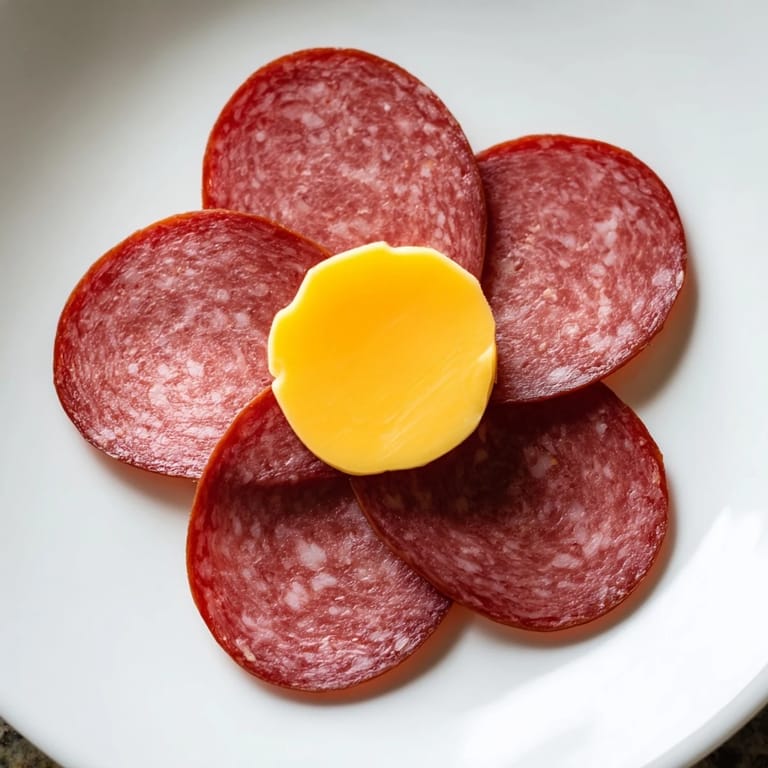
These roses anchor a charcuterie board because they signal care and creativity without hogging the spotlight. You can build an entire narrative around them—arrange three or four roses as focal points, then fill the negative space with nuts, dried fruit, olives, and bread. I learned this by accident when I made five roses for a holiday party and suddenly had created what looked like an intentional, curated spread instead of just a random collection of snacks.
- Make the roses first, then build the rest of the board around them as anchors.
- Use odd numbers of roses for better visual balance—three or five work better than four or six.
- Prepare everything else on the board before adding the roses so they stay fresh and picture-perfect until guests arrive.
 Pin it
 The Tudor Rose proved to me that elegance isn't about effort—it's about paying attention to small details and trusting that simplicity speaks louder than complexity. Every time I serve one, I think about how a little creativity and five minutes can completely change the way people perceive a meal.
Frequently Asked Questions
- → What types of cheese work best for the central piece?
Soft yet firm cheeses like Gouda or Cheddar provide the right texture and color for the centerpiece.
- → Can I substitute salami with other cured meats?
Yes, thin slices of prosciutto or pepperoni can create a similar floral effect with distinct flavors.
- → How do I ensure the floral shape stays symmetrical?
Arrange the salami slices slightly overlapping and evenly spaced in a circle, adjusting petals gently until the desired look is achieved.
- → Are there recommendations for serving accompaniments?
Pair with crackers, fresh bread, or garnish with herbs like basil or parsley for added color and texture.
- → Is this appetizer suitable for all diets?
It is naturally gluten-free but contains dairy and pork, so consider alternatives if needed.