 Save
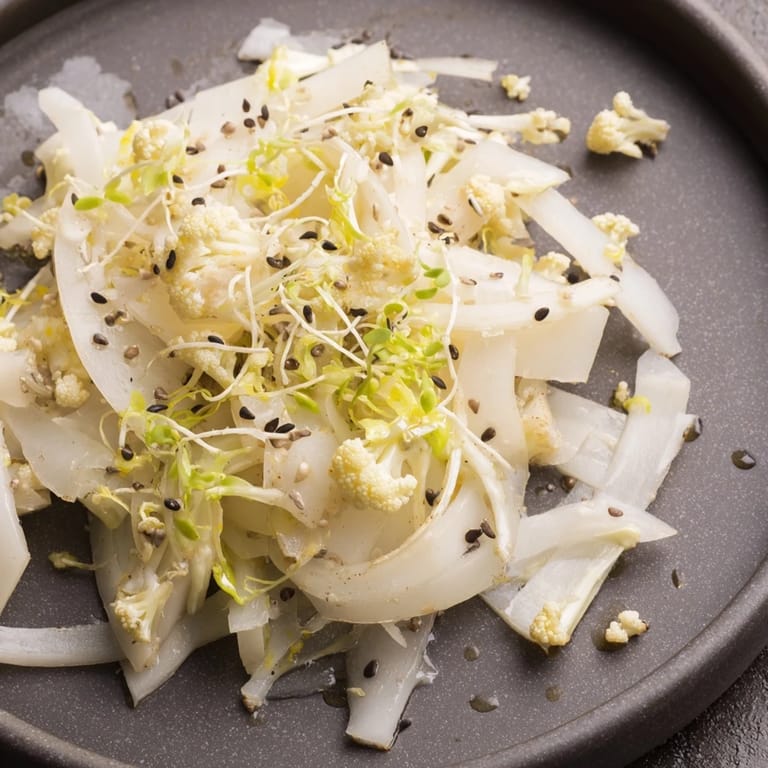
Save I stumbled onto this dish during a late winter evening when I was scrolling through images of the Arctic, utterly captivated by the vast, windswept landscapes of pale ice and sparse vegetation. Something about that stark minimalism made me want to recreate it on a plate—not as a photograph, but as something you could actually taste and feel the cold radiating from. That night, I raided my vegetable drawer for anything pale and crisp, and The Tundra Trek was born, a small act of culinary daydreaming that somehow felt both artistic and surprisingly simple to execute.
I made this for a small dinner party on a freezing February night, and I'll never forget watching my guests lean in, genuinely unsure whether to eat it or photograph it first. One friend said it tasted like what silence looks like, and I think that's exactly what I was going for—a plate that asks you to slow down and notice the subtle crunch of each vegetable, the whisper of coconut, the gentle warmth of the sesame.
Ingredients
- Daikon radish: This pale, crisp root is the backbone of the tundra landscape; slice it thin so it's delicate enough to eat without any resistance, and it stays cold remarkably well.
- Kohlrabi: A subtle, almost cabbage-like vegetable that adds textural variety without overpowering the dish; the pale green variety keeps the color palette cohesive.
- Belgian endive: Its natural leaves become your canvas for the other elements; they're slightly bitter and refreshingly sturdy when chilled.
- Cauliflower florets: Finely chopped into small pieces so they almost disappear into the landscape, lending a faint earthiness and visual texture.
- Coconut flakes: Unsweetened is essential—sweetened flakes would completely change the delicate balance and make this feel like dessert instead of an elegant opener.
- White and black sesame seeds: Toast the white ones lightly to wake up their flavor; the contrast of black against the pale vegetables is what makes this visually striking.
- Microgreens: Pea shoots and radish sprouts both work beautifully; they're added at the very last moment to preserve their delicate structure and peppery snap.
- Flaky sea salt: This is your seasoning and a final textural element; regular table salt dissolves too quickly and doesn't have the same presence.
- Extra-virgin olive oil: Use something you genuinely enjoy tasting, as it's one of the few elements that isn't masked by other flavors.
- Lemon juice and white wine vinegar: Together they create a brightness without overwhelming the subtle vegetables; the combination is lighter than either alone would be.
- White pepper: It has a softer heat than black pepper and doesn't create dark specks that would interrupt the pale aesthetic.
Tired of Takeout? 🥡
Get 10 meals you can make faster than delivery arrives. Seriously.
One email. No spam. Unsubscribe anytime.
Instructions
- Chill your canvas:
- Pop that stone or marble platter into the freezer for 15 minutes—this keeps everything cold as you assemble and serves as a beautiful, unexpected touch when your guests' warm hands encounter the icy surface. The cold is part of the experience.
- Build your dressing:
- Whisk together the oil, lemon juice, vinegar, and white pepper in a small bowl, tasting as you go to make sure the acid is bright but not sharp. This simple dressing should taste clean and almost imperceptible, like mist rather than a sauce.
- Create the landscape:
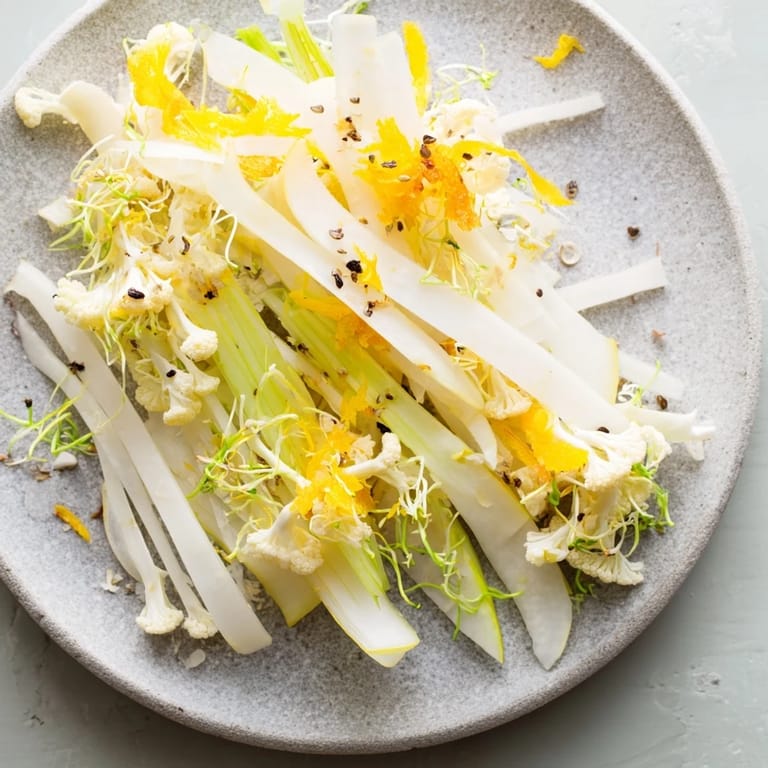
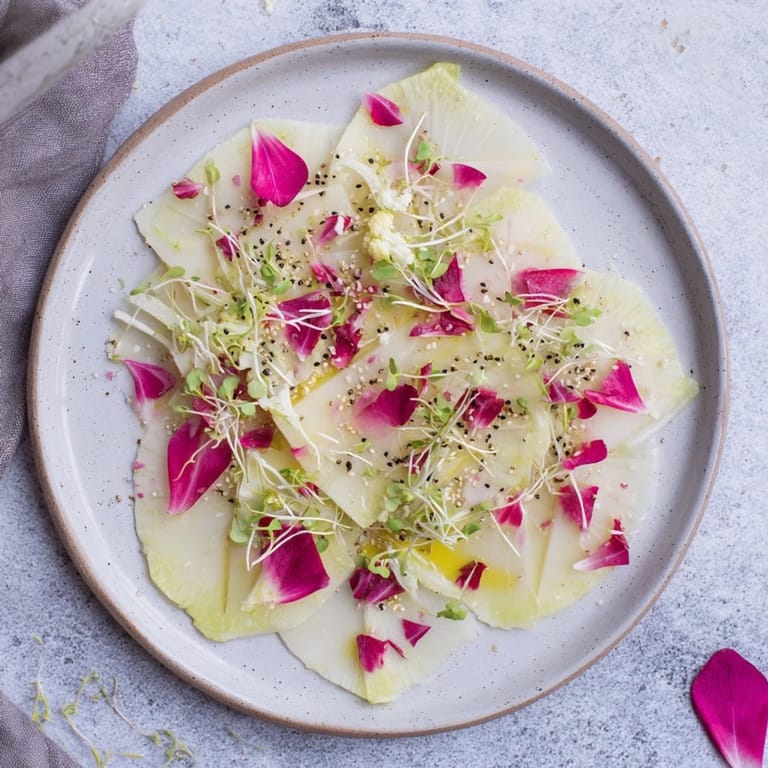
- Remove the chilled platter from the freezer and begin arranging your daikon and kohlrabi slices with intention but without precision—think scattered, sparse, as if wind has blown them into place. Leave generous empty space; this isn't a crowded dish.
- Layer the details:
- Tuck Belgian endive leaves among the sliced vegetables, then scatter the finely chopped cauliflower, coconut flakes, and both sesame seeds with a light hand, creating pockets of texture rather than even coverage. Step back and look at it from above to see if it feels balanced.
- Anoint with care:
- Drizzle the dressing lightly across the arrangement with a spoon or brush—you want to coat the vegetables without pooling, so they stay crisp rather than wilting. Every vegetable should be kissed by the dressing, not soaked.
- The final touch:
- Just before you bring it to the table, scatter the microgreens across the top and add a pinch or two of flaky sea salt, allowing each guest to see the complete dish in its fresh state. Serve immediately while everything is still cold and the textures are at their peak.
 Pin it
 What moved me most about this dish was realizing that minimalism in cooking isn't about deprivation—it's about clarity. Each element gets its moment to shine, and nothing is lost in translation or overwhelmed by competing flavors. It became a favorite because it proved that elegance and simplicity are sometimes the same thing.
A Philosophy of Negative Space
The Tundra Trek taught me that some of the most memorable dishes aren't about what you put on the plate, but what you leave off it. That empty space around each ingredient forces you to really look at what you're eating, to notice the subtle variations in color and texture that you might normally overlook. It's the culinary equivalent of a haiku—every element must earn its place, and restraint becomes its own kind of generosity.
Pairing and Presentation
This is the kind of dish that deserves a moment of ceremony. Bring it to the table on its chilled stone, let people admire it before anyone takes a bite, and watch how differently they approach it than they would a typical salad. The visual beauty changes how the palate receives the flavors, making the subtle sweetness of the daikon and the faint bitterness of the endive feel like discoveries rather than ingredients.
Making It Your Own
Once you understand the principle—pale vegetables, cold temperature, delicate dressing, artistic arrangement—this dish becomes a template rather than a rule. I've played with different pale vegetables depending on the season, experimented with yuzu juice or rice vinegar for the dressing, and even added thin slices of radish for a peppery kick. The core idea is flexible enough to grow with your mood and what your market offers.
- For added richness, scatter a few delicate flakes of smoked whitefish or chilled poached shrimp across the top.
- Try yuzu juice or rice vinegar if you want the dressing to carry more personality or align with a different culinary tradition.
- Chill a bottle of aquavit or a dry white wine to complement the Nordic-inspired aesthetic and the cool, clean flavors on the plate.
 Pin it
 The Tundra Trek is proof that sometimes the most striking dishes whisper instead of shout. Serve it to people who appreciate subtlety, and watch it become a conversation about flavor, texture, and the unexpected beauty of restraint.
Frequently Asked Questions
- → What vegetables create the main base of this dish?
The core vegetables include thinly sliced daikon radish, kohlrabi, and separated Belgian endive leaves, complemented by finely chopped cauliflower florets.
- → How is the dressing prepared for this plate?
A simple blend of extra-virgin olive oil, fresh lemon juice, white wine vinegar, and white pepper is whisked together to dress the ingredients lightly.
- → Why is the serving plate chilled before assembly?
Chilling the stone or marble platter enhances the crispness and freshness of the vegetables while evoking a cool, windswept tundra atmosphere.
- → Which accents add texture and visual interest?
Toasted white and black sesame seeds, unsweetened coconut flakes, and fresh microgreens provide layered textures and subtle flavor notes.
- → Are there suggested ingredient variations?
Yuzu juice or rice vinegar can replace lemon and wine vinegar for a different acidity profile; smoked whitefish or chilled shrimp can add protein for non-vegetarian versions.