 Save
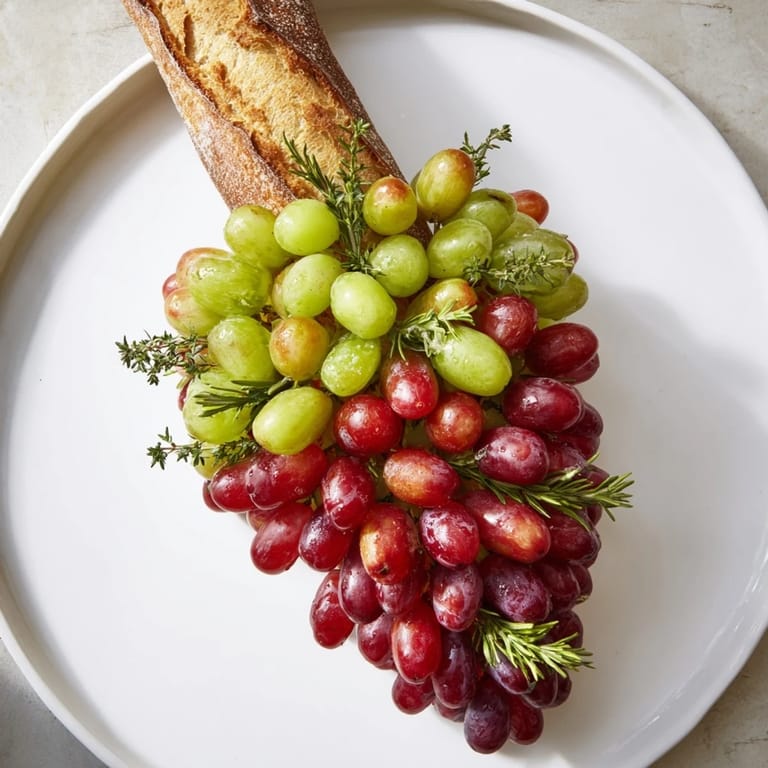
Save I'll never forget the first time I saw a Vineyard Grape Cluster Drop at a wine tasting in Sonoma. It sat there on a wooden board, cascading like nature's own artwork—hundreds of glossy grapes tumbling down in a perfect teardrop shape, crowned with a rustic breadstick stem. I remember thinking, 'Someone made this look effortless, but there's real intention in every cluster.' That moment changed how I think about appetizers. It taught me that food doesn't need to be complicated to be memorable; sometimes the most elegant dishes are just fruit, bread, and a little patience arranged with love.
I made this for my sister's engagement party last spring, and I watched her face light up when she walked into the kitchen. She pulled a green grape off the top cluster, bit into it, and said, 'You made this look like a work of art.' That's when I realized this dish isn't really about grapes at all—it's about creating a moment where people feel celebrated before they even take a bite.
Ingredients
- 600 g seedless green grapes: These are the backbone of your cluster, and I've learned that green grapes stay crispest when chilled right up until serving. They're slightly tartier than red grapes, which balances beautifully against bread or salami
- 600 g seedless red or black grapes: The visual contrast makes the whole arrangement pop—I like to alternate colors in gentle waves down the cluster for maximum drama
- 1 rustic baguette or 10–12 breadsticks: The stem is your anchor. A real baguette with a good crust works beautifully cut at an angle, but breadsticks give you more control and look more grapevine-like if you're going for authenticity
- 150 g thin salami sticks (optional stem): If you go the salami route, choose something elegant and thinly sliced—it should look intentional, not haphazard. Italian grissini-wrapped salami is perfect because it already has that grapevine structure built in
- Fresh herbs for garnish: A few sprigs of thyme or rosemary tucked around the base add aroma and realism. Grape leaves are the ultimate touch if you can find them—they'll make people smile at the authenticity
Tired of Takeout? 🥡
Get 10 meals you can make faster than delivery arrives. Seriously.
One email. No spam. Unsubscribe anytime.
Instructions
- Prepare your grapes with intention:
- Wash each grape cluster under cool running water—this is meditative work. Dry them thoroughly with a soft kitchen towel; any moisture will make them slip around later. As you work, try to keep small clusters of 3–5 grapes still attached to their stems where possible. These little branching clusters become the texture that makes your arrangement look alive, not constructed
- Build your teardrop shape:
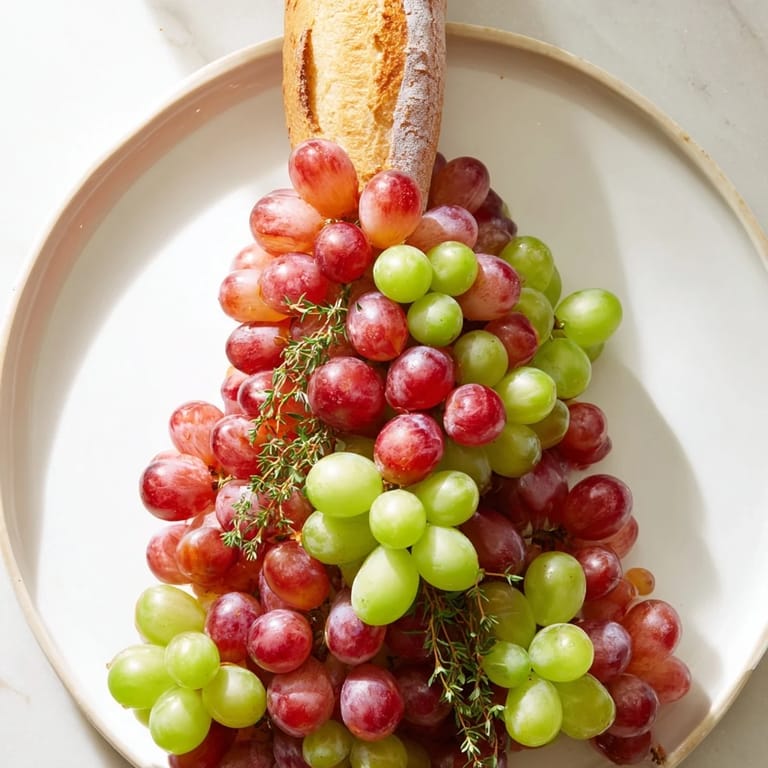
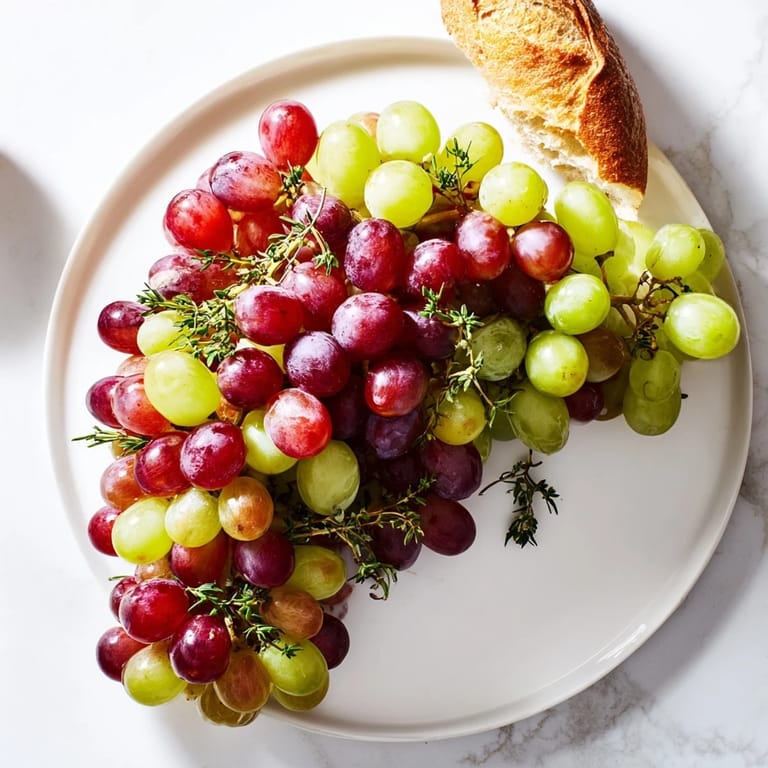
- This is where the magic happens. On your largest platter or wooden board, start arranging grapes in a wide, generous base—imagine an upside-down teardrop pointing toward the sky. Pack them tightly, alternating colors as you spiral upward. I work in rings, starting at the outer edge and spiraling inward and upward. It takes patience, but the finished shape is worth every moment
- Crown it with your stem:
- At the narrow top of your cluster, where the teardrop comes to a point, position your baguette (cut at an angle if it feels right) or arrange your breadsticks and salami like they're emerging from the grapes. This is where you can get creative—overlap them slightly, angle them, make them look natural and organic, like they grew there
- Tuck in your garnish:
- Now take those herb sprigs or grape leaves and nestle them around the base where the grapes meet the stem. This isn't just decoration—it grounds the whole sculpture and adds a whisper of aroma that guests will catch as they lean in
- Release it into the world:
- Step back and look at what you've made. Serve immediately, and trust that your guests will know instinctively how to eat it—they'll pull grapes, tear bread, maybe wrap a piece of salami around a grape. Let them discover the joy of it
 Pin it
 At my friend Marcus's wedding, someone's grandmother stood in front of the Vineyard Grape Cluster Drop for nearly five minutes without touching it, just looking. When I asked if she was okay, she said, 'I'm waiting for the right moment to break the spell.' That's when I understood—this dish is about more than hunger. It's about creating something beautiful that people feel a little honored to dismantle and share.
The Art of the Arrangement
I've made this dozens of times now, and I've learned that the magic is in the details. The cluster should be tight, almost too tight, with no gaps showing the platter beneath. Start with your largest grapes at the bottom and work up to slightly smaller ones as you taper toward the stem. This creates a natural visual flow. If you're using both colors, don't scatter them randomly—think about how you want to see them merge. Some people do strict alternating rows, but I prefer gentle swirls of color that feel more organic and less contrived. The goal is to look effortless, even though you've been deliberate about every single grape.
Choosing Your Stem Wisely
The stem choice completely changes the personality of this dish. A whole baguette, cut at an angle, says 'rustic elegance'—it's what you reach for when you want something that feels European and refined. Breadsticks are the playful choice, especially if you use them to create a little sheaf of stems at the top. And salami? That's for the savory-first crowd, the people who sneak a piece before anyone else. There's no wrong choice; it's about what story you want to tell about your gathering.
Pairing and Presentation Magic
A crisp white wine or sparkling rosé will make everyone taste both the grape and the drink as one experience. Serve this as a centerpiece that guests can graze from, and watch how it becomes a conversation piece. For a gluten-free version, skip the bread entirely and use only salami stems, or find good quality gluten-free breadsticks. If you want to add intrigue, tuck small cubes of aged manchego or sharp cheddar among the grapes, or add a small handful of toasted almonds scattered through the cluster.
- Keep the board or platter at room temperature, but chill the grapes until the last moment before serving
- If you're making this more than an hour ahead, cover it loosely with plastic wrap and refrigerate, then bring it out 10 minutes before guests arrive
- The beauty of this dish is that it lasts—even if you make it early, the grapes stay fresh and the bread stays crisp enough to enjoy
 Pin it
 Every time I make this, I'm reminded that the simplest ingredients, arranged with a little love and intention, can become something that people remember long after they've eaten. That's the real recipe here.
Frequently Asked Questions
- → How do I maintain the freshness of the grapes?
Wash and dry grapes thoroughly before arranging to prevent moisture buildup that can cause spoilage.
- → What types of grapes work best?
Use seedless green and red or black grapes for variety in color and texture.
- → Can I substitute the stem with other ingredients?
Yes, the stem can be made from rustic bread, breadsticks, or thin salami to suit dietary preferences.
- → How can I add more visual appeal?
Intersperse fresh herbs or grape leaves and consider alternating grape colors for contrast.
- → What serving suggestions complement this cluster?
Pair with crisp white wine or sparkling rosé and consider adding cheese cubes or nuts among the grapes.