 Save
Save My sister called me in a panic two days before Mother's Day—she'd promised mom a homemade cake but had zero baking confidence. I talked her through making this vanilla sponge while she sat on her kitchen counter, flour dusting her jeans, and something magical happened: by the time we got to the pink ombre buttercream, she was laughing instead of stressed. That cake became the centerpiece of our family brunch, and mom cried happy tears before we even cut into it.
I'll never forget watching my friend frost this cake at 11 PM the night before her mother's birthday, humming along to the radio, completely in her zone. The buttercream caught the kitchen light differently with each shade of pink she mixed, and she kept stepping back to admire it like she was revealing a secret. When her mom walked in the next morning and saw it sitting there, the first thing she did was take a photo—that's when I knew this recipe was more than just dessert.
Ingredients
- All-purpose flour (2 ½ cups / 315 g): Sifting it with baking powder and salt prevents lumps that could sink your crumb structure.
- Baking powder (2 ½ tsp): This gives your layers that gentle rise without overdoing it—crucial for keeping them tender.
- Salt (½ tsp): Just enough to wake up the vanilla and butter flavors without tasting salty.
- Unsalted butter, room temperature (1 cup / 230 g for cake, 1 ½ cups / 340 g for frosting): Cold butter won't cream properly, so pull it out an hour before you start.
- Granulated sugar (2 cups / 400 g): Creaming it with butter aerates the batter, making your cake impossibly light.
- Eggs, room temperature (4 large): Cold eggs break the emulsion and create a curdled-looking batter—let them sit out while you prep everything else.
- Pure vanilla extract (1 tbsp plus 2 tsp): Real vanilla makes this cake sing; the imitation stuff tastes hollow by comparison.
- Whole milk, room temperature (1 cup / 240 ml): Room temperature milk blends seamlessly instead of shocking the batter with temperature change.
- Powdered sugar, sifted (5 cups / 600 g): Sifting removes invisible lumps that create gritty buttercream texture.
- Milk or heavy cream (2-3 tbsp / 30-45 ml): This loosens the buttercream to spreadable consistency—start with 2 tablespoons and add more if needed.
- Gel food coloring (pink): Gel is more concentrated than liquid, so you won't dilute your buttercream and make it grainy.
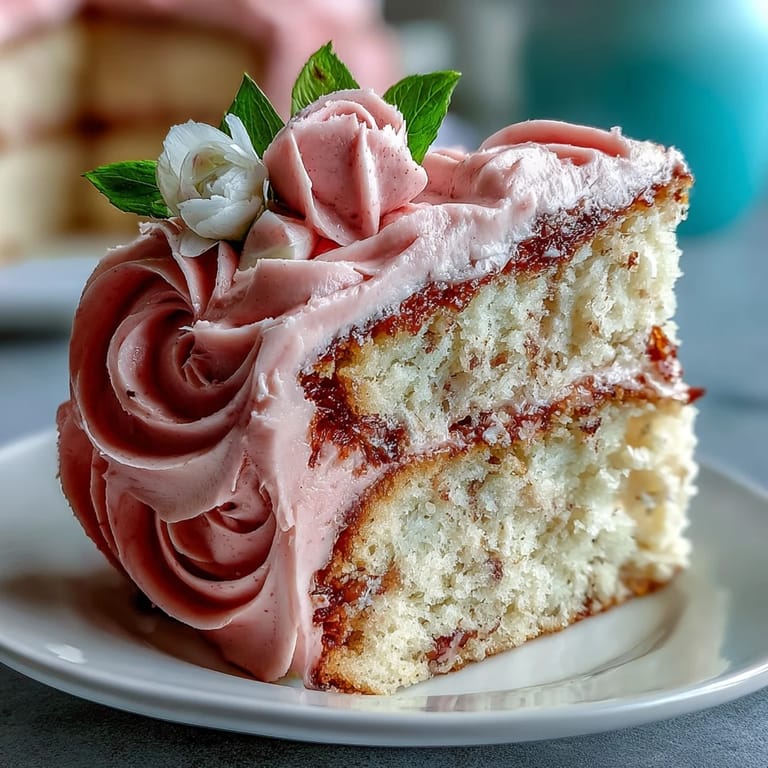
- Edible flowers: Pansies, violets, and rose petals add elegance—buy them from specialty grocers or grow your own.
Tired of Takeout? 🥡
Get 10 meals you can make faster than delivery arrives. Seriously.
One email. No spam. Unsubscribe anytime.
Instructions
- Prep your pans and heat the oven:
- Preheat to 350°F (175°C) and grease three 8-inch round pans with butter, then line the bottoms with parchment paper. This prevents sticking while letting you see exactly when the cakes pull away from the sides.
- Combine your dry ingredients:
- Whisk flour, baking powder, and salt in a medium bowl until evenly mixed. You're distributing the baking powder so it rises uniformly instead of creating random air pockets.
- Cream butter and sugar until fluffy:
- Beat them together on medium-high speed for 3 to 4 minutes until the mixture looks pale and airy—this is where the lift comes from. When you lift the beater, the mixture should hold soft peaks.
- Add eggs one at a time:
- After each egg, mix until just combined before adding the next one. Overbeating here makes the batter dense, so watch for the moment when the egg fully disappears into the mixture.
- Add vanilla extract:
- Pour it in with the last egg so it integrates naturally rather than sitting on top of the batter.
- Alternate flour and milk:
- Add one-third of the flour mixture, then one-half of the milk, then one-third of the flour, then the remaining milk, then the final flour portion. This prevents the batter from becoming gluey—you're keeping the gluten development minimal.
- Divide batter and bake:
- Pour equal amounts into your prepared pans and smooth the tops lightly with a spatula. Bake for 25 to 30 minutes until a toothpick comes out clean and the tops spring back when gently touched.
- Cool the cakes properly:
- Let them rest in the pans for 10 minutes so they set slightly, then flip them onto wire racks to cool completely. Rushing this makes layers crack when you frost them.
- Beat butter until creamy:
- For the buttercream, beat room-temperature butter on high speed for 2 to 3 minutes until it lightens in color and texture. This incorporates air that makes the frosting fluffy.
- Add powdered sugar slowly:
- Start on low speed and gradually pour in the sifted sugar to avoid clouds of powder. Once combined, beat on high for 3 minutes until it looks light and smooth.
- Add vanilla and milk:
- Mix in the vanilla extract and start with 2 tablespoons of milk, adding more if the buttercream is too stiff to spread. It should hold peaks but still spread smoothly under a spatula.
- Create your ombre effect:
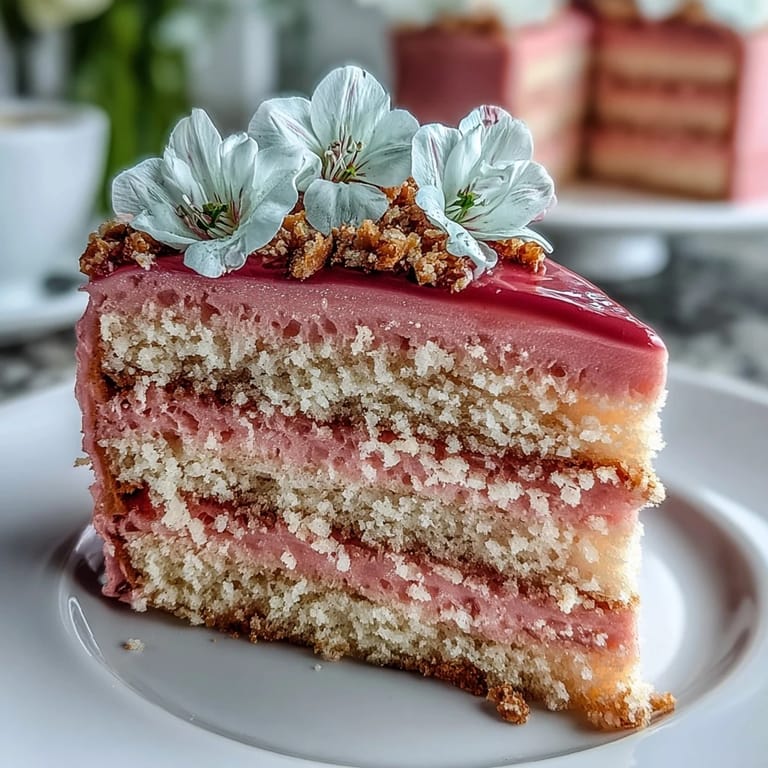
- Divide the buttercream into four bowls—leave one white for the sides. Add a tiny drop of gel coloring to the second bowl, more to the third, and the most to the fourth, so you have four shades from white to dark pink.
- Assemble the cake:
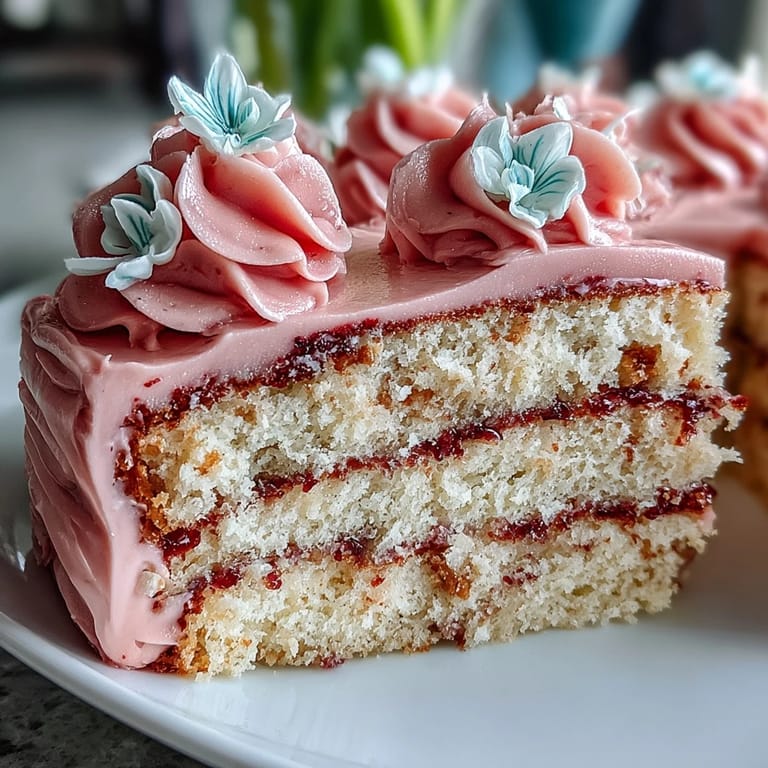
- Place the first layer on your serving plate or cake board, spread the darkest pink buttercream on top, add the second layer and spread medium pink, then add the final layer. Frost the top with light pink and the sides with white buttercream.
- Smooth and blend:
- Use an offset spatula to smooth everything into an even finish. If you want to blend the pink shades up the sides, use a bench scraper dipped in warm water and gently drag it upward where the colors meet.
- Decorate with flowers:
- Arrange fresh edible flowers on top and around the base just before serving to keep them looking dewy and pristine. If using non-edible toppers, remember to remove them before people eat.
- Chill before slicing:
- Refrigerate the finished cake for at least 30 minutes so the frosting sets and you get clean slices instead of frosting smears.
 Pin it
 There's something sacred about making a cake for the people who raised you, even when the recipe feels ambitious. I watched my mom taste the first slice of this cake at her own celebration, and she closed her eyes like she was remembering every birthday cake she'd ever made for us, full circle in that moment.
The Science of Tender Sponge
This cake stays soft because you're alternating wet and dry ingredients, which means the flour never gets overworked. Most home bakers dump everything together and beat it, which develops gluten and creates a dense crumb. The alternating method keeps you in control, letting the flour just blend in without getting tough. It's the difference between a cake that feels like air and one that feels like a brick, and nobody ever forgets which is which.
Why Pink Works Better Than You Think
Pink is honestly the most forgiving color for ombre because it looks elegant at any shade—pale pink reads feminine and fresh, while deeper pink feels luxurious and bold. I've made this cake in lavender, coral, and even champagne gold, but pink always brings people back because it's timeless without being boring. The ombre effect means even if your color mixing isn't perfect, the gradient disguises everything and looks intentional.
Making This Cake Your Own
Once you master this vanilla base, you can experiment fearlessly—brush the layers with simple syrup infused with rose water, swap the edible flowers for something seasonal, or even add a thin layer of fresh fruit between the cakes. The buttercream can shift colors entirely depending on your mood: lavender for springtime, coral for summer, deep burgundy for autumn celebrations. The structure is solid enough to handle your creativity without falling apart.
- Brush cooled cake layers with rose water simple syrup for an extra floral note that feels special.
- Add fresh berries between layers if you want a subtle tartness that cuts through the sweetness.
- Make the flowers the night before by pressing edible petals between parchment paper with a heavy book to flatten them slightly.
 Pin it
 This cake has taught me that the most impressive desserts are often the ones where you slow down and actually pay attention to what you're doing. Make it with someone you love, or make it for someone you want to celebrate—either way, those pink layers will taste like you put your whole heart into it.
Frequently Asked Questions
- → How do I achieve the pink ombre effect on the buttercream?
Divide the buttercream into portions and gradually add pink food coloring to three of them in increasing amounts. Layer these tinted frostings from darkest to lightest to create the gradient effect.
- → Can the cake be prepared in advance?
Yes, the vanilla sponge layers can be baked ahead and stored wrapped. Assemble and decorate the cake close to serving time for best freshness.
- → What is the best way to keep the cake moist?
Brushing cooled cake layers with simple syrup before frosting adds extra moisture and enhances flavor balance.
- → How should I handle the edible flowers for decoration?
Use fresh, edible flowers just before serving to maintain their vibrance, and ensure they are safe to eat.
- → What tools are essential for decorating this cake?
An offset spatula and a bench scraper help smooth the buttercream and blend the ombre colors for a professional finish.