 Save
Save My kitchen was cold that February evening when I opened the freezer to find a lonely bag of cheese tortellini and nothing else promising. I'd planned something more elaborate, but my stomach had other ideas, and within minutes I'd browned some ground beef, tossed in whatever aromatics I could find, and discovered something unexpectedly wonderful—a soup that tasted like someone had cared about it for hours when really it took barely forty-five minutes from start to finish.
I made this for my sister on a random Tuesday when she'd had a brutal day at work, and watching her face soften at the first spoonful was one of those quiet kitchen victories that stuck with me. She asked for the recipe immediately, and now it's become her go-to when she needs comfort in a bowl.
Ingredients
- Lean ground beef (1 lb): The foundation of the soup—lean meat means less fat to drain, though you'll still get those rich, meaty flavors that make the broth taste lived-in.
- Yellow onion and garlic (1 medium onion, 2 cloves): These two are non-negotiable; they're what transforms beef from plain to aromatic, and the garlic especially needs that full minute to whisper its flavor into the hot pan.
- Diced tomatoes with their juice (14.5 oz can): Don't drain them—that liquid becomes part of the broth's body, adding acidity that balances the cream beautifully.
- Beef broth (4 cups): Low-sodium matters here because you're controlling the salt yourself; it lets you taste the actual ingredients instead of just salt.
- Heavy cream (1 cup): This is what turns it from tomato soup into something luxurious—it softens the acidity and makes the whole thing feel like a hug.
- Tomato paste (2 tbsp): A small amount concentrates the tomato flavor without making it taste canned, and it adds body too.
- Cheese tortellini (10 oz fresh or refrigerated): Fresh or refrigerated tortellini will cook in just a few minutes and float beautifully; frozen takes a bit longer but works just fine if that's what you have.
- Dried basil and oregano (1 tsp and 1/2 tsp): Dried herbs work better here than fresh because you're adding them early, and they need time to bloom into the broth.
- Salt, black pepper, and red pepper flakes (1/2 tsp, 1/4 tsp, 1/4 tsp): Season gradually and taste as you go—the cream will mellow everything slightly, so what tastes perfect before the cream might need a pinch more after.
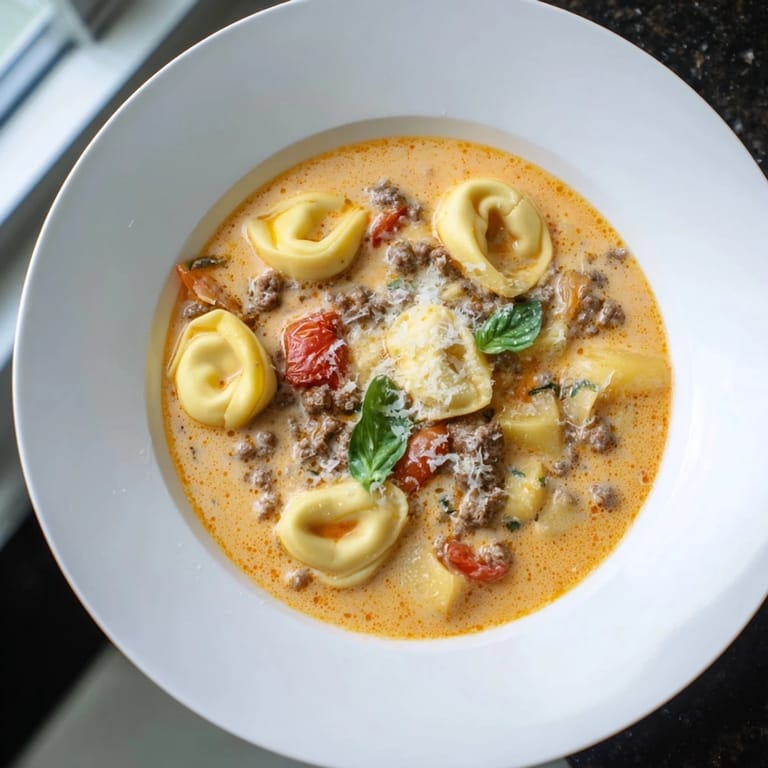
- Parmesan and fresh basil (for serving): The Parmesan adds a salty depth at the table, and fresh basil gives you that bright, just-picked moment that transforms a hot soup into something almost delicate.
- Baby spinach (2 cups, optional): I usually add it because those dark green leaves wilting into the soup in the last minute feel like a small celebration of nutrition you almost didn't notice you were eating.
Tired of Takeout? 🥡
Get 10 meals you can make faster than delivery arrives. Seriously.
One email. No spam. Unsubscribe anytime.
Instructions
- Brown the beef until it loses its pink:
- Set your pot to medium heat and let it warm while you pull the beef out. Once the pan is hot enough that a piece sizzles immediately, add the beef and let it sit for a minute before breaking it up—this crust that forms is where all the flavor lives. Keep breaking it into smaller pieces as it cooks; you want it cooked through but still tender, about 5 minutes total. If there's a pool of rendered fat, tilt the pot and use a spoon to push it to the edge, then blot it away with a paper towel.
- Soften the onion and awaken the garlic:
- Once the beef is done, add the diced onion directly to the pan—it'll sizzle immediately and start releasing its sweet, raw edges. Stir every minute or so for about 3 to 4 minutes until the pieces turn translucent and smell almost honey-like. Then add the minced garlic and stir constantly for exactly one minute; you want it fragrant and golden but not browned, because browned garlic tastes bitter.
- Build the tomato base:
- Add the tomato paste and let it cook in the oil for about 30 seconds, stirring, until it darkens slightly and loses that raw taste. Then pour in the can of diced tomatoes (with every drop of juice) along with the basil, oregano, salt, pepper, and red pepper flakes. Stir everything together and let it bubble gently for about 2 minutes—this is when the dried herbs wake up and the whole pot starts smelling like something intentional.
- Simmer the broth to marry the flavors:
- Add the beef broth and increase the heat to bring everything to a gentle boil—you'll see small bubbles breaking the surface. Once it reaches that point, turn the heat down to low or medium-low and let it simmer quietly for about 10 minutes. This isn't about cooking anything further; it's about giving the flavors time to know each other.
- Cream it gently:
- Remove the pot from heat for just a moment, then add the heavy cream in a thin stream while stirring constantly. This prevents any chance of the cream breaking or curdling from the heat shock. Return the pot to medium heat and bring it back to a gentle simmer—you're looking for small, lazy bubbles, not a rolling boil.
- Add the tortellini and time it carefully:
- Drop in the tortellini and set a timer for whatever your package says, usually 4 to 6 minutes. Stir gently once or twice so nothing sticks to the bottom. The tortellini will float to the surface when it's close to done, and you'll see it puff up slightly—that's your signal that it's almost there. Taste one to be sure; it should be tender but still have a slight firmness to it, not mushy.
- Wilt in the spinach if you're using it:
- Once the tortellini is perfect, add the baby spinach and stir it in. It'll look like way too much at first, but watch—it collapses down into nothing within about 30 seconds. Stir for just a minute longer and you're done.
- Taste and adjust:
- Pull a spoon of soup up, blow it cool, and really taste it. Does it need more salt? A pinch of pepper? Fresh cracks of pepper almost always help at this final moment.
 Pin it
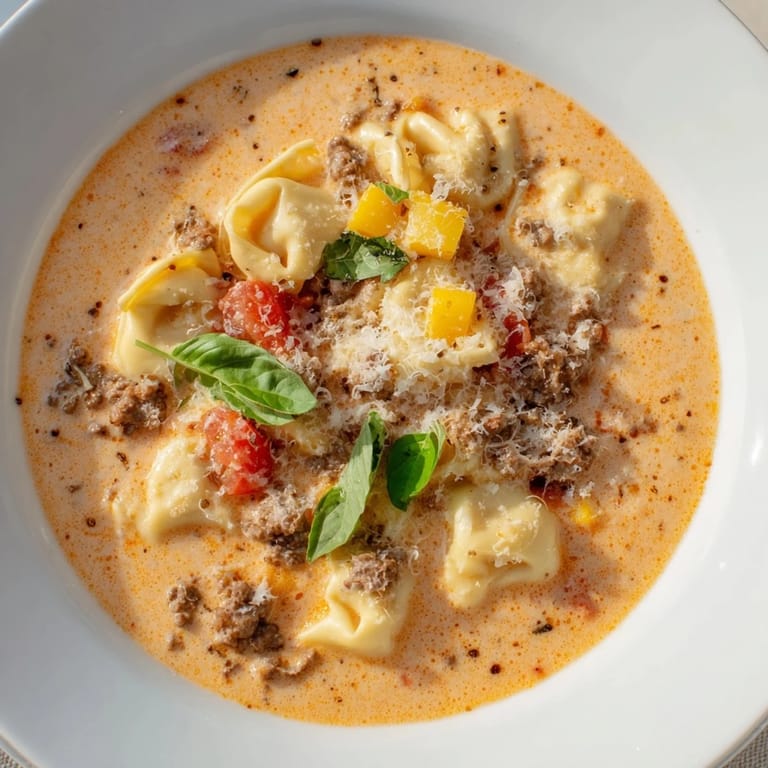
 This soup has become my answer to almost every occasion now—illness, exhaustion, unexpected guests, or just a Wednesday that needs something warm and honest. There's magic in how quickly it pulls together, and even more magic in how it tastes like you've been tending it all day.
The Magic of Cream in Soup
I used to think heavy cream was just for desserts and fancy sauces, until I learned that a cup of cream can completely transform a thin, acidic tomato broth into something that coats your mouth and lingers on your tongue. The cream doesn't just add richness—it acts like a buffer between the acidity of the tomatoes and your palate, making the soup feel sophisticated without ever tasting heavy. The key is never to boil it aggressively once it's added; gentle heat keeps it smooth and integrated instead of broken and grainy.
Choosing Your Tortellini Wisely
The difference between frozen and fresh tortellini matters more than you'd think in a soup like this. Fresh refrigerated tortellini cooks in just 4 to 5 minutes and holds its shape beautifully, staying tender without falling apart, which means your broth stays clear and clean. Frozen tortellini takes closer to 8 minutes and releases slightly more starch into the soup as it cooks, which can make everything look a bit cloudy—not bad, just different. I've made this soup both ways a hundred times, and honestly, whichever you have on hand will work, but now I always reach for fresh when I have a choice.
Variations and Moments of Improvisation
One night I didn't have fresh basil and used fresh thyme instead, and it tasted completely different but equally wonderful—earthier, almost like a deconstructed beef stew. Another time, I added a handful of sliced zucchini and a diced carrot about halfway through the simmering, and they softened perfectly into the broth, adding sweetness and texture without making the soup feel overcomplicated. I've also tried swapping half the beef broth for chicken broth when that's what I had, and the lighter broth actually made the cream and tomato flavors sing even louder. The frame of this recipe is solid enough that you can play within it—swap vegetables, use different pasta shapes, adjust the cream if you want something lighter.
- Half-and-half works beautifully if you want richness without quite so much heaviness, though the mouthfeel will be noticeably thinner.
- Frozen spinach works just as well as fresh if you squeeze all the water out of it first—if you don't squeeze it, you'll add unwanted moisture to the finished soup.
- This soup keeps beautifully in the refrigerator for 3 days, though I add the tortellini fresh each time to avoid mushiness.
 Pin it
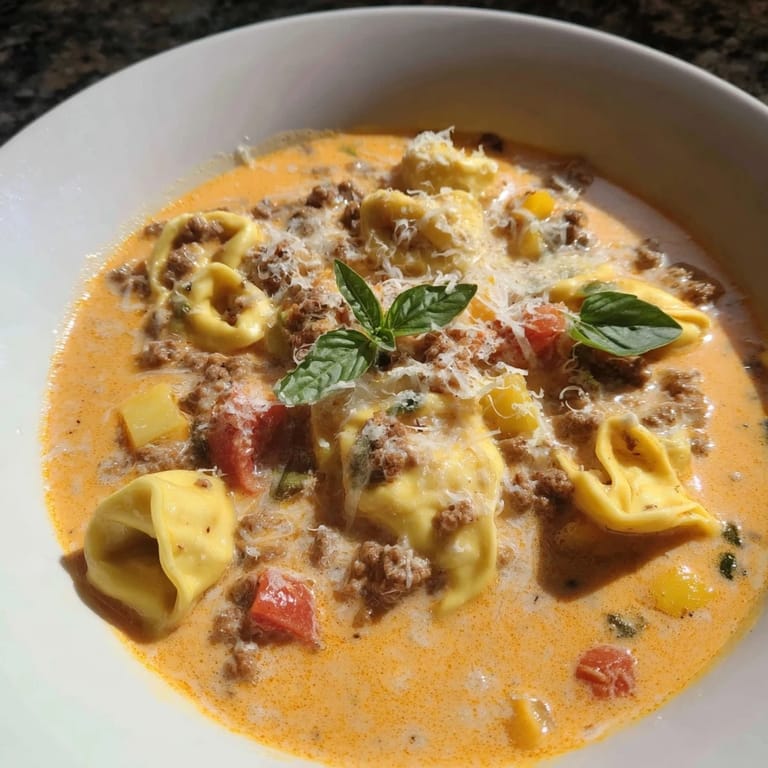
 This is the kind of soup that lives in your kitchen now, the one you make when you need something warm and honest and don't want to think too hard about it. Pour it into a bowl, add the Parmesan and fresh basil, and know that you've made something real.
Frequently Asked Questions
- → Can I use frozen tortellini instead of fresh?
Yes, frozen tortellini works well. Adjust cooking time slightly as per package instructions until they float and become tender.
- → How do I make the broth creamier?
Adding heavy cream towards the end of cooking enriches the broth, creating a smooth, luxurious texture.
- → Can I add more vegetables to this dish?
Absolutely. Zucchini, carrots, or extra spinach can be included to increase the vegetable content and enhance flavors.
- → What herbs complement this tortellini beef blend?
Dried basil and oregano provide classic Italian notes, balancing the richness of the beef and cream.
- → How can I prevent tortellini from overcooking?
Add tortellini near the end of simmering and cook just until they float and soften to avoid mushiness.
- → Is it possible to make this ahead of time?
Yes, the broth and beef base can be prepared in advance. Add tortellini just before serving to maintain proper texture.