 Save
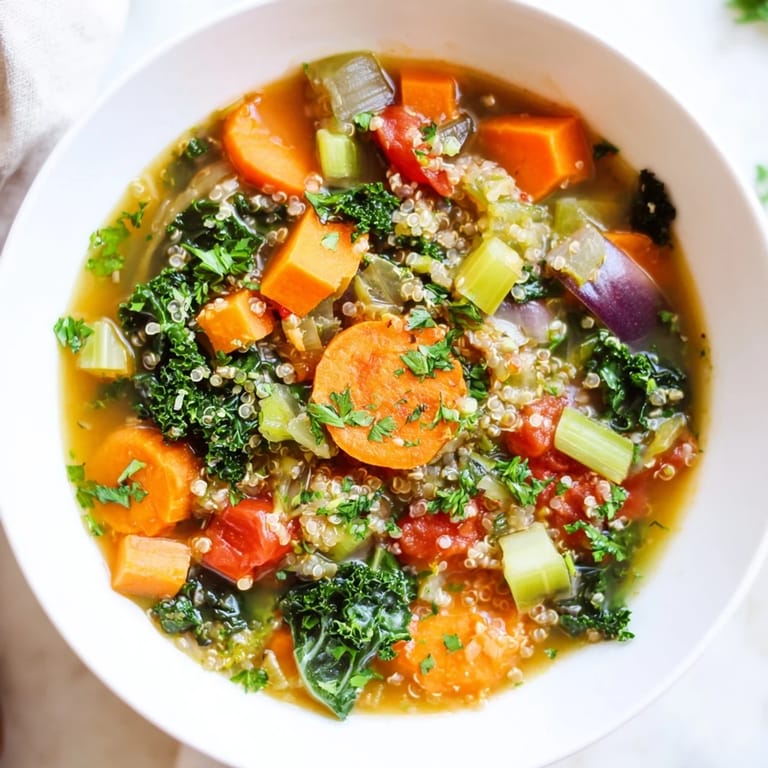
Save Last January, my neighbor dropped by with a bag of root vegetables from her CSA box, and I was standing there holding carrots, parsnips, and sweet potatoes wondering what to do with them all. I ended up throwing everything into a pot with some quinoa and broth, and what emerged was this warm, deeply satisfying soup that somehow tasted like it had been simmering for hours when it really hadn't. Now whenever the weather turns cold, someone asks me how I make it, and I realize it's become one of those recipes I reach for without thinking—just pure comfort.
I made this for my mom when she was recovering from the flu, and I remember her asking for seconds while wrapped in a blanket on the couch. There's something about a bowl of this soup that feels like an actual hug—the warmth, the bright colors, the gentle flavors all working together. She's made it three times since then.
Ingredients
- Olive oil: Just a tablespoon, enough to get everything shimmering and release those first wild aromas from the onion and garlic.
- Onion and garlic: These two are doing all the heavy lifting flavor-wise—don't skip the sautéing step or you'll miss out on that fragrant base that makes everything taste deeper.
- Carrots, celery, and parsnip: The parsnip is the secret player here; it adds this subtle sweetness that balances the earthiness of everything else.
- Sweet potato: Brings natural sweetness and creaminess without any heavy cream involved.
- Kale or Swiss chard: Remove those tough stems or you'll be chewing through them; the leaves soften beautifully and add serious nutrition.
- Cabbage: Adds body and a gentle sweetness, plus it breaks down just enough to thicken the broth slightly.
- Diced tomatoes: Use canned if fresh ones aren't in season; the acidity brightens everything up.
- Quinoa: Rinse it well to get rid of any bitter coating, then it cooks right in the broth and becomes this little protein-packed grain that makes the soup feel complete.
- Vegetable broth: Low-sodium matters here so you can taste the vegetables and adjust seasoning yourself.
- Thyme, oregano, and bay leaf: These dried herbs are gentle enough not to overpower but strong enough to tie all those different vegetables together into one harmonious bowl.
- Fresh parsley and lemon juice: Added at the end, parsley brings freshness and lemon adds brightness that makes you go back for another spoonful.
Tired of Takeout? 🥡
Get 10 meals you can make faster than delivery arrives. Seriously.
One email. No spam. Unsubscribe anytime.
Instructions
- Build the flavor base:
- Heat your oil until it shimmers, then add the diced onion and minced garlic. You're looking for that moment when everything becomes translucent and your kitchen smells absolutely amazing—usually about 2 to 3 minutes. This is where the magic starts.
- Layer in the root vegetables:
- Add the carrots, celery, parsnip, and sweet potato, stirring occasionally so they start to soften and release their natural sweetness. After 5 to 6 minutes, they'll be just tender enough to know they're ready for the next batch.
- Add the greens and tomatoes:
- Stir in your chopped kale or chard and cabbage along with the tomatoes. Cook for just 2 minutes—you're not trying to wilt them completely, just warm everything through.
- Pour in the broth and grain:
- Add your rinsed quinoa, vegetable broth, and all the seasonings. Give everything a good stir, then bring it to a boil over medium-high heat.
- Simmer until everything is tender:
- Turn the heat down low, cover your pot, and let it bubble gently for 25 to 30 minutes. The vegetables will become silky, the quinoa will plump up, and the whole thing will taste cohesive and warm.
- Taste and finish:
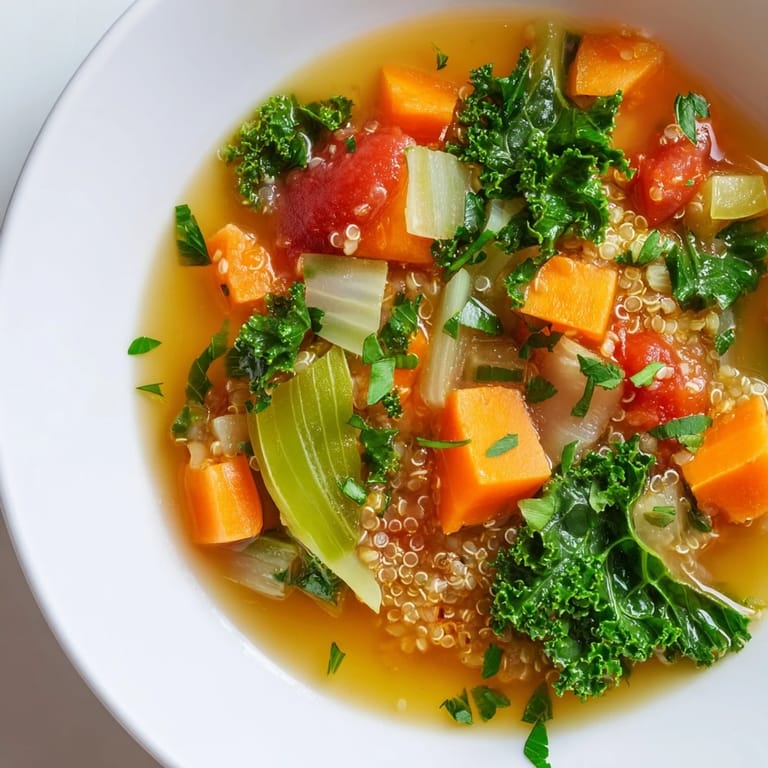
- Remove that bay leaf, then stir in the fresh parsley and a squeeze of lemon juice if you're using it. Taste a spoonful and adjust your salt and pepper—this is your chance to make it exactly right for your palate.
 Pin it
 My kids actually ask for this soup now, which still surprises me. I remember thinking no kid would voluntarily eat something with kale in it, but somewhere between the sweetness of the sweet potato and the nutty flavor of the quinoa, it became their favorite rainy day lunch.
Vegetable Swaps and Flexibility
This recipe is genuinely flexible in a way that matters—you're not locked into specific vegetables. In spring, I've used baby turnips and fresh peas instead of the parsnip and sweet potato, and it was completely different but equally wonderful. Winter months call for heartier root vegetables, but summer opens doors to zucchini, corn, and early greens. The quinoa and broth stay constant, and they hold everything together no matter what you're throwing in.
Making It More Substantial
If you want this to be even more filling, a can of drained chickpeas or white beans stirred in during the last 5 minutes makes it genuinely hearty enough for anyone who's doubting whether vegetables alone will satisfy them. Some people add a handful of spinach at the very end for extra greens, and it melts right in without adding any bitterness. I've also tried adding a can of coconut milk for a creamier version, which changes the whole vibe but in a good way if you're after something richer.
Serving and Storage Ideas
This soup tastes even better the next day once all the flavors have had time to get to know each other. It keeps beautifully in the fridge for about 4 days, and honestly, I often make a double batch just so I have portions waiting in the freezer for moments when I don't have time to cook.
- Crusty whole-grain bread is the obvious pairing, but sometimes I serve it with a simple green salad on the side for contrast.
- A pinch of red pepper flakes stirred into your bowl at the table gives you control over heat without affecting the whole pot.
- Top individual bowls with an extra handful of fresh parsley or a drizzle of really good olive oil if you're feeling fancy.
 Pin it
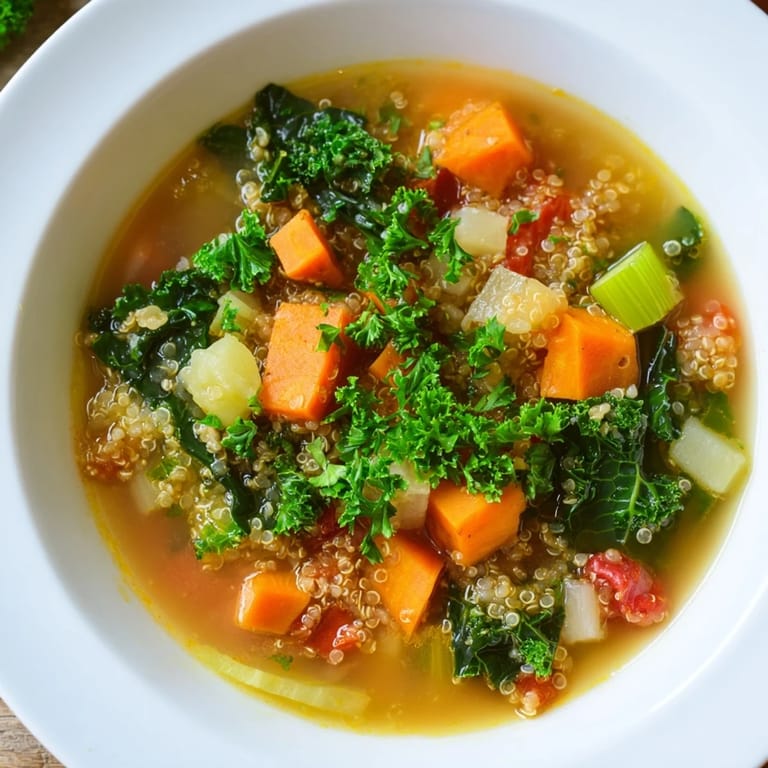
 There's something deeply satisfying about ladling a bowl of this soup and knowing exactly what's in it and where each ingredient came from. It's the kind of recipe that feels both nourishing and simple, which is exactly what comfort food should be.
Frequently Asked Questions
- → What vegetables are included in this soup?
The soup features onion, garlic, carrots, celery, parsnip, sweet potato, kale or Swiss chard, cabbage, and diced tomatoes.
- → Can I substitute quinoa with another grain?
Yes, you can replace quinoa with grains like barley or rice, though cooking times may vary.
- → How can I make the soup spicier?
Add a pinch of red pepper flakes during the sautéing step to introduce a gentle heat.
- → Is this soup suitable for special diets?
It suits vegetarian, gluten-free, and dairy-free preferences, and is naturally nut and soy free.
- → What are good serving suggestions for this dish?
Serve hot with crusty whole-grain bread to enhance the meal's heartiness and texture.
- → Can I add more protein to the soup?
Yes, drained chickpeas or white beans can be stirred in for additional protein and texture.