 Save
Save I discovered this board years ago at a gallery opening, where the appetizers were arranged like edible art. The host had created a yin-yang platter, and I was mesmerized by how it balanced dark and light, sweet and savory, all on one stunning surface. That night, I realized a board could tell a story without saying a word. Now whenever I need to impress without stress, I come back to this gorgeous arrangement that lets the ingredients speak for themselves.
I made this for my sister's book club once, and it became the star of the evening. Everyone kept circling back to different corners of the board, discovering new combinations. Someone paired the dark chocolate with a black olive, and suddenly everyone was experimenting. That's when I knew this wasn't just food—it was an invitation to play.
Ingredients
- Black olives, pitted (1 cup): These are your foundation for the dark side. I learned the hard way that pitting them yourself, while tedious, gives you better quality than the pre-pitted versions that sometimes taste like tin. They anchor the savory side beautifully.
- Dark rye crackers (80 g): Choose ones with a hearty texture that won't crumble when loaded with toppings. They're sturdier than wheat crackers and give an earthy note that complements the dark ingredients.
- Aged balsamic-glazed mushrooms, sliced (80 g, optional): These add a sophisticated umami depth. I prefer using cremini or portobello mushrooms sliced thin and marinated in aged balsamic vinegar. They're what make people say, 'Wait, what is this amazing flavor?'
- Black grapes or blackberries (60 g): The natural sweetness here prevents the dark side from feeling too heavy. I use grapes for their elegant appearance, but blackberries add an extra tartness that's lovely.
- Dark chocolate squares, 70% cacao or above (50 g): This is the surprise element. Choose quality chocolate because it will taste less bitter and pair unexpectedly well with olives and dried fruit. I learned this trick from a food writer who said 'contrast is the secret to memorable eating.'
- White cheese—goat cheese, brie, or mozzarella, sliced or cubed (120 g): This is your light side anchor. Goat cheese brings tang, brie brings creaminess, and mozzarella brings simplicity. I rotate depending on my mood and what guests might prefer.
- Rice crackers or water crackers (80 g): These should be delicate enough to not overpower but sturdy enough to hold toppings. Water crackers are my go-to because they're neutral and let the cheese shine.
- Raw cashews or blanched almonds (60 g): These add richness and crunch to the light side. I prefer cashews for their buttery sweetness, but almonds work beautifully too. Toast them lightly if you want more flavor intensity.
- Dried apricots or white grapes (50 g): The natural sweetness here balances the creamy cheese. Dried apricots have a deeper flavor that surprised me the first time I paired them with goat cheese.
- Honey for drizzling (1 tablespoon, optional): A final drizzle of good honey over the light side creates a visual finish and adds a glossy, luxe touch. It's optional, but I never skip it.
Tired of Takeout? 🥡
Get 10 meals you can make faster than delivery arrives. Seriously.
One email. No spam. Unsubscribe anytime.
Instructions
- Set your stage:
- Place your large round board or platter on your work surface. This is your canvas. I always let it sit for a moment and imagine the final arrangement. A wooden board feels warmer, while a ceramic platter feels more formal.
- Mark your yin and yang:
- Use a small bowl or circular cutter as a guide and lightly mark an S-shaped curve down the center. You're not carving it—just creating a gentle visual guide so your arrangement flows with intention. This is where the magic of balance begins.
- Build the dark side:
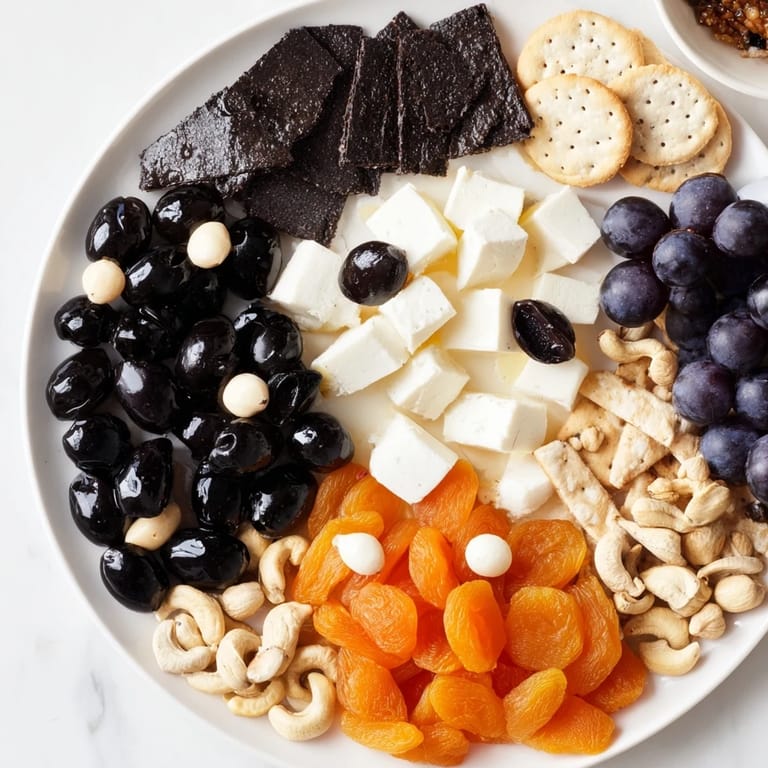
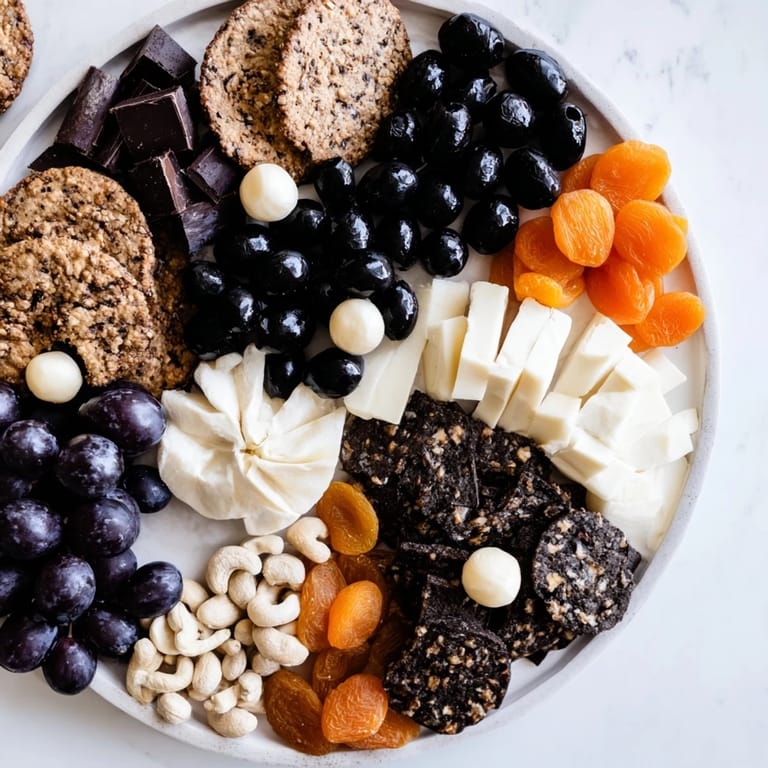
- Start arranging your black olives, dark rye crackers, mushrooms, grapes or blackberries, and dark chocolate on one half. Don't overthink the placement—let shapes and colors guide you. Group similar items loosely so there's visual rhythm. I usually create little pockets of each ingredient rather than a strict line, which feels more organic.
- Fill the light side:
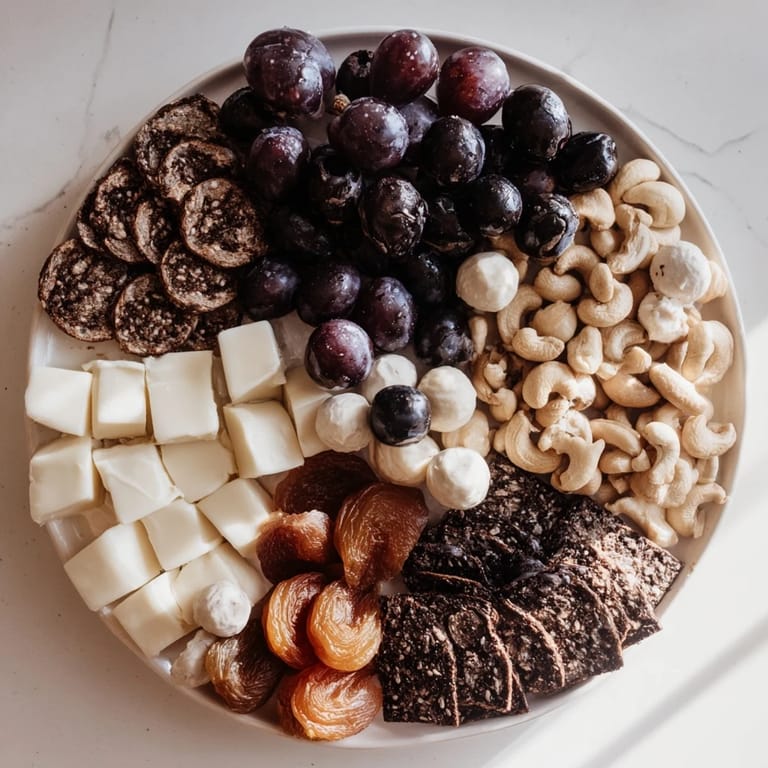
- Mirror the dark side with your white cheese, rice crackers, cashews or almonds, dried apricots or white grapes. Drizzle honey if using—let it pool slightly on the cheese for that luxe restaurant touch. Again, trust your eye rather than measuring distances.
- Add the symbol:
- Place a small round cheese ball on the dark side and a small dark olive on the light side, positioned where the yin and yang curves meet. This completes the classic symbol and ties the whole concept together visually.
- Serve with intention:
- Bring it to the table and encourage people to sample both sides, mixing and matching flavors. This is when the board becomes interactive and everyone gets to discover their own favorite combinations.
 Pin it
 I remember my grandmother watching me arrange one of these boards for the first time, and she said, 'You're not just making food, you're making conversation.' That stuck with me. A board like this invites people to linger, to taste, to talk. It's about generosity disguised as simplicity.
The Art of Balance
This board works because it respects the ancient concept of yin and yang—the idea that opposing forces complete each other. In cooking terms, this means dark and light, soft and crisp, sweet and savory all coexist peacefully. Every time you make this, you're practicing a kind of culinary philosophy. The dark side feels sophisticated and earthy, while the light side feels fresh and delicate. Neither overpowers the other; instead, they make each other more interesting. I've learned that this principle extends beyond this one board—it's true in any great dish.
Customizing for Your Crowd
The beauty of this arrangement is how adaptable it is. I've made versions for friends with nut allergies by swapping almonds for seeds, for people avoiding dairy by using dairy-free cheese alternatives, and for vegan friends by using hummus or cashew cream instead of animal cheese. The structure stays the same; only the players change. Once I even made a spicy version by adding chili-infused oil and red pepper flakes to the dark side. The yin-yang concept is flexible enough to hold your preferences without losing its elegance.
Pairing and Serving Wisdom
This board is a conversation starter that pairs beautifully with sparkling wine, light reds, or even crisp white wine. I usually serve it as an appetizer when I want people to mingle rather than sit immediately, because a board invites grazing and movement. It also works as a light lunch with soup, or as a sophisticated snack for an afternoon gathering. The 20-minute prep time means you can decide last-minute to host without stress, which has saved me more than once.
- Chill your board in the freezer for 10 minutes before arranging if you're serving on a hot day—it keeps cheese from softening too quickly
- Set out small plates and forks nearby so guests know they can eat freely without feeling like they're being too casual
- If making ahead is necessary, cover loosely with parchment paper rather than plastic wrap to prevent moisture buildup
 Pin it
 Every time I arrange this board, I'm reminded that food is about more than taste—it's about creating moments where people feel welcomed and delighted. This simple arrangement has started countless dinners, celebrations, and quiet afternoons with friends.
Frequently Asked Questions
- → How should the platter be arranged?
Arrange the dark ingredients on one half and the light ingredients on the other, using a curve to mimic the yin-yang shape for a balanced presentation.
- → Can the cheeses and crackers be substituted?
Yes, feel free to swap cheeses and crackers based on personal preferences or dietary needs without losing the balance of flavors.
- → What is the best way to serve this platter?
Serve immediately to keep textures fresh and encourage guests to enjoy the contrasting flavors side by side.
- → Are there any optional ingredients to enhance the platter?
Adding fresh herbs or edible flowers can add color and aroma, while a drizzle of honey enhances sweetness on the light side.
- → What beverages pair well with this platter?
Sparking white wine or a light red wine complement the varied flavors and textures beautifully.