 Save
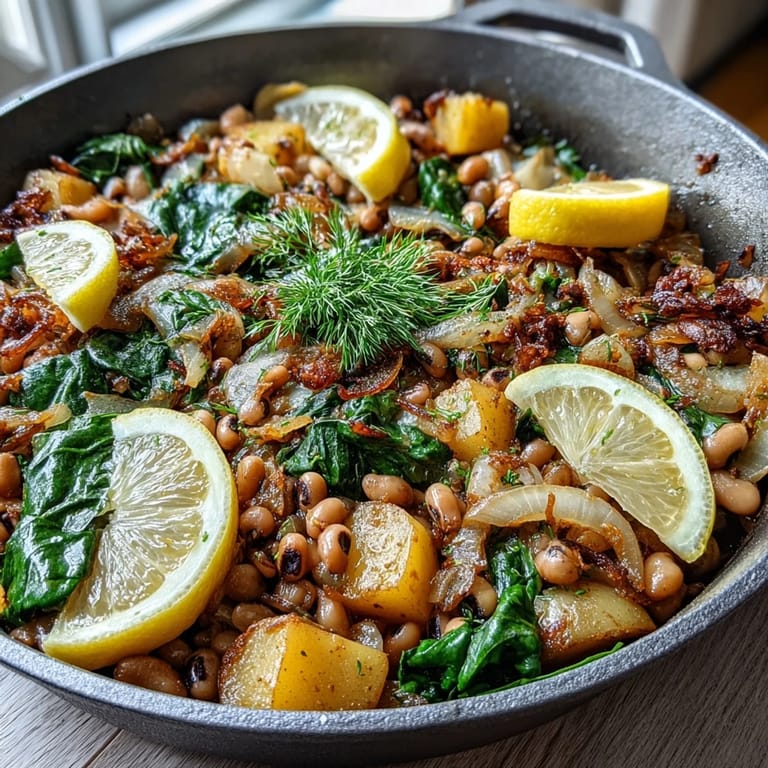
Save Cast iron skillets have a way of making you feel like you're cooking something important, even when you're just throwing together whatever's in the pantry. One Tuesday evening, I had spinach that needed using, a can of black-eyed peas I'd been meaning to cook with, and potatoes sitting on the counter looking hopeful. What emerged from that skillet was so satisfying and complete that I've made it dozens of times since, each version slightly different but always somehow exactly right.
My neighbor stopped by right as this was finishing, drawn in by the smell of caramelized onions and paprika wafting through the kitchen window. She ended up staying for dinner, and halfway through her first bite, she admitted she'd never had black-eyed peas prepared this way. By the end of the meal, she was already planning her own version with kale instead of spinach, which I loved because it meant the recipe had become hers too.
Ingredients
- Olive oil (2 tablespoons): Use good quality here since there's nothing fancy to hide behind—it's the base of everything and matters more than you'd think.
- Large yellow onion, thinly sliced (1): The thin slices caramelize better and distribute their sweetness throughout, which is the whole point of starting with onions.
- Yukon Gold potatoes, diced (3 medium): These waxy potatoes hold their shape instead of turning to mush, and they have a natural buttery flavor that complements the earthiness of the peas.
- Fresh spinach, roughly chopped (3 cups): It wilts down dramatically, so don't be intimidated by the volume—you'll end up with a modest handful of tender greens.
- Cooked black-eyed peas (2 cups): Whether you cook them from dried or use canned, they bring protein and a slightly creamy texture that makes the whole dish feel complete.
- Garlic, minced (3 cloves): Mince them fine so they dissolve into the oil and perfume everything without becoming harsh bits.
- Smoked paprika (1 teaspoon): This is what makes people think you've done something complicated—it adds warmth and a whisper of smoke that elevates the whole dish.
- Dried thyme (1/2 teaspoon): A quiet herb that plays well with black-eyed peas and doesn't overpower the delicate spinach.
- Crushed red pepper flakes (1/4 teaspoon): Optional, but a pinch adds a gentle heat that builds as you eat.
- Low-sodium vegetable broth (1/2 cup): This becomes a light, flavorful sauce that brings everything together—use it as your measure of when the potatoes are done cooking.
- Fresh parsley, chopped (2 tablespoons): A bright finish that cuts through the richness and makes the dish feel less heavy.
- Lemon wedges: A squeeze of acid at the end lifts all the flavors and is secretly the most important garnish.
Tired of Takeout? 🥡
Get 10 meals you can make faster than delivery arrives. Seriously.
One email. No spam. Unsubscribe anytime.
Instructions
- Set your stage with hot oil:
- Pour the olive oil into your cast iron skillet and let it heat over medium flame until it shimmers slightly and smells toasty. This should take about a minute, and you'll know it's ready when a piece of onion dropped in sizzles immediately.
- Coax sweetness from the onions:
- Add your thinly sliced onion and let it sit undisturbed for a minute before stirring—this helps develop color and caramelization. Sauté for 3 to 4 minutes, stirring occasionally, until the edges turn golden and the whole thing becomes soft and translucent.
- Build texture with potatoes:
- Toss in your diced potatoes and stir to coat them in the oil. Cook for 10 to 12 minutes, stirring every few minutes, until the outsides turn golden and crispy while the insides stay tender when you pierce them with a fork.
- Bloom your spices:
- Add the minced garlic, smoked paprika, thyme, and red pepper flakes all at once, stirring constantly for about 1 minute. You'll smell the moment they wake up—that's your signal to move forward before they scorch.
- Bring it together with liquid and legumes:
- Pour in the vegetable broth and add the black-eyed peas, stirring well so everything is submerged and the flavors can mingle. Cover the skillet and let it simmer for 8 to 10 minutes until the potatoes are completely tender and most of the liquid has been absorbed into the dish.
- Finish with green and seasoning:
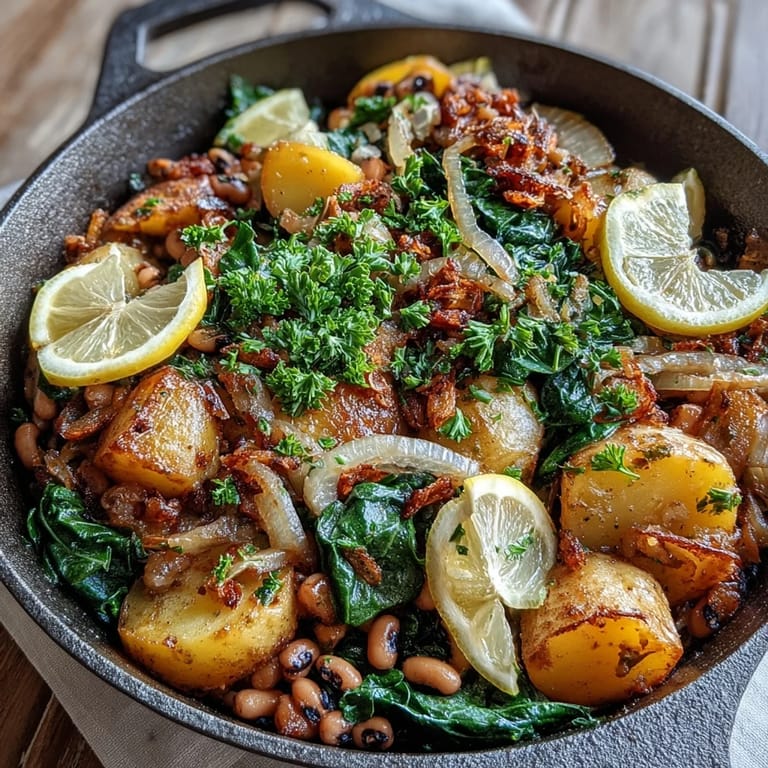
- Remove the lid and add your chopped spinach, stirring gently for 2 to 3 minutes until it wilts into a dark, tender mass. Taste everything and season with salt and freshly ground black pepper until it feels balanced and bright.
 Pin it
 There's a moment when a one-pan dinner becomes something more than just efficient cooking—it's when everyone at the table realizes they're genuinely satisfied, not just full. That's what this skillet does, and why I keep coming back to it.
Why Cast Iron Matters Here
A cast iron skillet distributes heat more evenly than most pans, which means your potatoes caramelize properly instead of steaming, and the whole dish develops those golden, slightly crispy edges that make it taste restaurant-quality. The skillet also retains heat beautifully, so when you cover it for simmering, the environment stays consistent and the cooking finishes gently. If you don't have cast iron, a heavy stainless steel skillet with a tight-fitting lid works fine—just give it a minute longer to develop color.
Variations That Work
The beauty of this recipe is how flexibly it adapts to what you have on hand or what sounds good in the moment. Swap the spinach for kale or Swiss chard if you prefer something heartier, or leave it out entirely if you're in a rush—the skillet is delicious without it. For extra protein, toss in cubes of pan-fried tempeh or crumbled tofu during the final simmering step, and nobody will notice it's vegetarian unless you tell them. You can also add diced bell peppers, mushrooms, or tomatoes during the potato-cooking stage, though give them enough time to soften alongside everything else.
Serving and Stretching the Meal
This skillet is honestly satisfying on its own, but serving it alongside something starchy makes it feel more substantial and turns it into a complete dinner that feels like you've put in real effort. Cornbread is the natural pairing—something about the sweet earthiness complements the smoky peas perfectly. You could also serve it over rice, with warm tortillas on the side, or with crusty bread for soaking up the minimal liquid at the bottom of the skillet.
- If you have fresh herbs beyond parsley, cilantro or chives stirred in at the very end add brightness without extra cooking.
- A squeeze of fresh lemon juice right before eating makes every flavor pop and keeps the dish from feeling heavy.
- Leftovers taste even better the next day after the flavors have had time to get comfortable with each other.
 Pin it
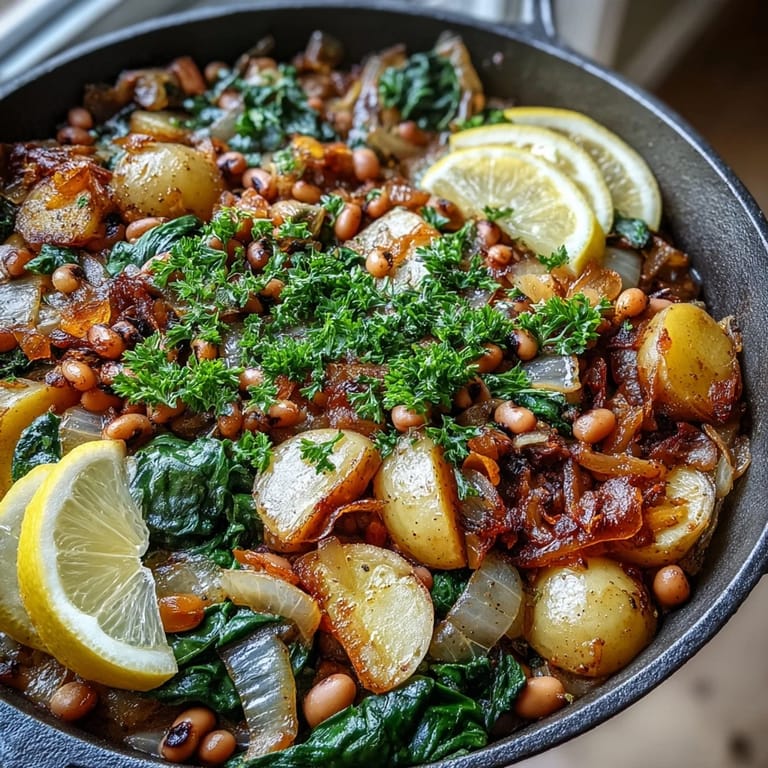
 This is the kind of recipe that quietly becomes a regular in your rotation, the one you make when you want something nourishing but don't want to fuss. It never feels like you're settling.
Frequently Asked Questions
- → What makes black-eyed peas special in skillet cooking?
Black-eyed peas hold their shape beautifully during skillet cooking while absorbing the smoky paprika and aromatic garlic. Their creamy texture contrasts perfectly with tender potatoes and wilted greens, creating a satisfying balance in every bite.
- → Can I use dried black-eyed peas instead of canned?
Absolutely—soak dried peas overnight and simmer until tender before adding to the skillet. This method allows even deeper absorption of the smoky spices and savory broth, though it will extend your total preparation time.
- → What's the best way to achieve tender potatoes in the skillet?
Dice your Yukon Gold potatoes uniformly and cook them uncovered after the onions soften. This allows the edges to golden while the interiors steam through, creating that perfect tender-yet-firm texture that holds up in the final simmer.
- → How do I prevent spinach from becoming too watery?
Add chopped spinach during the final 2-3 minutes of cooking, just until wilted. This quick cooking preserves the vibrant color and texture while allowing the greens to release just enough moisture to blend with the seasoned broth.
- → What proteins pair well with this skillet dinner?
While black-eyed peas provide substantial protein on their own, you can add sautéed tempeh cubes, crispy fried tofu, or even serve alongside grilled chicken. The savory, smoky base complements nearly any protein addition beautifully.
- → Can this meal be prepared ahead for meal prep?
This skillet dinner reheats exceptionally well—the flavors actually deepen overnight. Store in airtight containers and gently warm with a splash of broth to refresh the creamy consistency. The potatoes and peas maintain texture perfectly through reheating.