 Save
Save My neighbor brought over a bag of sourdough bagels one Saturday morning, still warm from the bakery, and I bit into one expecting the dense, chewy New York style I'd grown up with. Instead, what hit me was this tangy, almost subtle sourness that made me pause mid-chew—the kind of flavor that doesn't announce itself but rather whispers that someone really knew what they were doing. That afternoon, I asked her for the secret, and when she mentioned the overnight fermentation and those caramelized onions pressed onto the dough while it was still steaming from the boiling water, something clicked. I had to learn how to make these.
I made these for a Sunday brunch gathering last spring, and what I didn't expect was how my partner came into the kitchen around 6 AM just to watch the boiling process—standing there in pajamas with coffee, mesmerized by the dough puffing up in the water. By the time they came out of the oven, golden and fragrant, half my guests were already hovering nearby, and someone actually asked for the recipe before even tasting one. That's when I knew these weren't just bagels; they were the kind of thing people remember.
Ingredients
- Active sourdough starter (100 g, 100% hydration): This is your flavor foundation—it's what gives these bagels that distinctive tang and helps them rise without commercial yeast, so make sure your starter is bubbly and fed a few hours before mixing.
- Bread flour (400 g): Don't skip this for all-purpose; bread flour's higher protein content is what creates that chewy, toothsome crumb that defines a real bagel.
- Whole wheat flour (50 g): This adds subtle earthiness and keeps the bagels from feeling too one-note, plus it gives them a slightly darker, more interesting color.
- Sea salt (10 g): Fine sea salt dissolves evenly into the dough and brings out the sourdough's natural tanginess.
- Granulated sugar (25 g): Just enough to balance the sourness and feed the fermentation; too much and you'll lose the savory-tangy character that makes these special.
- Lukewarm water (240 ml): Temperature matters here—water that's too hot kills your starter, too cold and the dough won't develop properly during those long fermentations.
- Large yellow onion (1, finely chopped): Yellow onions caramelize into pure sweetness, and the fine chop means every bite of bagel gets flecks of that golden flavor.
- Olive oil or unsalted butter (1 tbsp): Either works, but I've found butter creates slightly deeper caramelization if you have the patience to stir it gently.
- Barley malt syrup or honey (1 tbsp for boiling): This is what gives bagels their subtle sweet undertone and slightly chewy crust—barley malt is traditional but honey is easier to find and works beautifully.
- Baking soda (1 tsp): This alkalizes the boiling water, which is what creates that signature bagel chew and helps the exterior set properly.
Tired of Takeout? 🥡
Get 10 meals you can make faster than delivery arrives. Seriously.
One email. No spam. Unsubscribe anytime.
Instructions
- Sauté those onions first:
- Heat your oil or butter over medium heat, add the finely chopped onion with a pinch of salt, and let it go for 8–10 minutes, stirring occasionally. You want them soft, translucent, and starting to turn golden—they should smell sweet and almost caramel-like, not sharp. Once they're done, spread them on a plate to cool while you work on the dough.
- Mix your sourdough dough:
- Combine your active starter, bread flour, whole wheat flour, salt, sugar, and lukewarm water in a large bowl and stir until everything is incorporated into a shaggy, rough dough. Don't worry if it looks messy; that's exactly right.
- Knead and develop:
- Knead for 8–10 minutes by hand (or use a stand mixer on medium speed) until the dough becomes smooth, elastic, and slightly tacky. You should feel the gluten strands developing under your hands or hearing the mixer work steadily.
- Stretch and fold during bulk ferment:
- Cover the bowl and let it sit at room temperature for 4 hours, but here's the trick—every 30 minutes during the first 2 hours, wet your hand and stretch one side of the dough up and fold it over itself, rotating the bowl a quarter turn each time. You'll do this twice total, and it's what builds structure without aggressive kneading.
- Cold ferment overnight:
- Cover your dough and refrigerate for 8–12 hours, even up to 18 if you can wait that long. This is when the real sourdough magic happens—the cold temperatures slow fermentation, allowing flavors to develop and the dough to become easier to shape.
- Shape your bagels:
- Remove dough from the fridge, divide into 8 equal pieces (a scale helps, but roughly the size of a golf ball works), and gently pre-shape each into a ball. Let them rest for 10 minutes, then poke a hole in the center of each with your thumb and gently stretch to form a bagel shape with about a 2-inch hole in the middle.
- Give them a quick proof:
- Place shaped bagels on a parchment-lined baking sheet, cover loosely with plastic wrap, and let them rise for 1–2 hours at room temperature. They should look slightly puffy and hold an indent if you gently press them, but they shouldn't be huge—bagels gain volume during boiling.
- Prepare your boil:
- Preheat your oven to 220°C (425°F) and bring a large pot of water to a boil with the barley malt syrup and baking soda stirred in. Once boiling, you're ready to go—don't let it cool.
- Boil with intention:
- Working with 1–2 bagels at a time, gently lower them into the boiling water and let them boil for exactly 1 minute per side. You'll see them sink at first, then float to the surface; flip them when they float. Use a slotted spoon to remove them and return them to the baking sheet.
- Top while damp:
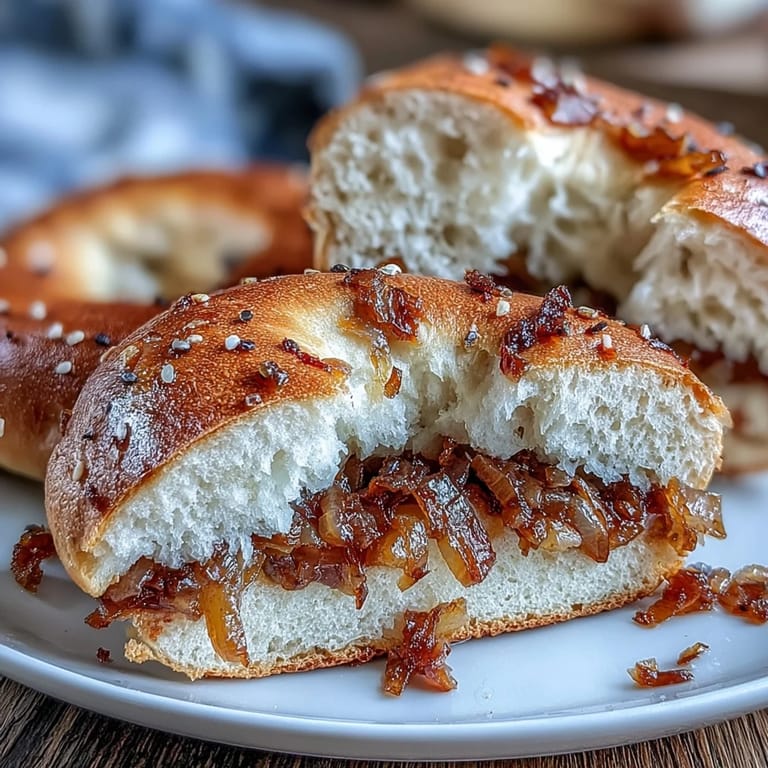
- While the bagels are still wet from boiling, press a generous handful of those cooled caramelized onions onto the top of each one. The moisture helps them stick beautifully.
- Bake until golden:
- Bake for 20–25 minutes until the bagels are deep golden brown on top and sound hollow when you tap the bottom. Your kitchen will smell absolutely extraordinary at this point.
- Cool properly:
- Transfer bagels to a wire rack to cool completely before slicing—this prevents steam from making them soggy on the inside. It's hard to wait, but trust me.
 Pin it
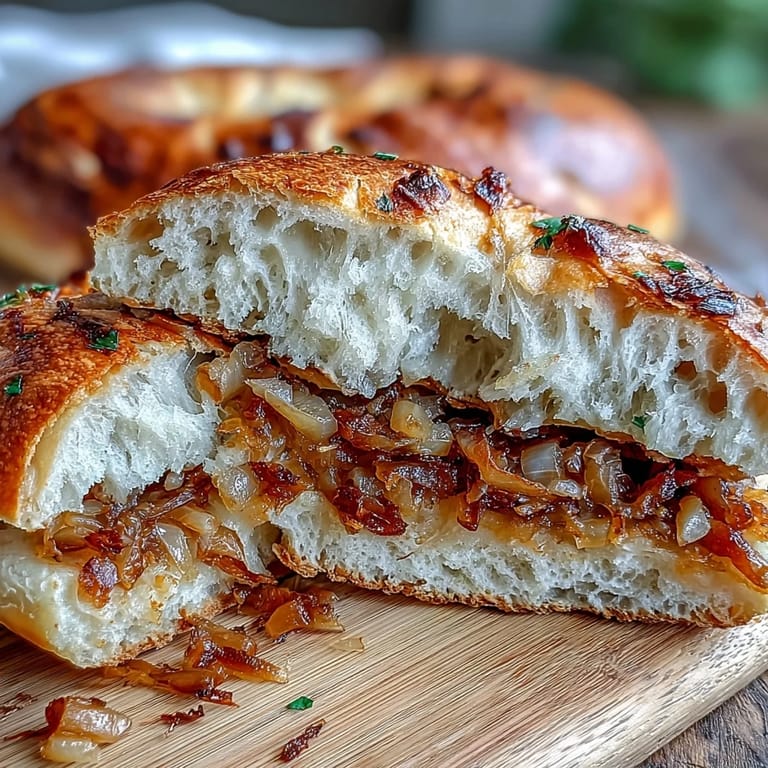
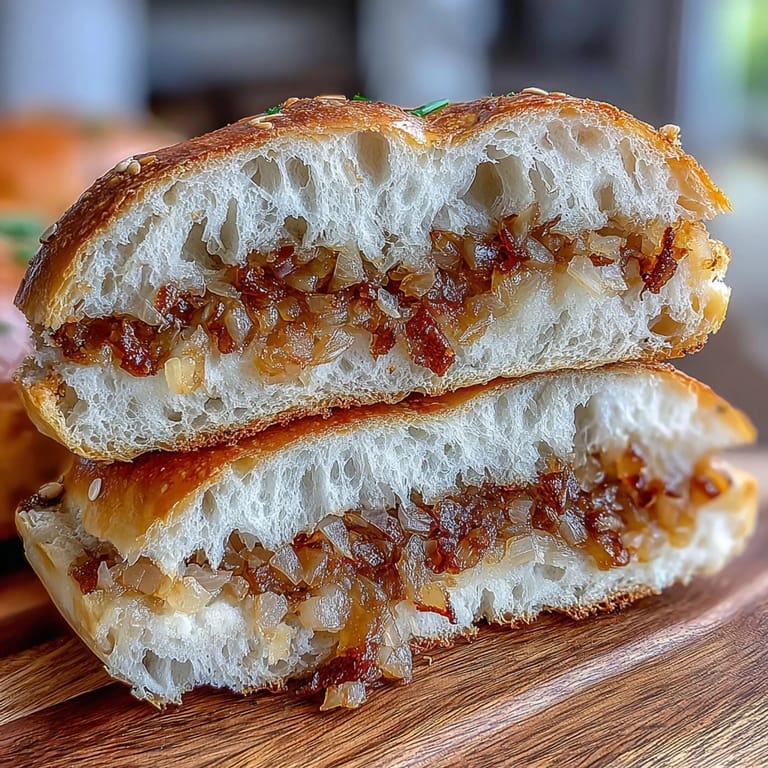
 There's this particular moment that happens when you slice into a fresh bagel still slightly warm from the rack—your knife goes through that tender crumb, you catch the aroma of sourdough and those sweet onions all at once, and suddenly you understand why people have such strong feelings about bagels. Making these taught me that the best recipes aren't always about fancy ingredients or complicated techniques; sometimes they're about respecting time and understanding how patience turns simple flour and water into something that tastes like care.
The Sourdough Starter Factor
Your starter is really the heart of these bagels, and I've learned that a happy, active starter makes a noticeable difference in flavor and rise. If your starter is sluggish or hasn't been fed regularly, the dough will take longer to ferment and won't develop that beautiful tanginess. Feed your starter at least 4–6 hours before mixing, and if possible, catch it at peak activity—when it's bubbly and risen but hasn't started collapsing yet. The ratio of starter to flour here is relatively low (about 20%), which means you're relying on slow fermentation for flavor rather than speed, so patience with your starter pays off directly in the final bagel.
Why Cold Fermentation Changes Everything
I used to rush this recipe and skip the overnight cold ferment, thinking I could just proof at room temperature and get the same result faster. What I got was bagels that tasted fine but flat, missing that depth of flavor that makes these special. Cold fermentation slows things down deliberately, and in that slowness, the sourdough cultures develop more complex flavors, the gluten network becomes more organized, and the dough becomes less sticky and way easier to shape. Even 8 hours makes a difference, but if you have the time, 12 hours is the sweet spot where you get maximum flavor without over-fermentation.
Caramelizing Onions Is a Meditation
There's something almost meditative about caramelizing onions—the slow transformation from sharp and bite-y to sweet and golden teaches you patience in a way that rushing never could. Medium heat is genuinely the right temperature; high heat will brown them too fast and leave them slightly raw inside, while low heat just makes them stew. The 8–10 minutes I mentioned is more of a guide than a rule, depending on your stove and the size of your onion pieces. What you're watching for is that transition where they stop being translucent and start turning golden at the edges, and the smell shifts from raw onion to something almost caramel-like. Once they're done and cooled, they keep in the fridge for several days, so you could even make them ahead.
- Stir occasionally but not constantly—letting them sit for a minute or two between stirs helps them caramelize rather than just soften.
- If they're browning too fast, turn the heat down and add a tiny splash of water to slow things down.
- Taste them once they're cooled; if they still taste a bit sharp, you haven't caramelized them enough yet.
 Pin it
 These bagels have become my go-to when I want to impress people without spending the whole day cooking, because honestly, the time is mostly just fermentation happening while you live your life. Once you've made a batch, you'll understand why sourdough bagels are worth the overnight planning—they're the kind of breakfast that makes the whole morning feel special.
Frequently Asked Questions
- → Why use sourdough starter in the dough?
Sourdough starter adds natural fermentation, creating a tangy flavor and improving the bagels’ texture and shelf life.
- → How does boiling affect the bagels?
Boiling with barley malt syrup helps develop a glossy crust and chewy bite by setting the exterior before baking.
- → Can I substitute barley malt syrup?
Honey can be used as a sweet alternative, offering slightly different flavor notes but similar crust effects.
- → What’s the role of the sautéed onions?
Golden sautéed onions add sweetness and savory depth to the topping, balancing the sourdough tang of the bagels.
- → How long should the dough ferment?
Fermentation lasts 8–12 hours in the refrigerator, developing flavor and improving texture.