 Save
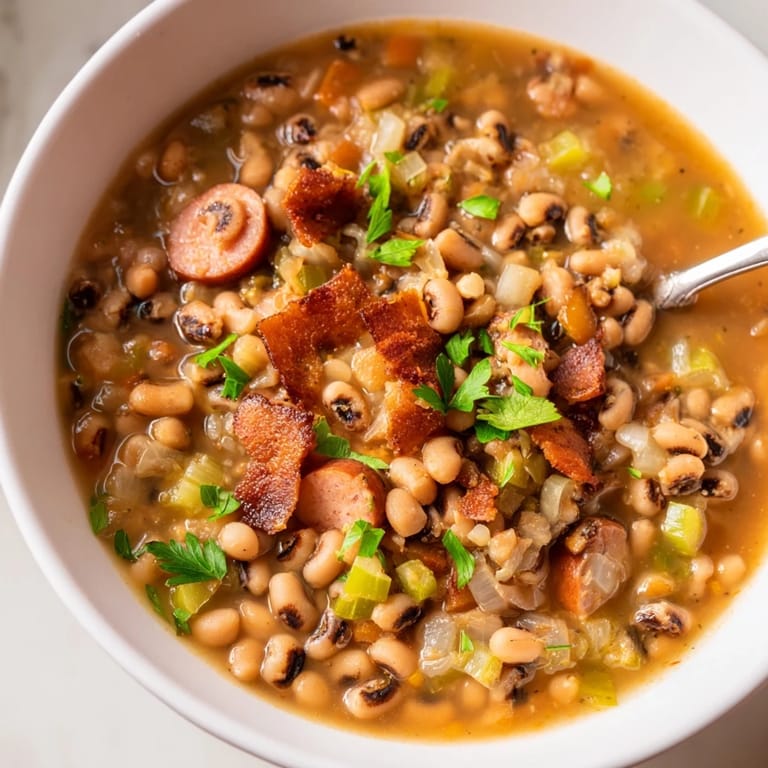
Save The smell of smoked sausage hitting a hot pan still takes me back to my grandmother's kitchen on New Year's Day. She swore black-eyed peas brought luck, but I think the real magic was how the whole house filled with that rich, smoky aroma while they simmered away. I've spent years perfecting my version, and now it's the one dish my family requests before I even ask what to cook for holidays. Something about a bubbling pot of peas and vegetables just feels like home, no matter where you're from.
Last year, my neighbor came over while I had a pot going and ended up staying for hours. We sat at the kitchen table just talking and waiting, which is exactly what this dish is meant for. She confessed she'd never made black-eyed peas from dried beans before, so we spent the afternoon going through each step together. Now she texts me every New Year's Eve to ask if my peas are simmering yet. Some recipes are just meant to be shared.
Ingredients
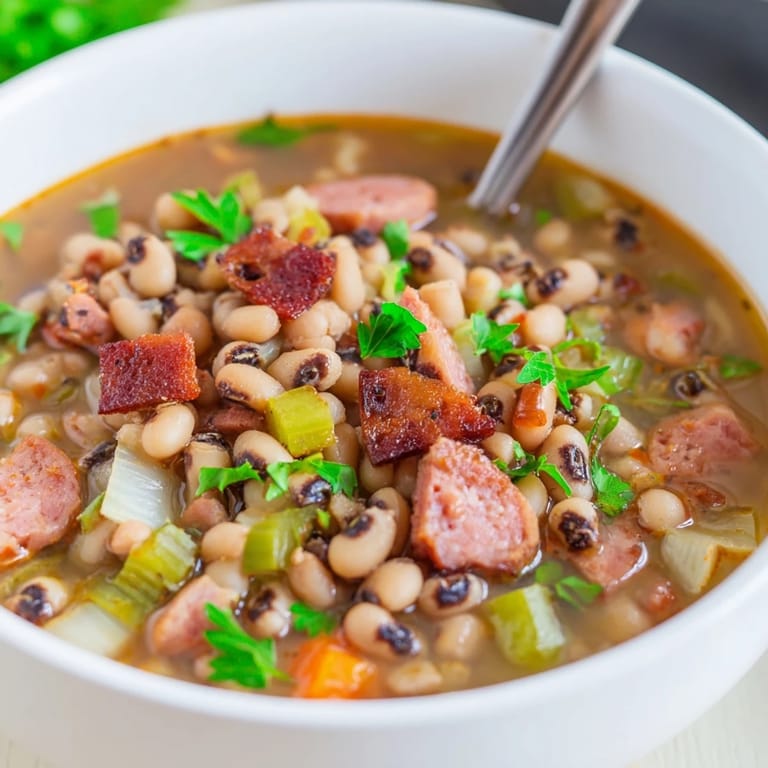
- Smoked sausage: Andouille adds authentic Cajun depth but Kielbasa works beautifully if that is what you can find
- Thick-cut bacon: The smoky rendered fat becomes the foundation for cooking all your vegetables
- Dried black-eyed peas: Skip the canned version and use dried for better texture and control over seasoning
- Onion, bell pepper, and celery: This classic holy trinity forms the aromatic base of the dish
- Garlic: Mince it fresh because pre-minced garlic never quite delivers the same punch
- Low-sodium chicken broth: Starting with less salt lets you adjust seasoning at the end
- Bay leaves: They add subtle herbal notes while the peas simmer away
- Smoked paprika: This is the secret ingredient that amplifies the smoky meat flavor
- Dried thyme: Earthy and warm, it complements the beans without overpowering them
- Cayenne pepper: Optional but recommended if you like a gentle warmth in the background
- Fresh parsley: Sprinkle this on right before serving for a bright contrast to all that rich smokiness
Tired of Takeout? 🥡
Get 10 meals you can make faster than delivery arrives. Seriously.
One email. No spam. Unsubscribe anytime.
Instructions
- Soak the black-eyed peas overnight:
- Place them in a large bowl and cover with plenty of cold water, then drain and rinse when you are ready to cook the next day
- Crisp the bacon:
- Cook the diced bacon in your Dutch oven over medium heat until it is brown and crispy, then remove it with a slotted spoon
- Brown the sausage:
- Add the sliced sausage to the bacon drippings and sauté until it is nicely browned on all sides, then set it aside with the bacon
- Build the vegetable base:
- Cook the onion, bell pepper, and celery in the same pot until they are soft and fragrant, then stir in the garlic for just one minute
- Combine everything:
- Add the soaked peas, chicken broth, water, bay leaves, smoked paprika, thyme, cayenne, black pepper, and salt to the pot
- Return the meats:
- Stir the cooked bacon and sausage back into the pot and bring everything to a boil
- Simmer slowly:
- Reduce the heat to low, cover, and let it simmer gently for 1 to 1.5 hours until the peas are perfectly tender
- Finish and serve:
- Taste and adjust the seasoning, discard the bay leaves, and sprinkle with fresh parsley before serving hot
 Pin it
 My aunt once forgot to soak the beans and tried to speed cook them, which resulted in a texture somewhere between gravel and disappointment. We ordered pizza that night but she still laughs about it every New Year's. Now she keeps a bag of pre-soaked peas in her freezer just in case. Sometimes the best recipes come from the mistakes that teach us to slow down and do it right.
Make It Your Own
Swap the meats for smoked turkey wings or ham hocks if you want a deeper pork flavor. Vegetarians can use vegetable broth and add extra smoked paprika or a few drops of liquid smoke to capture that essential smokiness.
What To Serve Alongside
Cornbread is non-negotiable in my house because it soaks up that flavorful broth perfectly. A simple skillet of cornbread or even buttered white rice turns this into a complete meal that feeds a crowd.
Storage And Reheating
The peas will keep in the refrigerator for up to five days and actually improve as the flavors meld together. Freeze portions in airtight containers for up to three months, and thaw overnight in the refrigerator before reheating gently on the stove.
- Add a splash of broth when reheating because the peas will have absorbed more liquid overnight
- The texture is best when reheated slowly over low heat rather than in the microwave
- Wait to add fresh parsley and hot sauce until you are ready to serve
 Pin it
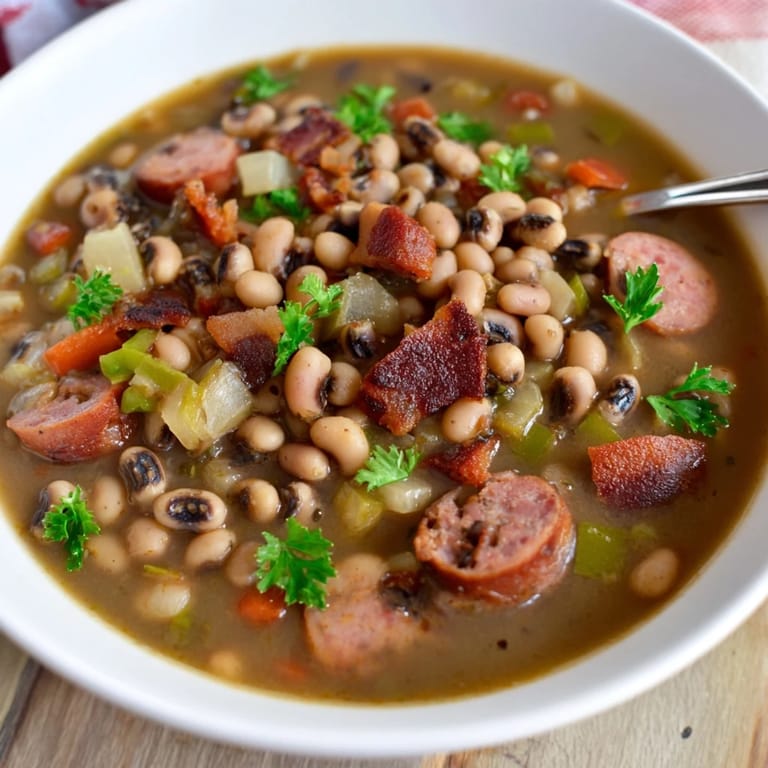
 Whether you are chasing New Year's luck or just craving something deeply comforting, this pot of peas will feed your soul as much as your stomach.
Frequently Asked Questions
- → Do I need to soak black-eyed peas before cooking?
Yes, soak dried black-eyed peas overnight in water, then drain and rinse. For a faster method, cover them with boiling water and let stand for 1 hour before draining.
- → What makes this Southern-style?
The combination of the holy trinity (onion, bell pepper, celery), smoked meats like Andouille sausage and bacon, plus Creole spices such as smoked paprika and thyme creates authentic Southern flavor.
- → Can I make this vegetarian?
Absolutely. Omit the bacon and sausage, use vegetable broth instead of chicken broth, and add extra smoked paprika or liquid smoke to maintain depth of flavor.
- → What should I serve with black-eyed peas?
Traditional pairings include steamed rice, cornbread, or sautéed greens like collards. Iced tea or a crisp white wine complement the meal nicely.
- → Why are black-eyed peas eaten on New Year's?
Southern tradition holds that eating black-eyed peas on New Year's brings prosperity and luck for the coming year, making them a staple for holiday celebrations.
- → How do I know when they're done cooking?
The peas are ready when they're tender and creamy, not mushy, and the broth has thickened slightly. This typically takes 1 to 1.5 hours of simmering.