 Save
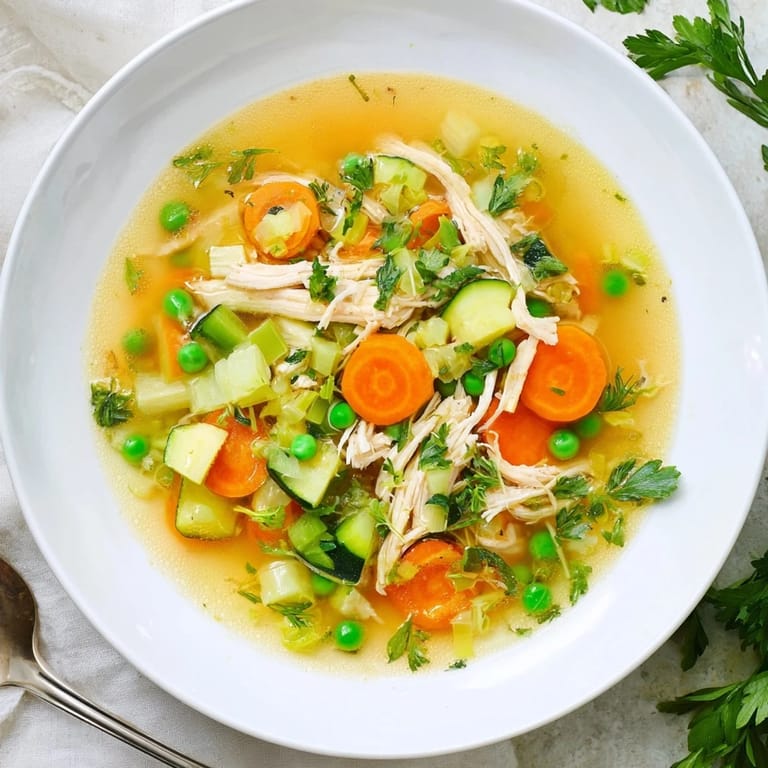
Save The first time I made this soup, it was actually because I had a random collection of vegetables that needed using and some chicken I had forgotten about in the freezer. It was one of those gray afternoons where you just need something that feels like a warm hug, and this bright, springy soup ended up surprising me with how something so simple could taste so vibrant and alive.
Last spring, my sister came over feeling completely drained from work, and I made a huge pot of this. She sat at my counter, watching the steam rise, and after the first bowl, she actually said she could feel the stress leaving her body. Now whenever either of us needs a reset, we text each other chicken soup emojis.
Ingredients
- Chicken breasts: Poaching them directly in the broth keeps them incredibly tender and infuses the liquid with extra flavor
- Fresh vegetables: The carrots, zucchini, and peas provide that spring freshness, but do not be afraid to swap in whatever looks good at the market
- Low-sodium broth: Starting with unsalted or low-sodium broth lets you control the seasoning perfectly
- Lemon juice: This optional squeeze at the end is the secret weapon that makes everything sing
Tired of Takeout? 🥡
Get 10 meals you can make faster than delivery arrives. Seriously.
One email. No spam. Unsubscribe anytime.
Instructions
- Build your flavor base:
- Heat a drizzle of olive oil in a large pot over medium heat and add your onion, celery, and carrots, letting them soften and become fragrant for about 5 minutes
- Wake up the aromatics:
- Stir in the minced garlic and cook for just one minute until you can smell it, then pour in the chicken broth, bay leaf, and thyme
- Cook the chicken:
- Once the broth reaches a gentle boil, add the chicken breasts, reduce heat to low, cover, and let simmer for 15 to 18 minutes until cooked through
- Shred and add remaining vegetables:
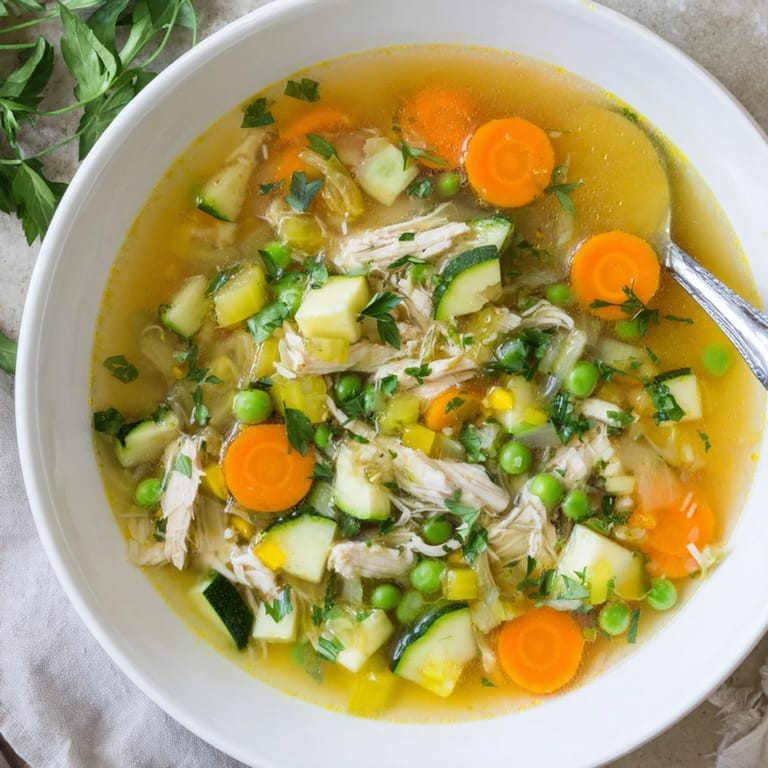
- Remove the chicken to a plate and shred with two forks, then return it to the pot along with zucchini and peas, cooking for 5 to 7 more minutes until tender
- Finish and season:
- Stir in fresh parsley, that optional lemon juice if you want brightness, and season generously with salt and pepper before serving
 Pin it
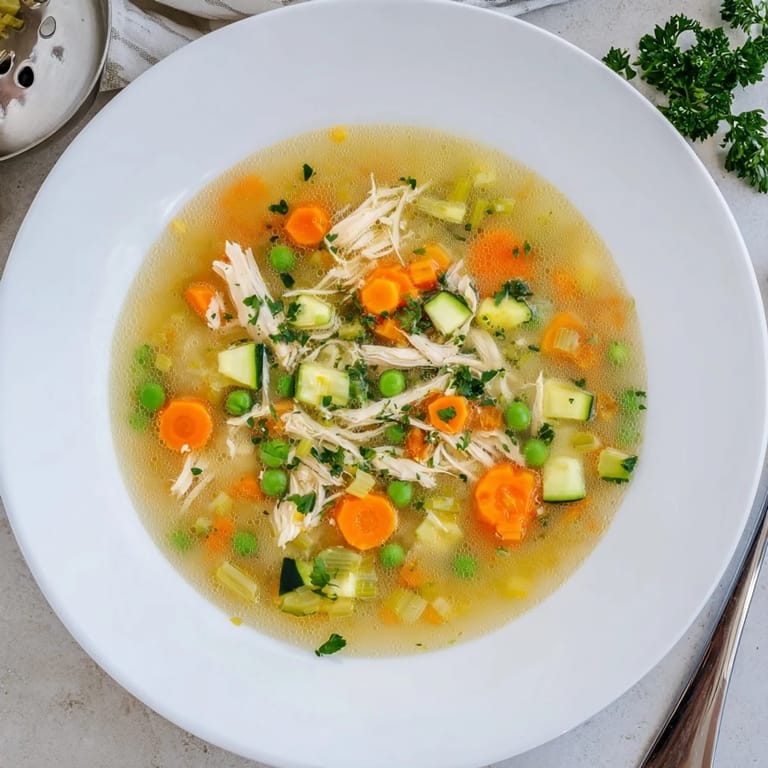
 This soup has become my go-to when friends are sick, stressed, or just need a reminder that good food does not have to be complicated. There is something about the clear, bright broth and tender vegetables that feels restorative in a way that heavy cream-based soups never quite achieve.
Making It Your Own
Sometimes I throw in a handful of small pasta or cooked rice if I want it to be more filling, especially on colder days. The beauty of this recipe is that it is a template, not a rulebook.
Seasonal Swaps
In summer, I have used fresh corn and green beans instead of peas. Winter calls for butternut squash and kale. The method stays the same, but the soup changes with whatever is growing outside your window.
Serving Suggestions
A crusty slice of bread is non-negotiable for soaking up that flavorful broth. A crisp white wine like Sauvignon Blanc cuts through the richness beautifully if you are feeling fancy.
- Make a double batch and freeze half for emergencies
- The flavors actually get better after a day in the refrigerator
- Keep some extra lemon wedges on the table for those who love extra brightness
 Pin it
 There is quiet magic in a pot of soup that somehow tastes like hope.
Frequently Asked Questions
- → Can I use bone-in chicken instead of boneless breasts?
Yes, you can use bone-in, skin-on chicken. Increase the cooking time to 20-25 minutes to ensure thorough cooking. Remove bones after cooking before shredding. The broth will develop deeper flavor from the bones.
- → What vegetables can be substituted in this soup?
You can swap vegetables based on availability and preference. Try asparagus, green beans, spinach, or diced bell peppers. Spring produce like fresh leeks or fennel also work beautifully. Adjust cooking times based on the density of your chosen vegetables.
- → How do I store and reheat leftovers?
Store cooled soup in an airtight container in the refrigerator for up to 3 days. Reheat gently on the stovetop over medium heat, adding a splash of broth if needed to restore consistency. Avoid boiling to preserve the delicate flavors.
- → Is this soup suitable for meal prep?
Absolutely. This soup freezes well for up to 2-3 months. Cool completely before transferring to freezer-safe containers. Thaw overnight in the refrigerator and reheat gently on the stovetop. Fresh herb garnish is best added after reheating.
- → How can I make this soup heartier?
Add small pasta, cooked rice, or quinoa in the final minutes of cooking for added substance. A handful of white beans also works well. These additions complement the light broth without overpowering the fresh vegetable flavors.
- → What type of broth works best?
Low-sodium chicken broth allows you to control salt levels. Homemade broth adds superior flavor depth. Ensure your broth is labeled gluten-free if you're maintaining that dietary requirement. Always check ingredient lists for potential allergens.