 Save
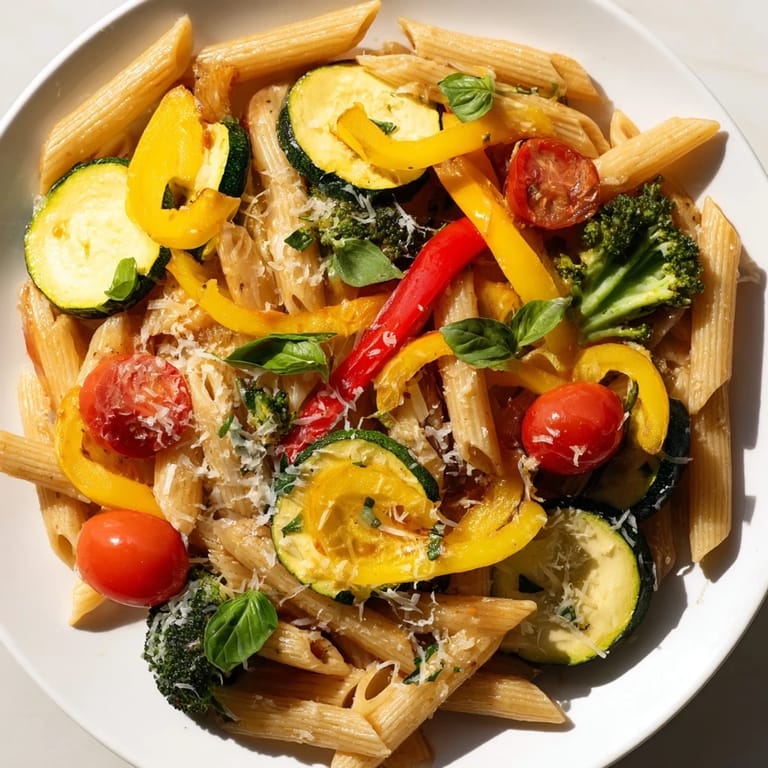
Save Spring cleaning the fridge led me to this dish one Sunday evening. I had a crisper drawer full of bell peppers, a lone zucchini, and some sad-looking broccoli that needed immediate attention. Instead of letting them wilt into compost, I cranked the oven high, drizzled everything with olive oil, and let the heat work its magic. The kitchen smelled like a trattoria, and I realized I'd stumbled onto something I'd make on purpose from then on.
I made this for a friend who claimed she didn't like vegetables. She went silent after the first bite, then asked if I'd used butter or cream. When I told her it was just olive oil and roasted vegetables, she looked genuinely betrayed by every salad she'd ever eaten. We finished the entire bowl between the two of us, and she left with the recipe scribbled on the back of a grocery receipt.
Ingredients
- Penne or fusilli pasta: Short shapes with ridges grab onto the olive oil and little bits of roasted vegetable, making every bite cohesive instead of slippery.
- Zucchini and yellow squash: These cook down just enough to stay tender without turning mushy, and their mild flavor lets the garlic and herbs shine through.
- Red and yellow bell peppers: Roasting brings out their natural sugars, and the mix of colors makes the dish look like something you'd order at a nice Italian spot.
- Red onion: It softens and caramelizes in the oven, adding a subtle sweetness that balances the sharper notes of garlic.
- Cherry tomatoes: They burst in the heat and release their juices, creating a light sauce that clings to the pasta without any extra work.
- Broccoli florets: The edges get crispy and almost nutty, which is a revelation if you've only ever had steamed broccoli.
- Extra virgin olive oil: This is not the place for bargain oil, it coats everything and carries the flavor of the garlic and herbs into every bite.
- Garlic: Fresh is essential here, the quick sauté in oil creates that aromatic base that makes your kitchen smell like you know what you're doing.
- Italian herbs: Dried works beautifully because the roasting process rehydrates them and spreads their flavor across all the vegetables.
- Parmesan cheese: Freshly grated melts into the warm pasta and adds a salty, umami richness that ties everything together.
- Fresh basil or parsley: A handful of chopped herbs at the end wakes up the dish and adds a pop of color and brightness.
- Lemon wedges: Optional, but a squeeze of lemon right before serving cuts through the richness and makes the whole thing taste even more vibrant.
Tired of Takeout? 🥡
Get 10 meals you can make faster than delivery arrives. Seriously.
One email. No spam. Unsubscribe anytime.
Instructions
- Preheat and prep the pan:
- Set your oven to 220°C (425°F) and line a large baking sheet with parchment paper. This keeps cleanup easy and prevents any sticking, especially with the tomatoes.
- Toss the vegetables:
- Spread the zucchini, squash, bell peppers, red onion, cherry tomatoes, and broccoli on the sheet. Drizzle with 2 tablespoons of olive oil, sprinkle with Italian herbs, salt, and pepper, then toss everything with your hands to coat evenly and spread in a single layer so they roast instead of steam.
- Roast until golden:
- Slide the tray into the oven and roast for 18 to 20 minutes, stirring once halfway through. You want the edges to brown and the vegetables to soften but still hold their shape.
- Boil the pasta:
- While the vegetables roast, bring a large pot of salted water to a rolling boil and cook the pasta according to the package instructions until al dente. Reserve half a cup of the starchy pasta water before draining, it's your secret weapon for bringing everything together later.
- Sauté the garlic:
- In a large skillet over medium heat, add the remaining tablespoon of olive oil and toss in the minced garlic. Sauté for about 30 seconds, just until fragrant but not browned, because burnt garlic is bitter and will ruin the vibe.
- Combine and toss:
- Add the roasted vegetables and drained pasta to the skillet with the garlic. Toss gently, adding splashes of the reserved pasta water to loosen everything and help the olive oil cling to the pasta.
- Finish with cheese and herbs:
- Remove the skillet from the heat and stir in half the Parmesan and the fresh basil or parsley. Taste and adjust the seasoning with more salt, pepper, or a pinch of red pepper flakes if you like a little heat.
- Serve and garnish:
- Divide the pasta among bowls and top with the remaining Parmesan and extra herbs. Add a squeeze of lemon juice if you want a bright, tangy finish that makes everything pop.
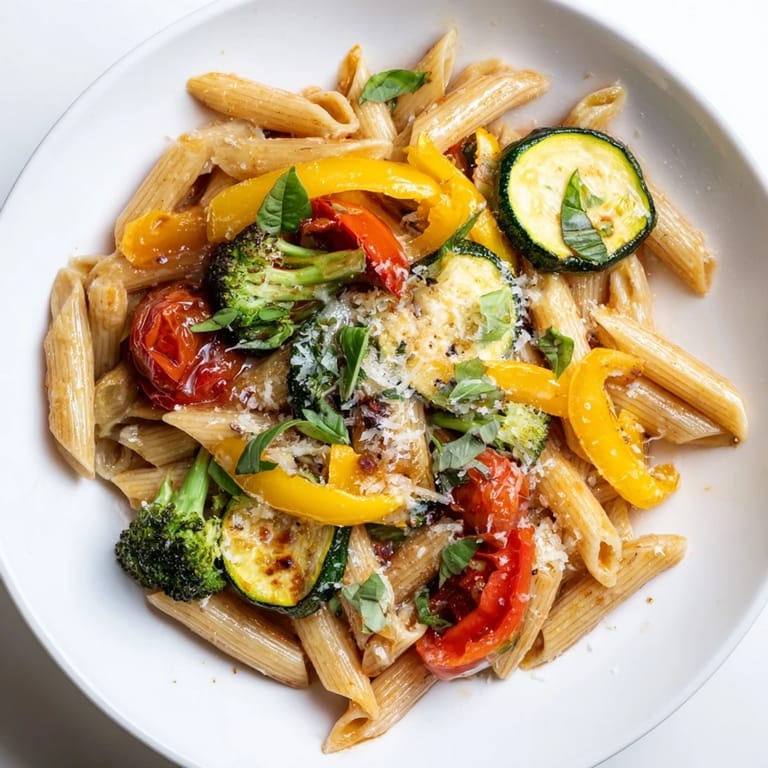 Pin it
 This became my go-to whenever someone said they were trying to eat lighter but still wanted comfort food. It's hearty enough to feel like a real meal, but it doesn't leave you sluggish or overstuffed. One night, my neighbor stopped by just as I was plating it, and she ended up staying for dinner. She told me later it was the first time she'd enjoyed a meatless meal without missing the meat, and I took that as the highest compliment.
Choosing Your Vegetables
The vegetables listed here are just a starting point, not a rulebook. I've made this with asparagus in the spring, snap peas in early summer, and mushrooms in the fall when the market had bins of them on sale. The key is to pick vegetables that roast well and won't release too much water. Leafy greens like spinach or arugula can be tossed in raw at the end for a wilted, peppery finish. If you're using heartier vegetables like carrots or cauliflower, cut them smaller so they roast in the same time as the softer ones.
Making It a Complete Meal
This dish is satisfying on its own, but sometimes you want a little more protein or heft. I've stirred in sautéed chicken thighs, tossed in roasted chickpeas for a plant-based boost, or added shrimp during the last few minutes of roasting so they cook alongside the vegetables. A poached or fried egg on top turns it into a next-level breakfast-for-dinner situation. If you're serving it to guests, a crusty baguette and a simple green salad on the side make it feel like a full Italian spread without much extra effort.
Storing and Reheating
Leftovers keep well in the fridge for up to three days, though the pasta will soak up some of the olive oil as it sits. When reheating, add a splash of water or broth to the pan and warm it gently over medium heat, stirring often so it doesn't dry out. I've also eaten this cold straight from the fridge as a pasta salad, and it's surprisingly good that way. The flavors meld overnight, and the roasted vegetables taste even sweeter the next day.
- Store in an airtight container to keep the vegetables from drying out.
- Reheat in a skillet rather than the microwave for the best texture.
- If making ahead, slightly undercook the pasta so it doesn't get mushy when reheated.
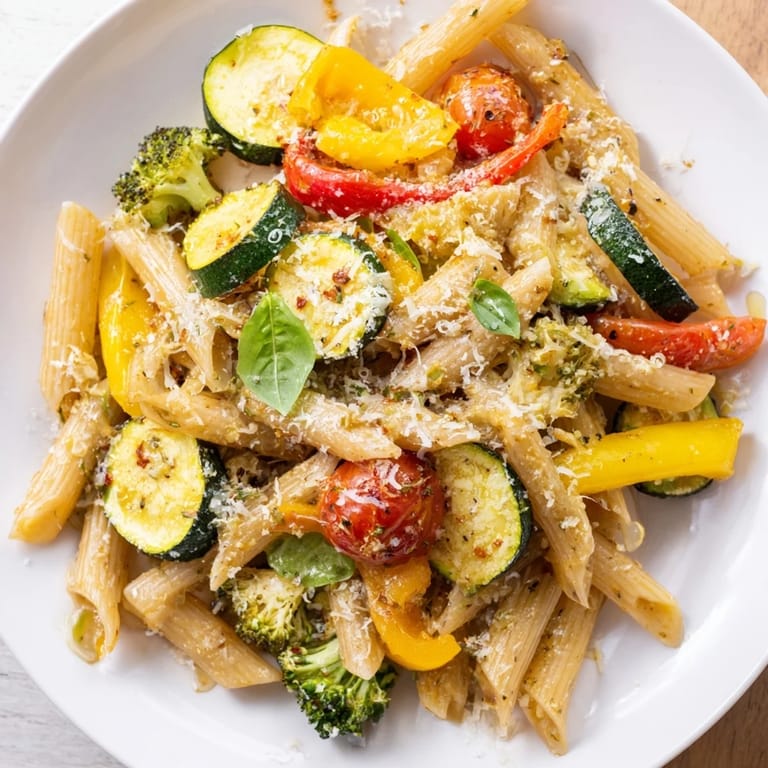 Pin it
 This is the kind of dish that makes you look like a capable cook without requiring any fancy techniques or hard-to-find ingredients. It's flexible, forgiving, and always tastes like you put more thought into it than you actually did.
Frequently Asked Questions
- → Can I prepare the vegetables in advance?
Yes, you can chop vegetables up to 24 hours ahead and store in airtight containers. Roast them fresh when ready to prepare the dish for best texture and flavor.
- → What vegetables work best for this dish?
Use seasonal vegetables that roast well: zucchini, summer squash, bell peppers, tomatoes, broccoli, asparagus, snap peas, mushrooms, or eggplant. Choose a variety of colors for visual appeal.
- → How do I prevent the pasta from becoming mushy?
Cook pasta to al dente according to package directions, usually 1-2 minutes before the recommended time. Toss gently with vegetables and use reserved pasta water sparingly to maintain texture.
- → Can I add protein to this dish?
Absolutely. Sauté diced chicken breast, shrimp, or chickpeas separately and add them to the skillet before tossing with the pasta for added substance and nutrition.
- → What wine pairs well with this dish?
Light, crisp white wines complement the fresh vegetables and olive oil base beautifully. Pinot Grigio and Sauvignon Blanc are excellent choices that don't overpower the delicate flavors.
- → Is this suitable for gluten-free diets?
Yes, simply substitute gluten-free pasta and verify all packaged ingredients are certified gluten-free. The vegetables and olive oil base are naturally gluten-free.