 Save
Save There's something about assembling a Mediterranean bowl that feels less like cooking and more like painting with flavors. I discovered this particular combination while standing in my kitchen on a Tuesday evening, staring at a lonely lemon and some chicken that needed purpose. The smell of oregano and thyme hitting the olive oil transported me instantly to a sun-drenched courtyard somewhere I'd never actually been, and suddenly dinner felt like an escape.
I made this for my sister's surprise visit last spring, and watching her eat it straight from the bowl while sitting on my kitchen counter told me everything I needed to know. She kept going back for more chicken, then more feta, and by the end we were just laughing about how something so simple could taste this good. That's when I knew this recipe had staying power.
Ingredients
- Boneless, skinless chicken breasts: Cut into strips rather than leaving them whole, so they cook faster and absorb the marinade more evenly, plus they're easier to eat in a bowl.
- Olive oil: Use a good quality oil for the marinade and don't skip it—it's what carries all those Mediterranean flavors directly to the chicken.
- Lemon juice and zest: Both components matter; the juice adds acidity while the zest brings brightness that deepens as the chicken sits.
- Garlic, oregano, and thyme: These three are the holy trinity here, creating that authentic Mediterranean backbone that ties everything together.
- Feta cheese: Crumble it just before serving so it stays creamy and doesn't dry out sitting on warm couscous.
- Pearl couscous: Larger than regular couscous, it has better texture and doesn't turn mushy when dressed—this small choice makes a huge difference.
- Fresh vegetables: Dice everything roughly the same size so the salad feels intentional and balanced, not like a vegetable accident.
- Fresh herbs (parsley and mint): These brighten the whole bowl at the end; dried versions won't give you that same fresh-picked taste.
- Dijon mustard in the dressing: A small spoonful acts as an emulsifier and adds subtle depth that people can't quite identify but absolutely taste.
Tired of Takeout? 🥡
Get 10 meals you can make faster than delivery arrives. Seriously.
One email. No spam. Unsubscribe anytime.
Instructions
- Make the marinade magic:
- Whisk together the oil, lemon juice and zest, minced garlic, oregano, thyme, salt, and pepper in a bowl. The moment these ingredients combine, you'll smell why this works—let it sit for a minute before adding the chicken so the flavors can get cozy together.
- Marinate the chicken:
- Toss your chicken strips in that fragrant mixture and let them sit for at least 15 minutes at room temperature. If you have time (and a fridge), marinating for an hour or two is where the real magic happens, but don't stress if you're in a rush.
- Cook the pearl couscous:
- Bring your water or broth to a rolling boil, add the couscous, then turn the heat down so it simmers gently under a lid for 8 to 10 minutes. You'll know it's done when the pearls are tender but still have a little personality to them, not mushy and collapsed.
- Cool the couscous quickly:
- Once it's cooked, drain it and rinse it briefly with cold water to stop it from cooking further and to separate those little pearls. Spread it on a plate if you're impatient and want it cooled right away.
- Whisk the dressing:
- Combine the extra-virgin olive oil, lemon juice, Dijon mustard, and honey in a small bowl—whisk it until it looks emulsified and slightly thicker than when you started. Taste and adjust salt and pepper, remembering that the feta will add saltiness later.
- Build the couscous salad:
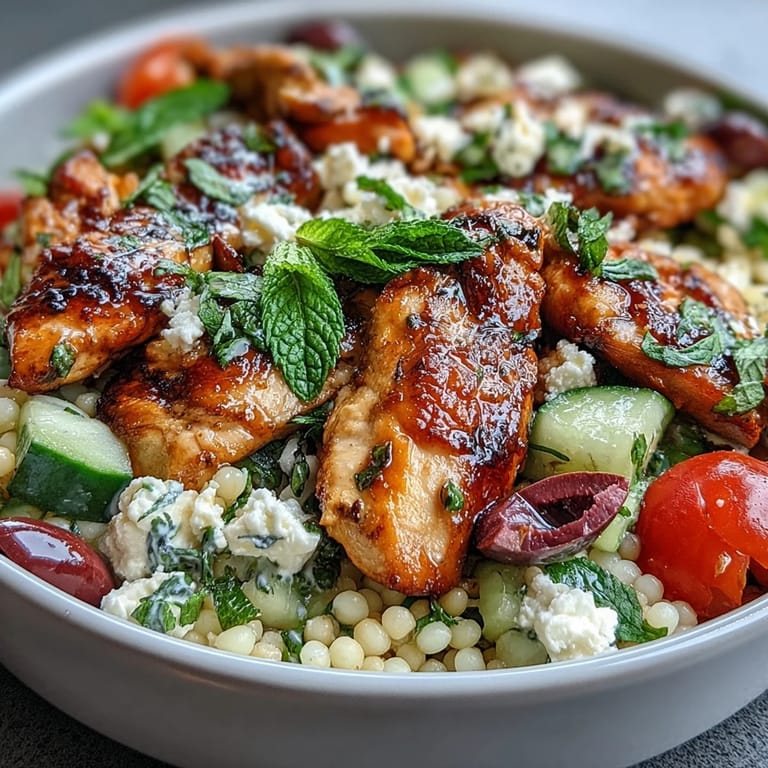
- In a large bowl, combine your cooled couscous with the diced cucumber, bell pepper, halved tomatoes, red onion, olives, parsley, and mint. Pour that dressing over everything and toss gently until every pearl is coated—this is where the salad really comes alive.
- Cook the chicken until golden:
- Heat your skillet or grill pan over medium-high heat and cook those marinated chicken strips for 3 to 4 minutes per side until they're golden on the edges and cooked through. Don't move them around constantly; let them sit and develop a little color.
- Assemble and serve:
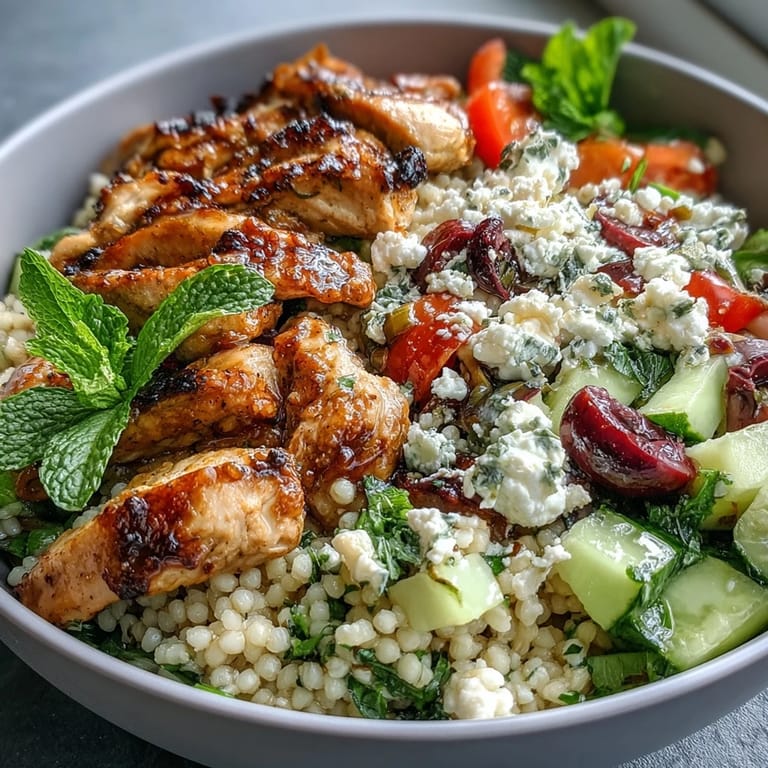
- Divide the couscous salad among bowls, top each with warm chicken strips, then scatter crumbled feta over the top. Serve immediately while the chicken is still warm and the bowl feels like a complete, balanced meal.
 Pin it
 There was a moment last summer when a friend asked for the recipe midway through eating, and I realized this bowl had transcended being just dinner—it had become something people wanted to recreate at home. That's when food stops being sustenance and becomes a memory you can serve again and again.
The Secret to Perfect Couscous
Pearl couscous is forgiving but not foolproof. The key is hitting that sweet spot where it's cooked through but still has bite, which honestly comes down to watching it rather than just setting a timer. I learned this the hard way when I over-cooked a batch and ended up with something that felt like wet sand, so now I taste a pearl at the 8-minute mark to see where we're at. If it's still slightly chalky in the center, give it another minute or two, but the moment it feels tender all the way through, you're done.
Why Feta at the End Matters
Crumbling the feta right before serving might seem like a detail, but it changes everything about how the dish tastes and feels. Feta that's been sitting on warm couscous starts to break down and lose its texture, becoming almost paste-like, whereas fresh crumbles stay creamy and distinct. I used to make the whole bowl in advance and wondered why it seemed one-dimensional by the time I ate it—then I started holding back the cheese and suddenly the same ingredients felt vibrant again.
Making It Your Own
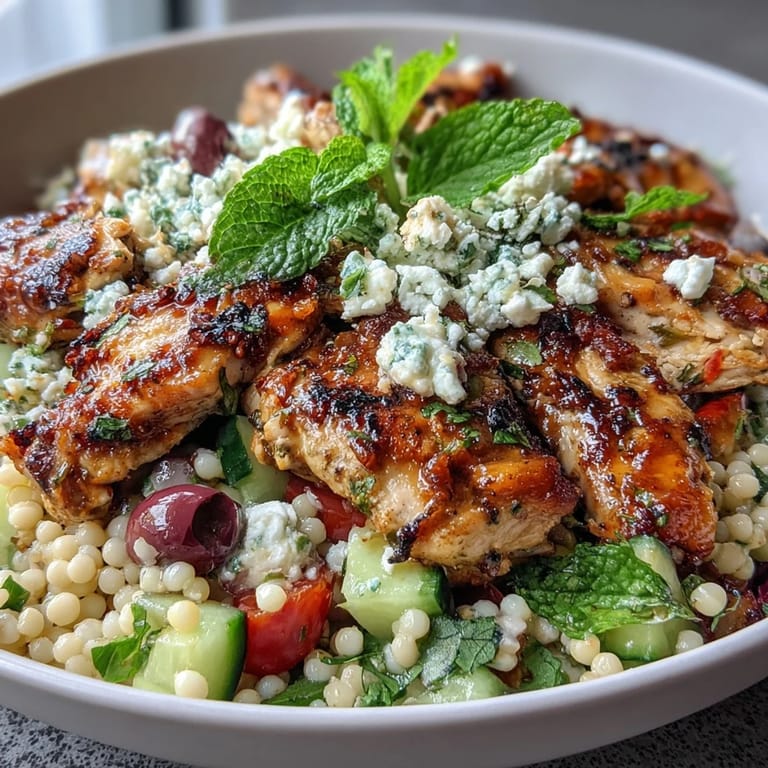
This bowl is a framework more than a fixed formula, which is probably why it's become my go-to when I need to cook with what's on hand. I've added roasted eggplant on nights when I had it, swapped the mint for basil when that's what was growing in my garden, and even used grilled halloumi instead of chicken when I felt like vegetarian eating. The core structure—herbed grains, fresh vegetables, something creamy, something cooked and warm—holds everything together no matter what you're improvising with.
- Roasted artichoke hearts or eggplant add earthy depth if you want the bowl to feel heavier.
- Grilled halloumi or chickpeas swap in seamlessly for chicken if you're going meatless.
- A squeeze of lemon juice right at the table is never wrong and often exactly what the bowl needs.
 Pin it
 This bowl has become my answer to the question of what to make when you want something that feels special but doesn't require special skills. It's the kind of dish that sits happily in your kitchen rotation and never gets boring.
Frequently Asked Questions
- → What is pearl couscous?
Pearl couscous, also known as Israeli couscous, consists of small, toasted pasta-like grains that are tender yet slightly chewy once cooked, providing a delightful texture in salads and bowls.
- → Can I substitute chicken in the dish?
Yes, grilled halloumi or chickpeas can replace chicken for a vegetarian alternative, providing protein and a satisfying texture.
- → How is the marinade prepared?
The marinade combines olive oil, lemon juice and zest, garlic, oregano, thyme, salt, and pepper to infuse the chicken with bright, herbaceous flavors.
- → What dressing ingredients are used?
The dressing blends extra-virgin olive oil, lemon juice, Dijon mustard, honey, salt, and pepper for a balanced, tangy finish that complements the salad and chicken.
- → How do I cook pearl couscous properly?
Bring water or broth to a boil, add couscous, reduce to a simmer, cover, and cook for about 8–10 minutes until tender. Drain and rinse briefly with cold water before using.
- → What wine pairs well with this dish?
A crisp Sauvignon Blanc or a light Greek white wine complements the fresh citrus and herb flavors nicely.